


Characterization of an insertion sequence element associated with genetically diverse plant pathogenic Streptomyces spp
- PMID: 10049389
- PMCID: PMC93547
- DOI: 10.1128/JB.181.5.1562-1568.1999
Characterization of an insertion sequence element associated with genetically diverse plant pathogenic Streptomyces spp
Abstract
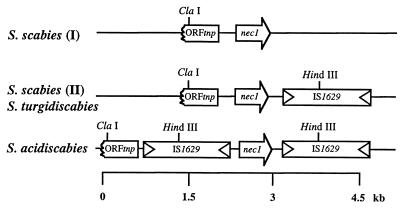
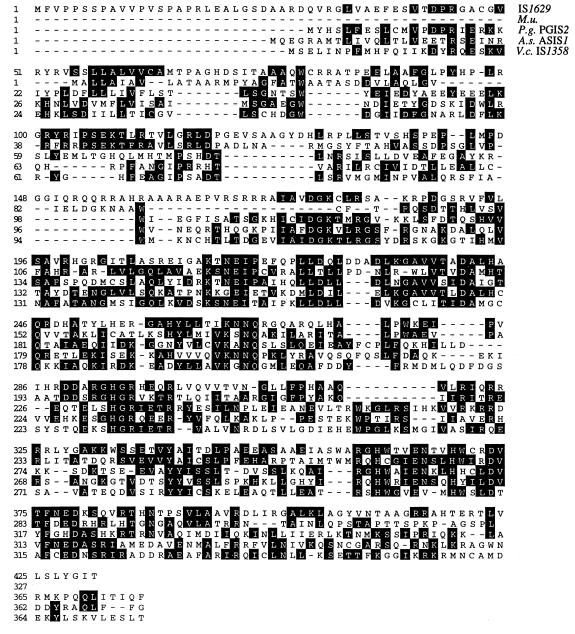
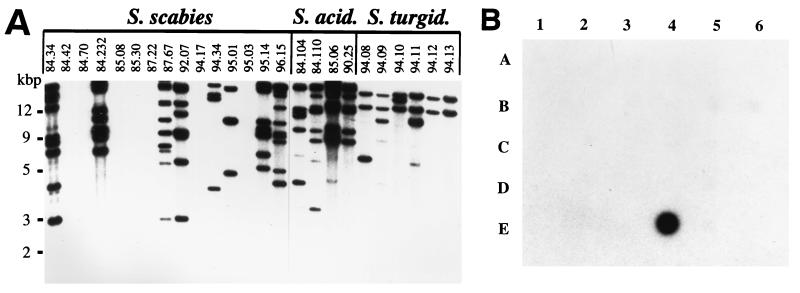
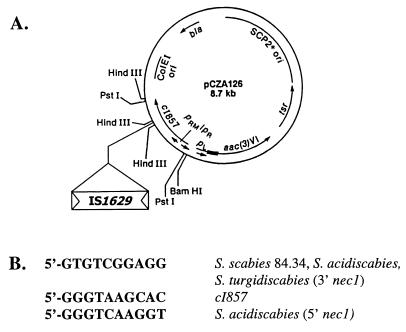
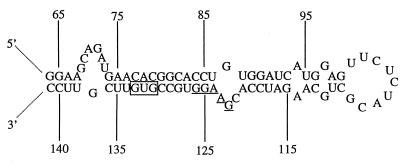
Streptomycetes are common soil inhabitants, yet few described species are plant pathogens. While the pathogenicity mechanisms remain unclear, previous work identified a gene, nec1, which encodes a putative pathogenicity or virulence factor. nec1 and a neighboring transposase pseudogene, ORFtnp, are conserved among unrelated plant pathogens and absent from nonpathogens. The atypical GC content of nec1 suggests that it was acquired through horizontal transfer events. Our investigation of the genetic organization of regions adjacent to the 3' end of nec1 in Streptomyces scabies 84.34 identified a new insertion sequence (IS) element, IS1629, with homology to other IS elements from prokaryotic animal pathogens. IS1629 is 1,462 bp with 26-bp terminal inverted repeats and encodes a putative 431-amino-acid (aa) transposase. Transposition of IS1629 generates a 10-bp target site duplication. A 77-nucleotide (nt) sequence encompassing the start codon and upstream region of the transposase was identified which could function in the posttranscritpional regulation of transposase synthesis. A functional copy of IS1629 from S. turgidiscabies 94.09 (Hi-C-13) was selected in the transposon trap pCZA126, through its insertion into the lambda cI857 repressor. IS1629 is present in multiple copies in some S. scabies strains and is present in all S. acidiscabies and S. turgidiscabies strains examined. A second copy of IS1629 was identified between ORFtnp and nec1 in S. acidiscabies strains. The diversity of IS1629 hybridization profiles was greatest within S. scabies. IS1629 was absent from the 27 nonpathogenic Streptomyces strains tested. The genetic organization and nucleotide sequence of the nec1-IS1629 region was conserved and identical among representatives of S. acidiscabies and S. turgidiscabies. These findings support our current model for the unidirectional transfer of the ORFtnp-nec1-IS1629 locus from IS1629-containing S. scabies (type II) to S. acidiscabies and S. turgidiscabies.
Figures

References
-
- Bukhalid R A, Chung S Y, Loria R. nec1, a gene conferring a necrogenic phenotype, is conserved in plant pathogenic Streptomyces species and linked to a transposase pseudogene. Mol Plant-Microbe Interact. 1998;11:960–967. - PubMed
-
- Byrne M E. Nucleotide sequence analysis of IS256 from the Staphylococcus aureus gentamicin-tobramycin-kanamycin-resistance transposon Tn4001. Gene. 1989;81:361–367. - PubMed
-
- Davis M A, Simons R W, Kleckner N. Tn10 protects itself at two levels from fortuitous activation by external promoters. Cell. 1985;43:379–387. - PubMed
-
- Grindley N D F, Reed R R. Transpositional recombination in prokaryotes. Annu Rev Biochem. 1985;54:863–896. - PubMed
Publication types
MeSH terms
Substances
Associated data
- Actions
LinkOut - more resources
Full Text Sources
Research Materials
Miscellaneous
