


Dissimilatory reduction of Fe(III) and other electron acceptors by a Thermus isolate
- PMID: 10049886
- PMCID: PMC91167
- DOI: 10.1128/AEM.65.3.1214-1221.1999
Dissimilatory reduction of Fe(III) and other electron acceptors by a Thermus isolate
Abstract
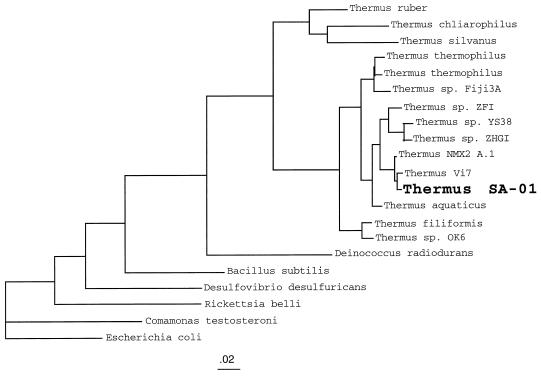
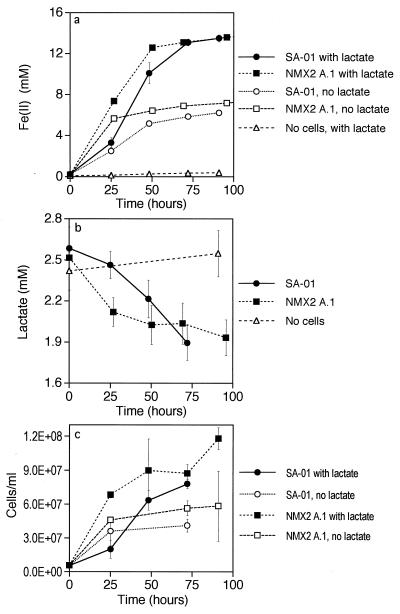
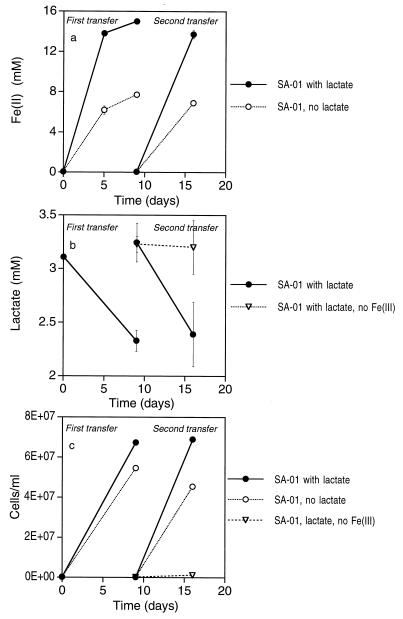
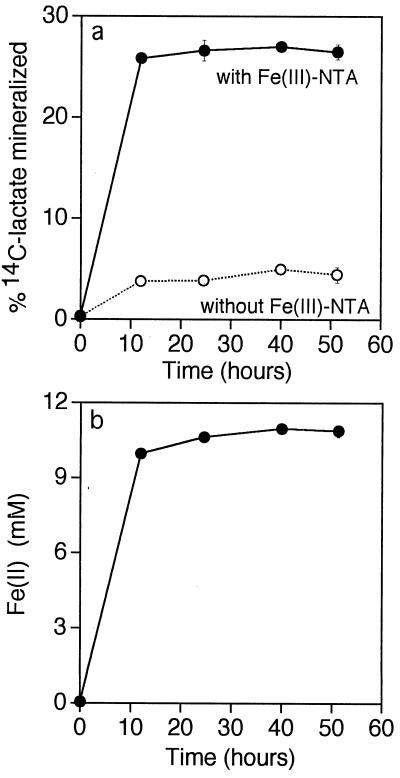
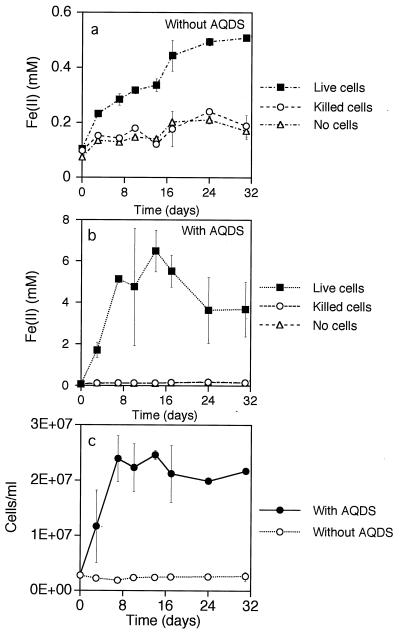
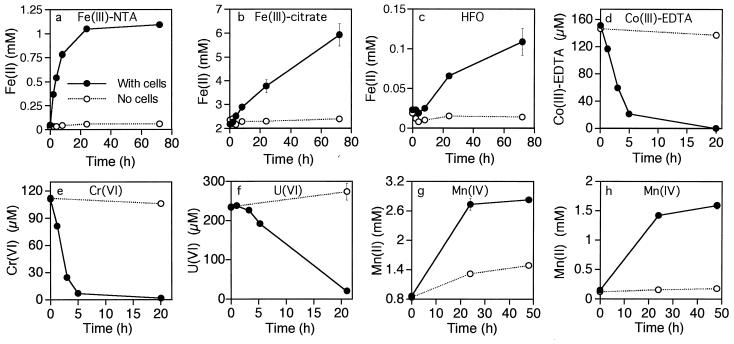
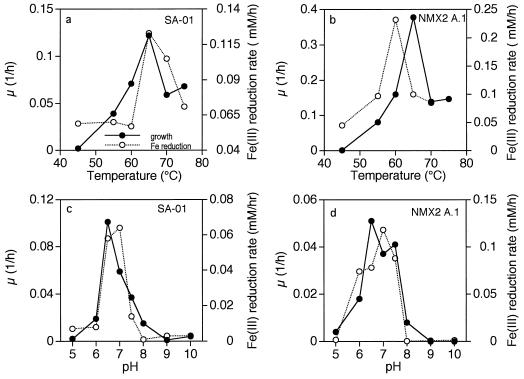
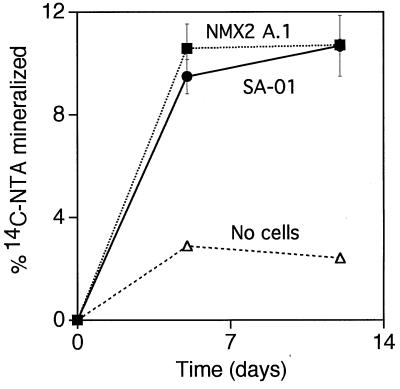
A thermophilic bacterium that can use O2, NO3-, Fe(III), and S0 as terminal electron acceptors for growth was isolated from groundwater sampled at a 3.2-km depth in a South African gold mine. This organism, designated SA-01, clustered most closely with members of the genus Thermus, as determined by 16S rRNA gene (rDNA) sequence analysis. The 16S rDNA sequence of SA-01 was >98% similar to that of Thermus strain NMX2 A.1, which was previously isolated by other investigators from a thermal spring in New Mexico. Strain NMX2 A.1 was also able to reduce Fe(III) and other electron acceptors. Neither SA-01 nor NMX2 A.1 grew fermentatively, i.e., addition of an external electron acceptor was required for anaerobic growth. Thermus strain SA-01 reduced soluble Fe(III) complexed with citrate or nitrilotriacetic acid (NTA); however, it could reduce only relatively small quantities (0.5 mM) of hydrous ferric oxide except when the humic acid analog 2,6-anthraquinone disulfonate was added as an electron shuttle, in which case 10 mM Fe(III) was reduced. Fe(III)-NTA was reduced quantitatively to Fe(II); reduction of Fe(III)-NTA was coupled to the oxidation of lactate and supported growth through three consecutive transfers. Suspensions of Thermus strain SA-01 cells also reduced Mn(IV), Co(III)-EDTA, Cr(VI), and U(VI). Mn(IV)-oxide was reduced in the presence of either lactate or H2. Both strains were also able to mineralize NTA to CO2 and to couple its oxidation to Fe(III) reduction and growth. The optimum temperature for growth and Fe(III) reduction by Thermus strains SA-01 and NMX2 A.1 is approximately 65 degrees C; their optimum pH is 6.5 to 7.0. This is the first report of a Thermus sp. being able to couple the oxidation of organic compounds to the reduction of Fe, Mn, or S.
Figures
References
-
- Alfredsson G A, Kristjansson J K. Ecology, distribution, and isolation of Thermus. In: Sharp R, Williams R, editors. Thermus species. New York, N.Y: Plenum Press; 1995. pp. 43–66.
-
- Altschul S F, Gish W, Miller W, Meyers E W, Lipman D J. Basic local alignment search tool. J Mol Biol. 1990;215:403–410. - PubMed
-
- American Public Health Association. Standard methods for the examination of water and wastewater. 16th ed. Washington, D.C: American Public Health Association; 1985.
-
- Atlas R M. Handbook of microbiological media. Boca Raton, Fla: CRC Press; 1993.
-
- Bolton H, Jr, Girvin D C. Effect of adsorption on the biodegradation of nitrilotriacetate by Chelobacter heintzii. Environ Sci Technol. 1996;30:2057–2065.
Publication types
MeSH terms
Substances
Associated data
- Actions
LinkOut - more resources
Full Text Sources
Other Literature Sources
Molecular Biology Databases
