


Selenium redox biochemistry of zinc-sulfur coordination sites in proteins and enzymes
- PMID: 10051568
- PMCID: PMC26710
- DOI: 10.1073/pnas.96.5.1910
Selenium redox biochemistry of zinc-sulfur coordination sites in proteins and enzymes
Abstract
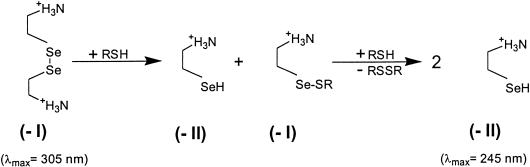
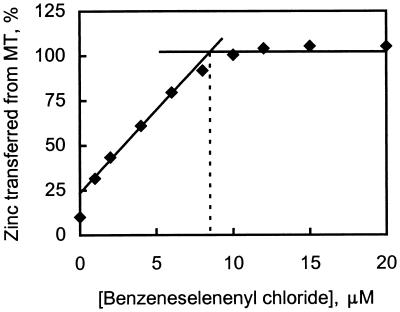
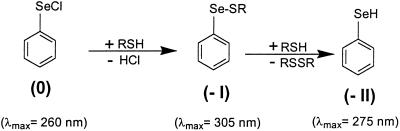
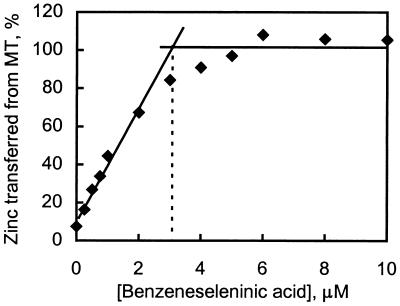
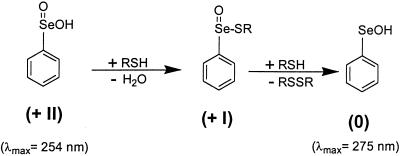
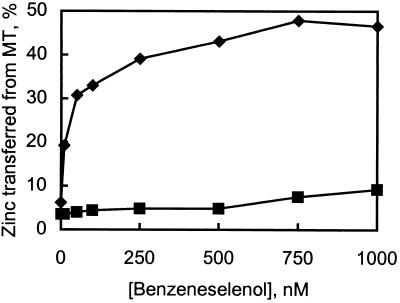
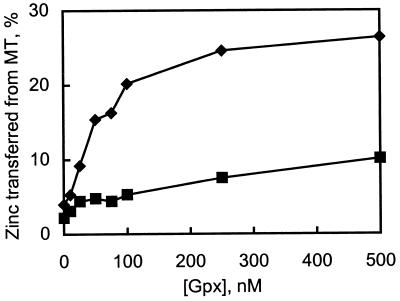
Selenium has been increasingly recognized as an essential element in biology and medicine. Its biochemistry resembles that of sulfur, yet differs from it by virtue of both redox potentials and stabilities of its oxidation states. Selenium can substitute for the more ubiquitous sulfur of cysteine and as such plays an important role in more than a dozen selenoproteins. We have chosen to examine zinc-sulfur centers as possible targets of selenium redox biochemistry. Selenium compounds release zinc from zinc/thiolate-coordination environments, thereby affecting the cellular thiol redox state and the distribution of zinc and likely of other metal ions. Aromatic selenium compounds are excellent spectroscopic probes of the otherwise relatively unstable functional selenium groups. Zinc-coordinated thiolates, e.g., metallothionein (MT), and uncoordinated thiolates, e.g., glutathione, react with benzeneseleninic acid (oxidation state +2), benzeneselenenyl chloride (oxidation state 0) and selenocystamine (oxidation state -1). Benzeneseleninic acid and benzeneselenenyl chloride react very rapidly with MT and titrate substoichiometrically and with a 1:1 stoichiometry, respectively. Selenium compounds also catalyze the release of zinc from MT in peroxidation and thiol/disulfide-interchange reactions. The selenoenzyme glutathione peroxidase catalytically oxidizes MT and releases zinc in the presence of t-butyl hydroperoxide, suggesting that this type of redox chemistry may be employed in biology for the control of metal metabolism. Moreover, selenium compounds are likely targets for zinc/thiolate coordination centers in vivo, because the reactions are only partially suppressed by excess glutathione. This specificity and the potential to undergo catalytic reactions at low concentrations suggests that zinc release is a significant aspect of the therapeutic antioxidant actions of selenium compounds in antiinflammatory and anticarcinogenic agents.
Figures
References
Publication types
MeSH terms
Substances
LinkOut - more resources
Full Text Sources
