


Inhibitory sites in enzymes: zinc removal and reactivation by thionein
- PMID: 10051573
- PMCID: PMC26715
- DOI: 10.1073/pnas.96.5.1936
Inhibitory sites in enzymes: zinc removal and reactivation by thionein
Abstract
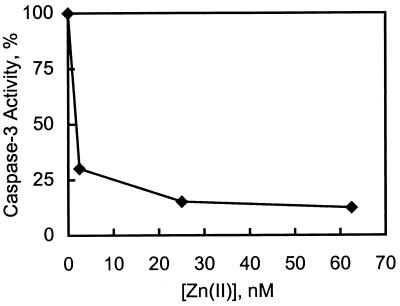
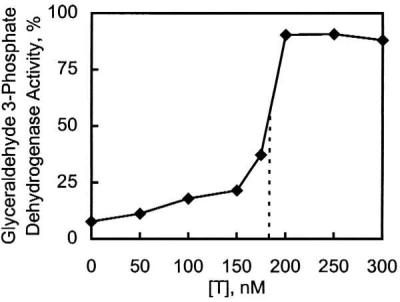
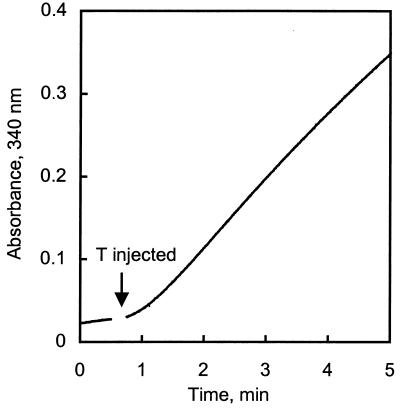
Thionein (T) has not been isolated previously from biological material. However, it is generated transiently in situ by removal of zinc from metallothionein under oxidoreductive conditions, particularly in the presence of selenium compounds. T very rapidly activates a group of enzymes in which zinc is bound at an inhibitory site. The reaction is selective, as is apparent from the fact that T does not remove zinc from the catalytic sites of zinc metalloenzymes. T instantaneously reverses the zinc inhibition with a stoichiometry commensurate with its known capacity to bind seven zinc atoms in the form of clusters in metallothionein. The zinc inhibition is much more pronounced than was previously reported, with dissociation constants in the low nanomolar range. Thus, T is an effective, endogenous chelating agent, suggesting the existence of a hitherto unknown and unrecognized biological regulatory system. T removes the metal from an inhibitory zinc-specific enzymatic site with a resultant marked increase of activity. The potential significance of this system is supported by the demonstration of its operations in enzymes involved in glycolysis and signal transduction.
Figures
Comment in
-
Crosstalk of the group IIa and IIb metals calcium and zinc in cellular signaling.Proc Natl Acad Sci U S A. 2001 Oct 23;98(22):12325-7. doi: 10.1073/pnas.231481398. Proc Natl Acad Sci U S A. 2001. PMID: 11675482 Free PMC article. No abstract available.
References
-
- Margoshes M, Vallee B L. J Am Chem Soc. 1957;79:4813.
-
- Zeng J, Heuchel R, Schaffner W, Kägi J H R. FEBS Lett. 1991;279:310–312. - PubMed
Publication types
MeSH terms
Substances
LinkOut - more resources
Full Text Sources
Other Literature Sources
