


Organization of biogenesis genes for aggregative adherence fimbria II defines a virulence gene cluster in enteroaggregative Escherichia coli
- PMID: 10074069
- PMCID: PMC93575
- DOI: 10.1128/JB.181.6.1779-1785.1999
Organization of biogenesis genes for aggregative adherence fimbria II defines a virulence gene cluster in enteroaggregative Escherichia coli
Abstract
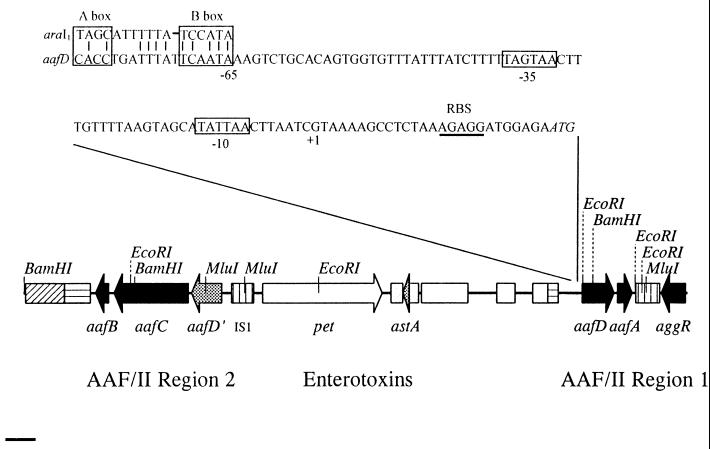
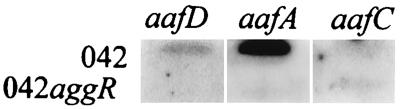
Several virulence-related genes have been described for prototype enteroaggregative Escherichia coli (EAEC) strain 042, which has been shown to cause diarrhea in human volunteers. Among these factors are the enterotoxins Pet and EAST and the fimbrial antigen aggregative adherence fimbria II (AAF/II), all of which are encoded on the 65-MDa virulence plasmid pAA2. Using nucleotide sequence analysis and insertional mutagenesis, we have found that the genes required for the expression of each of these factors, as well as the transcriptional activator of fimbrial expression AggR, map to a distinct cluster on the pAA2 plasmid map. The cluster is 23 kb in length and includes two regions required for expression of the AAF/II fimbria. These fimbrial biogenesis genes feature a unique organization in which the chaperone, subunit, and transcriptional activator lie in one cluster, whereas the second, unlinked cluster comprises a silent chaperone gene, usher, and invasin reminiscent of Dr family fimbrial clusters. This plasmid-borne virulence locus may represent an important set of virulence determinants in EAEC strains.
Figures
References
-
- Bardwell J C A, McGovern K, Beckwith J. Identification of a protein required for disulfide bond formation in vivo. Cell. 1991;67:581–589. - PubMed
-
- Bhan M K, Raj P, Levine M M, Kaper J B, Bhandari N, Srivastava R, Kumar R, Sazawal S. Enteroaggregative Escherichia coli associated with persistent diarrhea in a cohort of rural children in India. J Infect Dis. 1989;159:1061–1064. - PubMed
-
- Bilge S M, Apostol J M, Jr, Fullner K J, Moseley S L. Transcriptional organization of the F1845 fimbrial adhesin determinant of Escherichia coli. Mol Microbiol. 1993;7:993–1006. - PubMed
Publication types
MeSH terms
Substances
Associated data
- Actions
- Actions
Grants and funding
LinkOut - more resources
Full Text Sources
Other Literature Sources
