


Biological heterogeneity, including systemic replication in mice, of H5N1 influenza A virus isolates from humans in Hong Kong
- PMID: 10074171
- PMCID: PMC104081
- DOI: 10.1128/JVI.73.4.3184-3189.1999
Biological heterogeneity, including systemic replication in mice, of H5N1 influenza A virus isolates from humans in Hong Kong
Abstract
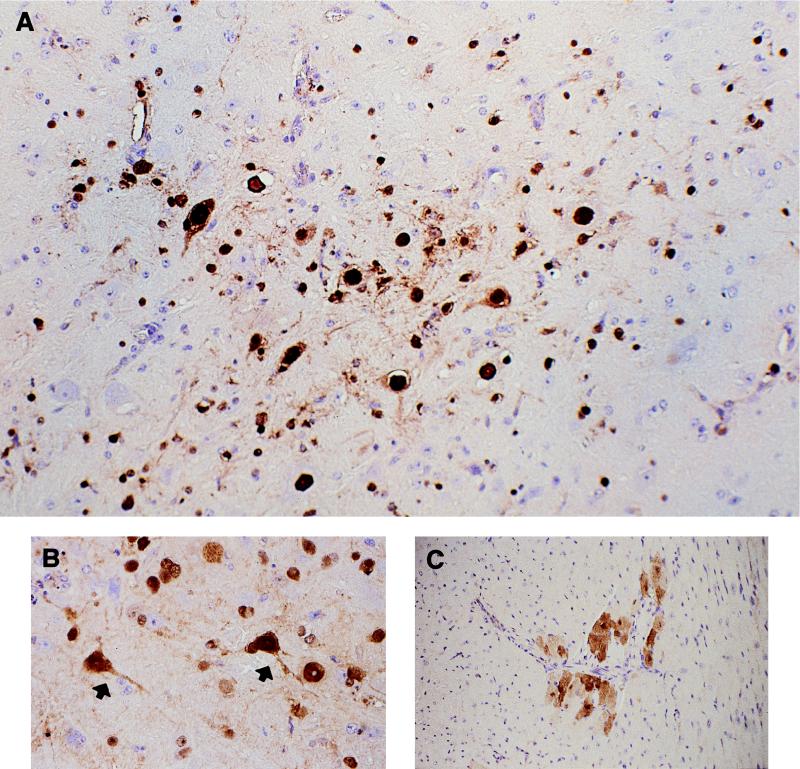
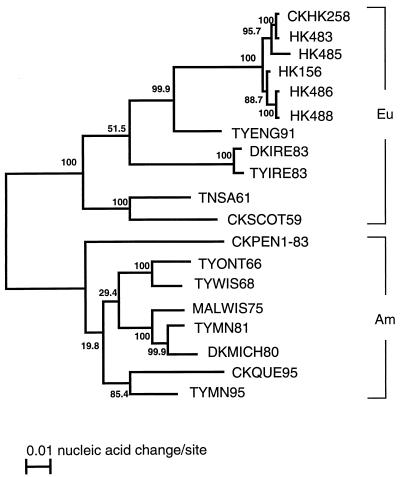
An H5N1 avian influenza A virus was transmitted to humans in Hong Kong in 1997. Although the virus causes systemic infection and is highly lethal in chickens because of the susceptibility of the hemagglutinin to furin and PC6 proteases, it is not known whether it also causes systemic infection in humans. The clinical outcomes of infection in Hong Kong residents ranged widely, from mild respiratory disease to multiple organ failure leading to death. Therefore, to understand the pathogenesis of influenza due to these H5N1 isolates, we investigated their virulence in mice. The results identified two distinct groups of viruses: group 1, for which the dose lethal for 50% of mice (MLD50) was between 0.3 and 11 PFU, and group 2, for which the MLD50 was more than 10(3) PFU. One day after intranasal inoculation of mice with 100 PFU of group 1 viruses, the virus titer in lungs was 10(7) PFU/g or 3 log units higher than that for group 2 viruses. Both types of viruses had replicated to high titers (>10(6) PFU/g) in the lungs by day 3 and maintained these titers through day 6. More importantly, only the group 1 viruses caused systemic infection, replicating in nonrespiratory organs, including the brain. Immunohistochemical analysis demonstrated the replication of a group 1 virus in brain neurons and glial cells and in cardiac myofibers. Phylogenetic analysis of all viral genes showed that both groups of Hong Kong H5N1 viruses had formed a lineage distinct from those of other viruses and that genetic reassortment between H5N1 and H1 or H3 human viruses had not occurred. Since mice and humans harbor both the furin and the PC6 proteases, we suggest that the virulence mechanism responsible for the lethality of influenza viruses in birds also operates in mammalian hosts. The failure of some H5N1 viruses to produce systemic infection in our model indicates that multiple, still-to-be-identified, factors contribute to the severity of H5N1 infection in mammals. In addition, the ability of these viruses to produce systemic infection in mice and the clear differences in pathogenicity among the isolates studied here indicate that this system provides a useful model for studying the pathogenesis of avian influenza virus infection in mammals.
Figures
References
-
- Bean W J, Sriram G, Webster R G. Electrophoretic analysis of iodine-labeled influenza virus RNA segments. Anal Biochem. 1980;102:228–232. - PubMed
-
- Centers for Disease Control and Prevention. Isolation of avian influenza A (H5N1) viruses from humans—Hong Kong, May–December 1997. Morbid Mortal Weekly Rep. 1997;46:1204–1207. - PubMed
-
- Centers for Disease Control and Prevention. Update: isolation of avian influenza A (H5N1) viruses from humans—Hong Kong, 1997–1998. Morbid Mortal Weekly Rep. 1998;46:1245–1247. - PubMed
-
- Claas E C J, Osterhaus A D M E, Van Beek R, De Jong J C, Rimmelzwaan G F, Senne D A, Krauss S, Shortridge K F, Webster R G. Human influenza A H5N1 virus related to a highly pathogenic avian influenza virus. Lancet. 1998;351:472–477. - PubMed
Publication types
MeSH terms
Grants and funding
LinkOut - more resources
Full Text Sources
Other Literature Sources
Medical
