


Fatal disseminated Trichoderma longibrachiatum infection in an adult bone marrow transplant patient: species identification and review of the literature
- PMID: 10074541
- PMCID: PMC88664
- DOI: 10.1128/JCM.37.4.1154-1160.1999
Fatal disseminated Trichoderma longibrachiatum infection in an adult bone marrow transplant patient: species identification and review of the literature
Abstract
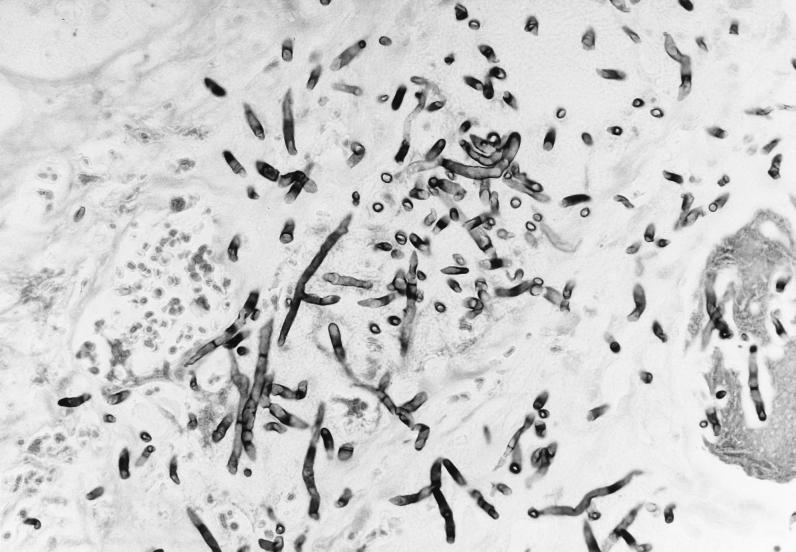
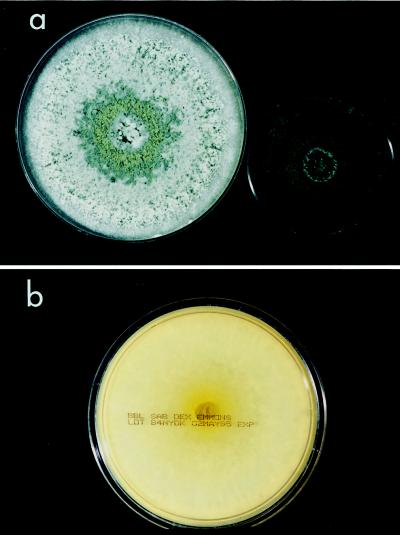
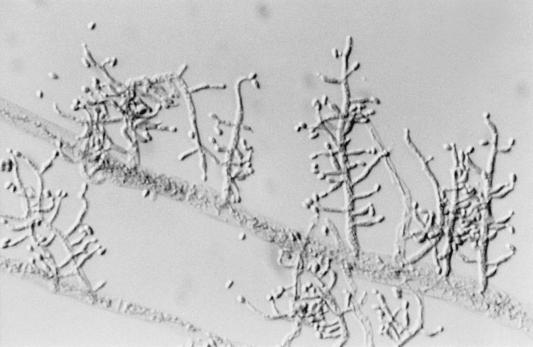
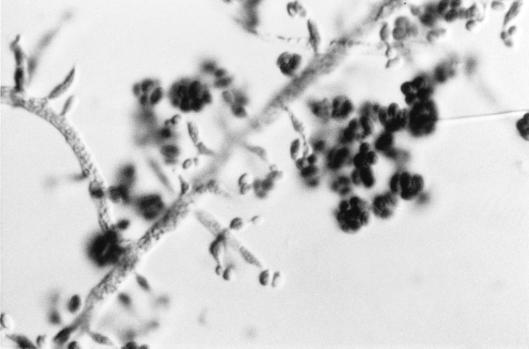
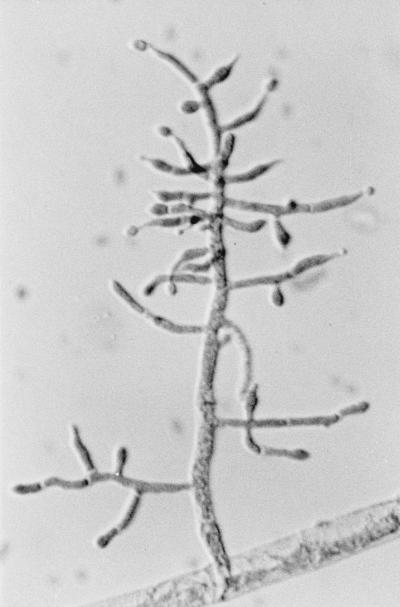
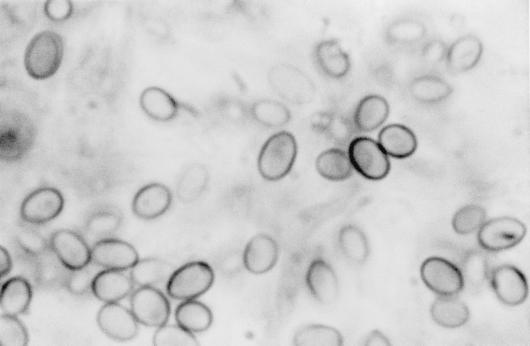
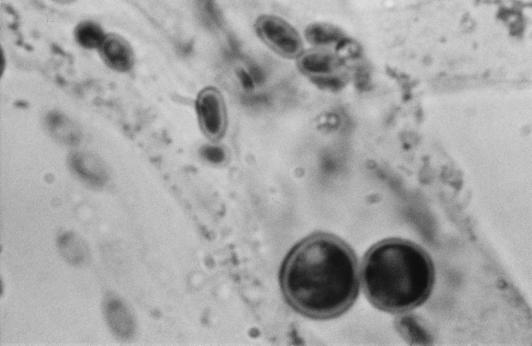
Trichoderma longibrachiatum was recovered from stool surveillance cultures and a perirectal ulcer biopsy specimen from a 29-year-old male who had received an allogeneic bone marrow transplant for acute lymphoblastic leukemia. The amphotericin B (2.0 microgram/ml) and itraconazole (1.0 microgram/ml) MICs for the organism were elevated. Therapy with these agents was unsuccessful, and the patient died on day 58 posttransplantation. At autopsy, histologic sections from the lungs, liver, brain, and intestinal wall showed infiltration by branching septate hyphae. Cultures were positive for Trichoderma longibrachiatum. While Trichoderma species have been recognized to be pathogenic in profoundly immunosuppressed hosts with increasing frequency, this is the first report of probable acquisition through the gastrointestinal tract. Salient features regarding the identification of molds in the Trichoderma longibrachiatum species aggregate are presented.
Figures
References
-
- Beck-Sague C M, Jarvis W R the National Nosocomial Infections Surveillance System. Secular trends in the epidemiology of nosocomial fungal infections in the United States, 1980–1990. J Infect Dis. 1993;167:1247–1251. - PubMed
-
- Bissett J. A revision of the genus Trichoderma. I. Section Longibrachiatum sect. nov. Can J Bot. 1984;62:924–931.
-
- Bissett J. A revision of the genus Trichoderma. IV. Additional notes on section Longibrachiatum. Can J Bot. 1991;69:2418–2420.
-
- Boutati E I, Anaissie E J. Fusarium, a significant emerging pathogen in patients with hematologic malignancy: ten years’ experience at a cancer center and implications for management. Blood. 1997;90:999–1008. - PubMed
-
- Castagnola E, Bussi B, Viscoli C. Fungal infections in patients undergoing bone marrow transplantation: an approach to a rational management protocol. Bone Marrow Transplant. 1996;18(Suppl. 2):97–106. - PubMed
Publication types
MeSH terms
Substances
LinkOut - more resources
Full Text Sources
Medical
