


Insulin increases near-membrane but not global Ca2+ in isolated skeletal muscle
- PMID: 10077675
- PMCID: PMC15933
- DOI: 10.1073/pnas.96.6.3281
Insulin increases near-membrane but not global Ca2+ in isolated skeletal muscle
Abstract
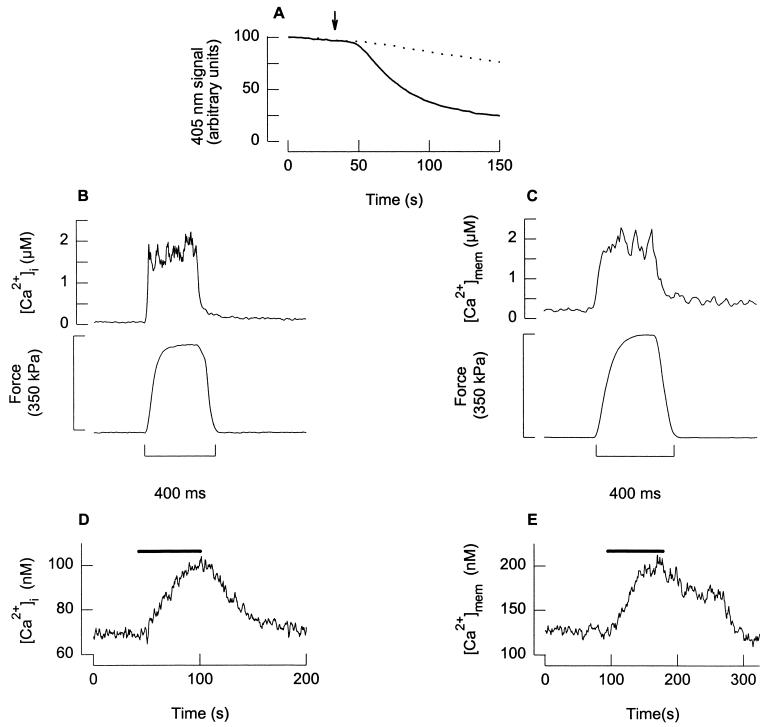
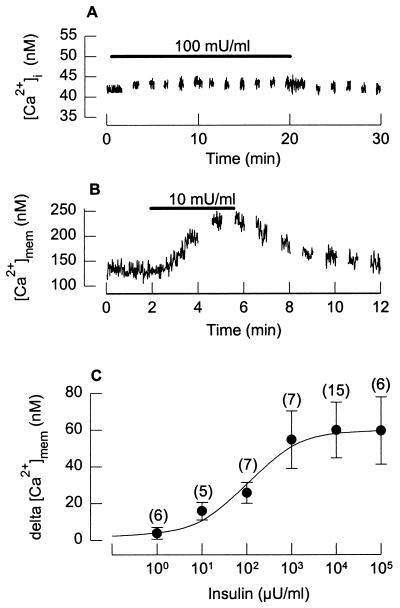
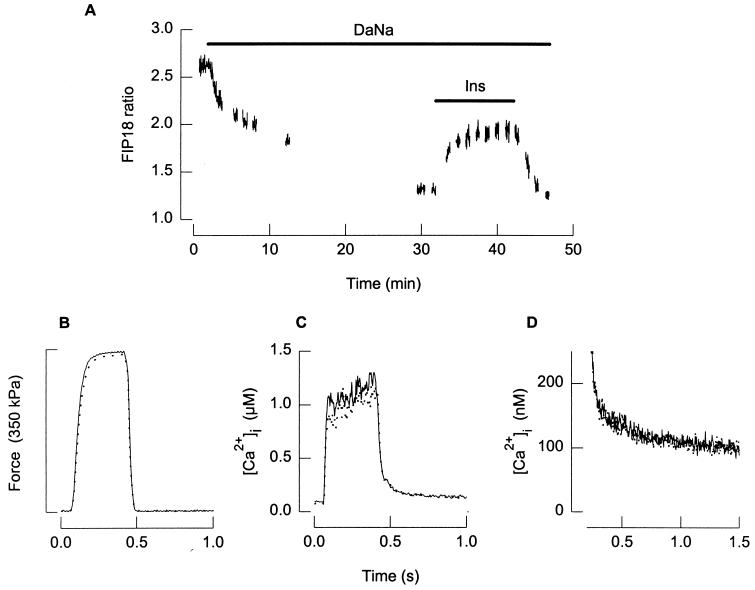
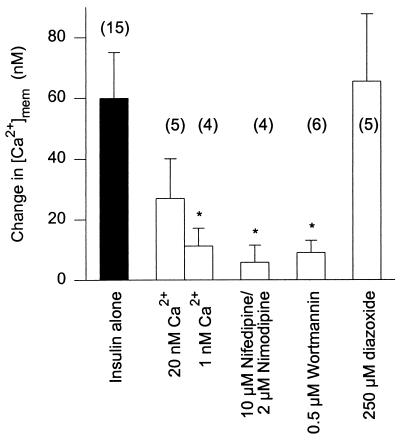
It has long been debated whether changes in Ca2+ are involved in insulin-stimulated glucose uptake in skeletal muscle. We have now investigated the effect of insulin on the global free myoplasmic Ca2+ concentration and the near-membrane free Ca2+ concentration ([Ca2+]mem) in intact, single skeletal muscle fibers from mice by using fluorescent Ca2+ indicators. Insulin has no effect on the global free myoplasmic Ca2+ concentration. However, insulin increases [Ca2+]mem by approximately 70% and the half-maximal increase in [Ca2+]mem occurs at an insulin concentration of 110 microunits per ml. The increase in [Ca2+]mem by insulin persists when sarcoplasmic reticulum Ca2+ release is inhibited but is lost by perfusing the fiber with a low Ca2+ medium or by addition of L-type Ca2+ channel inhibitors. Thus, insulin appears to stimulate Ca2+ entry into muscle cells via L-type Ca2+ channels. Wortmannin, which inhibits insulin-mediated activation of glucose transport in isolated skeletal muscle, also inhibits the insulin-mediated increase in [Ca2+]mem. These data demonstrate a new facet of insulin signaling and indicate that insulin-mediated increases in [Ca2+]mem in skeletal muscle may underlie important actions of the hormone.
Figures
References
-
- Borkman M, Storlein L H, Pan D A, Jenkins A B, Chisholm D J, Campbell L V. N Engl J Med. 1993;328:238–244. - PubMed
-
- Saltiel A R. Am J Physiol. 1996;270:E375–E385. - PubMed
-
- Villar-Palasi C, Guinovart J J. FASEB J. 1997;11:544–558. - PubMed
-
- Draznin B, Reusch J E-B. In: Diabetes Mellitus. Leroith D, Taylor S I, Olefsky J M, editors. Philadelphia: Lippincott-Raven; 1996. pp. 227–234.
Publication types
MeSH terms
Substances
LinkOut - more resources
Full Text Sources
Other Literature Sources
Medical
Miscellaneous
