Quality of life four years after acute myocardial infarction: short form 36 scores compared with a normal population
- PMID: 10092560
- PMCID: PMC1728997
- DOI: 10.1136/hrt.81.4.352
Quality of life four years after acute myocardial infarction: short form 36 scores compared with a normal population
Abstract
Objectives: To assess the impact of myocardial infarction on quality of life in four year survivors compared to data from "community norms", and to determine factors associated with a poor quality of life.
Design: Cohort study based on the Nottingham heart attack register.
Setting: Two district general hospitals serving a defined urban/rural population.
Subjects: All patients admitted with acute myocardial infarction during 1992 and alive at a median of four years.
Main outcome measures: Short form 36 (SF 36) domain and overall scores.
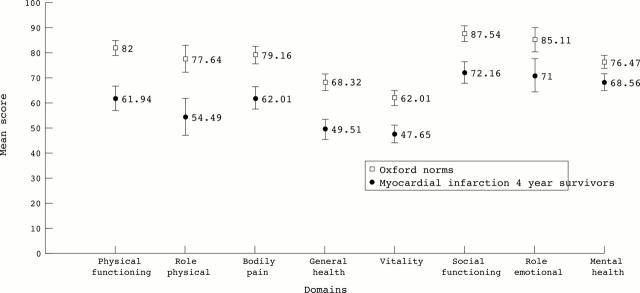
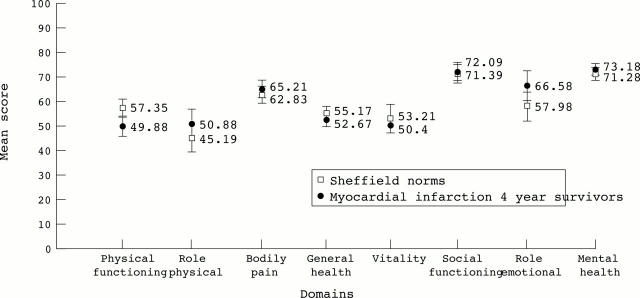
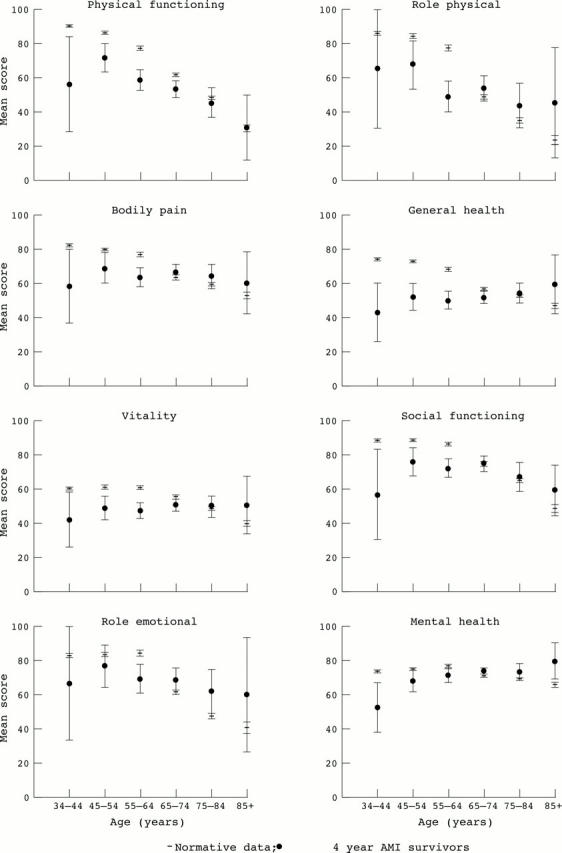
Results: Of 900 patients with an acute myocardial infarction in 1992, there were 476 patients alive and capable of responding to a questionnaire in 1997. The response rate was 424 (89. 1%). Compared to age and sex adjusted normative data, patients aged under 65 years exhibited impairment in all eight domains, the largest differences being in physical functioning (mean difference 20 points), role physical (mean difference 23 points), and general health (mean difference 19 points). In patients over 65 years mean domain scores were similar to community norms. Multiple regression analysis revealed that impaired quality of life was closely associated with inability to return to work through ill health, a need for coronary revascularisation, the use of anxiolytics, hypnotics or inhalers, the need for two or more angina drugs, a frequency of chest pain one or more times per week, and a Rose dyspnoea score of >/= 2.
Conclusions: The SF 36 provides valuable additional information for the practising clinician. Compared to community norms the greatest impact on quality of life is seen in patients of working age. Impaired quality of life was reported by patients unfit for work, those with angina and dyspnoea, patients with coexistent lung disease, and those with anxiety and sleep disturbances. Improving quality of life after myocardial infarction remains a challenge for physicians.
Figures
Comment in
-
Quality of life four years after myocardial infarction: short form 36 scores compared with a normal population.Heart. 2000 Jan;83(1):104-5. doi: 10.1136/heart.83.1.103b. Heart. 2000. PMID: 10671073 Free PMC article. No abstract available.
References
Publication types
MeSH terms
LinkOut - more resources
Full Text Sources
Medical