. 1999 Mar 30;96(7):3404-11.
doi: 10.1073/pnas.96.7.3404.

Biological impact on mineral dissolution: application of the lichen model to understanding mineral weathering in the rhizosphere

Affiliations

Biological impact on mineral dissolution: application of the lichen model to understanding mineral weathering in the rhizosphere

J F Banfield et al. Proc Natl Acad Sci U S A. .

Abstract

Microorganisms modify rates and mechanisms of chemical and physical weathering and clay growth, thus playing fundamental roles in soil and sediment formation. Because processes in soils are inherently complex and difficult to study, we employ a model based on the lichen-mineral system to identify the fundamental interactions. Fixed carbon released by the photosynthetic symbiont stimulates growth of fungi and other microorganisms. These microorganisms directly or indirectly induce mineral disaggregation, hydration, dissolution, and secondary mineral formation. Model polysaccharides were used to investigate direct mediation of mineral surface reactions by extracellular polymers. Polysaccharides can suppress or enhance rates of chemical weathering by up to three orders of magnitude, depending on the pH, mineral surface structure and composition, and organic functional groups. Mg, Mn, Fe, Al, and Si are redistributed into clays that strongly adsorb ions. Microbes contribute to dissolution of insoluble secondary phosphates, possibly via release of organic acids. These reactions significantly impact soil fertility. Below fungi-mineral interfaces, mineral surfaces are exposed to dissolved metabolic byproducts. Through this indirect process, microorganisms can accelerate mineral dissolution, leading to enhanced porosity and permeability and colonization by microbial communities.


Figures
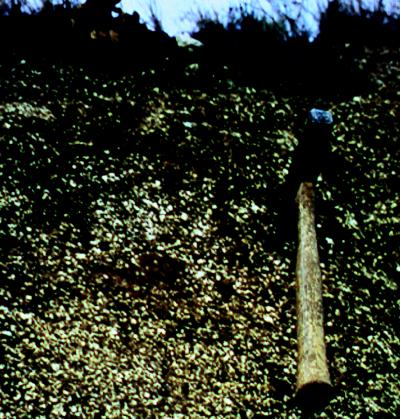
Figure 1
Figure 1
A granite weathering profile that passes from almost fresh rock (below) into soil. Characterization of the mineralogy and microbiology of samples from throughout this profile reveals chemical and physical changes that accompany soil formation.
Figure 2
Figure 2
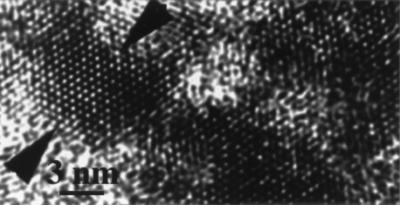
High-resolution transmission electron microscope (HRTEM) image of nanocrystalline material produced by chemical weathering.
Figure 3
Figure 3
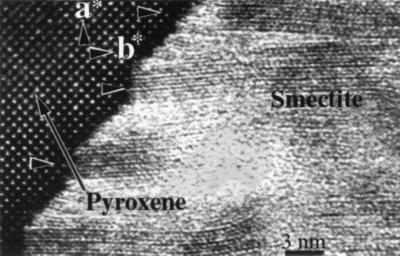
High-resolution transmission electron microscope (HRTEM) image showing clays reaction products formed during early weathering of pyroxene develop in highly specific orientations with respect to the parent structure.
Figure 4
Figure 4
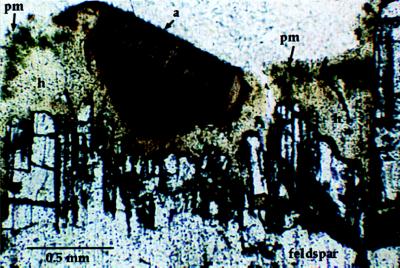
Optical micrograph showing a cross section through the lichen–feldspar interface. Photosynthetic microorganisms (pm) exist within the upper levels of a mass of fungal hyphae (h). A fungal fruiting body (a) is present in this image. Fungal hyphae contribute to physical weathering by penetrating feldspar cleavages and grain boundaries to expose the interior of crystals to microbial colonization.
Figure 5
Figure 5
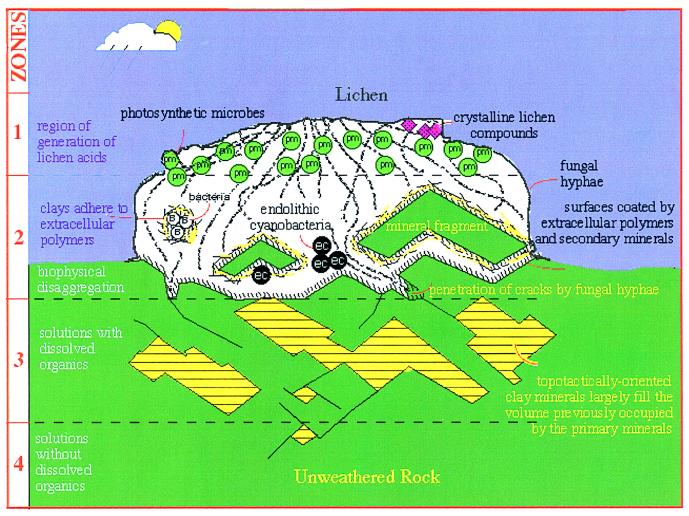
Zone model cartoon illustrating mineral weathering occurring in zones that are impacted by microbes to different degrees and in different ways. Zone 4 includes unweathered rock and rock incipiently weathered by inorganic reactions. Zone 3 is where reactions are accelerated by dissolved organic molecules (predominantly acids) but cells are in direct contact with reacting mineral surfaces. Zone 2 is the area of direct contact between microbes, organic products, including polymers, and mineral surfaces. Zone 1 is where photosynthetic members of the symbiosis generate fixed carbon and where crystalline lichen acids precipitate.
Figure 6
Figure 6
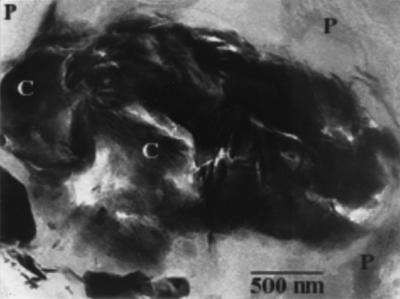
This energy-filtered transmission electron microscope (EFTEM) zero loss image reveals that complex mixtures of organic polymers (p) and clay minerals (c) exist at the lichen–microbe interface.
Figure 7
Figure 7
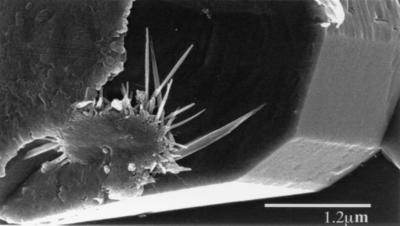
Secondary phosphate minerals formed on the surface of apatite during the early stages of weathering. These insoluble phases bind P in a relatively nonbioavailable form.
Figure 8
Figure 8
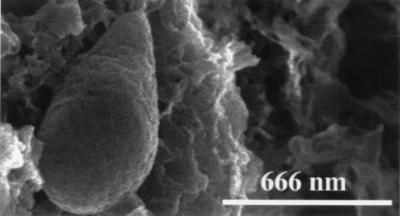
Microorganisms colonize surfaces of secondary minerals in pits formed by apatite dissolution. Microbial processes mobilize phosphorus from insoluble secondary phases.
Figure 9
Figure 9
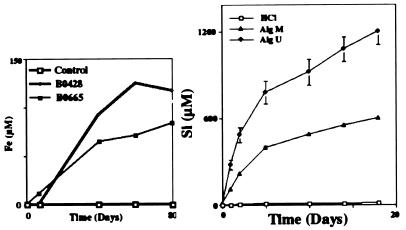
(Left) Fe released from biotite to solution in three experiments, two of which used bacterial cultures (B0428 and B0665) and one that was a control experiment. Significant enhancement of biotite dissolution rate is observed. (Right) Results of a feldspar dissolution experiment (pH 4.0) using undifferentiated and medium molecular weight polysaccharides demonstrate enhanced feldspar dissolution by two to three orders of magnitude under some conditions.

References

    1. Banfield J F, Nealson K H. Rev Mineral. 1997;35:1.
    1. Vincent W F, James M R. Biodivers Conserv. 1996;5:1451.
    1. Vishniac H S. Biodivers Conserv. 1996;5:1356.
    1. Broady P A. Biodivers Conserv. 1996;5:1307.
    1. Johnston C G, Vestal J R. Microb Ecol. 1993;25:305. - PubMed

LinkOut - more resources