


A logical analysis of T cell activation and anergy
- PMID: 10097134
- PMCID: PMC22391
- DOI: 10.1073/pnas.96.7.3894
A logical analysis of T cell activation and anergy
Abstract
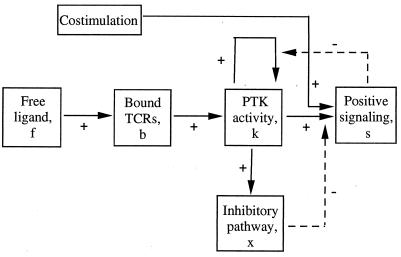
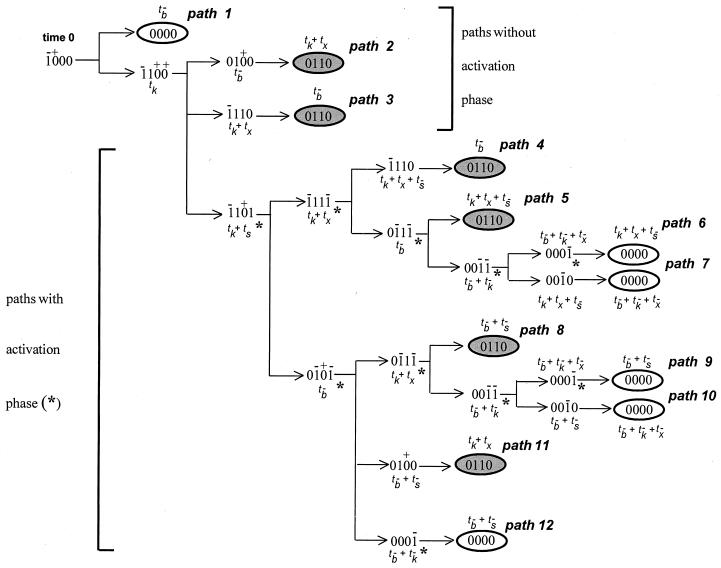
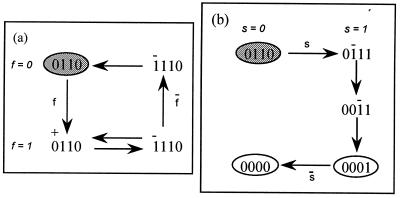
Interaction of the antigen-specific receptor of T lymphocytes with its antigenic ligand can lead either to cell activation or to a state of profound unresponsiveness (anergy). Although subtle changes in the nature of the ligand or of the antigen-presenting cell have been shown to affect the outcome of T cell receptor ligation, the mechanism by which the same receptor can induce alternative cellular responses is not completely understood. A model for explaining both positive (cell proliferation and cytokine production) and negative (anergy induction) signaling of T lymphocytes is described herein. This model relies on the autophosphorylative properties of the tyrosine kinases associated with the T cell receptor. One of its basic assumptions is that the kinase activity of these receptor-associated enzymes remains above background level after ligand removal and is responsible for cellular unresponsiveness. Using a simple Boolean formalism, we show how the timing of the binding and intracellular signal-transduction events can affect the properties of receptor signaling and determine the type of cellular response. The present approach integrates into a common framework a large body of experimental observations and allows specification of conditions leading to cellular activation or to anergy.
Figures
References
-
- Sloan-Lancaster J, Evavold B D, Allen P M. Nature (London) 1993;363:156–159. - PubMed
-
- Jameson S C, Bevan M J. Immunity. 1995;2:1–11. - PubMed
-
- Rabinowitz J D, Beeson C, Wülfing C, Tate K, Allen P M, Davis M M, McConnell H M. Immunity. 1996;5:125–135. - PubMed
-
- DeSilva D R, Urdahl K B, Jenkins M. J Immunol. 1991;147:3261–3267. - PubMed
Publication types
MeSH terms
Substances
LinkOut - more resources
Full Text Sources
