


Anti-phospholipid antibodies and CD5+ B cells in HIV infection
- PMID: 10193419
- PMCID: PMC1905258
- DOI: 10.1046/j.1365-2249.1999.00828.x
Anti-phospholipid antibodies and CD5+ B cells in HIV infection
Abstract
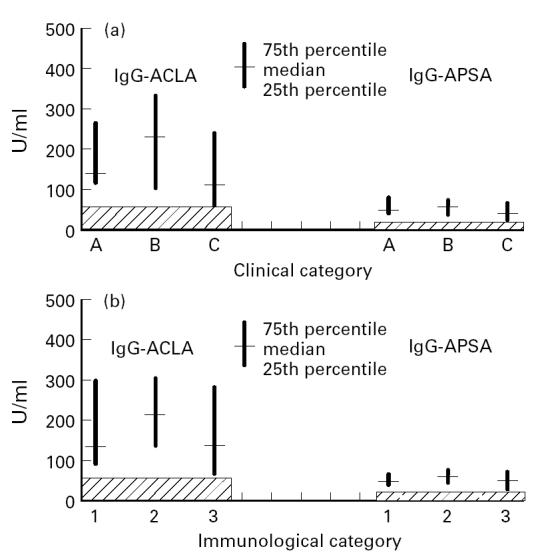
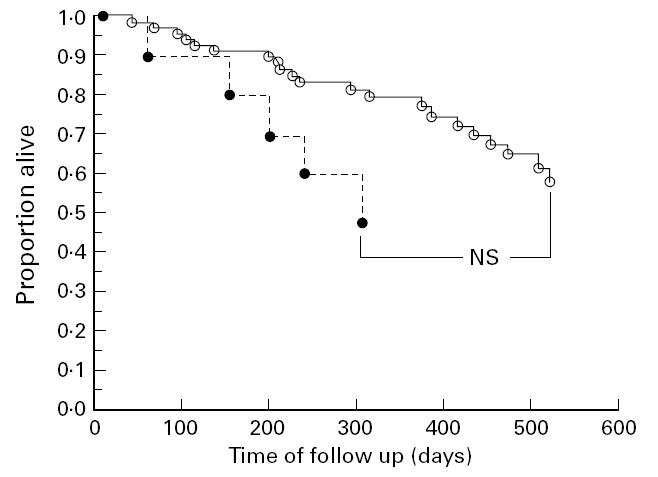
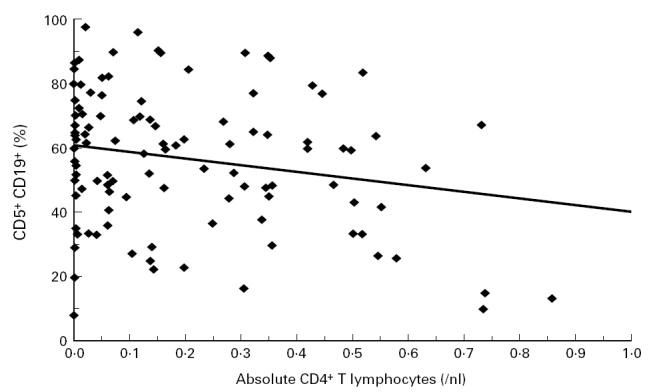
This cross-sectional study evaluates the correlation between anti-phospholipid antibodies and CD5+ B cells in 110 patients infected with HIV-1. There were 89.1% of the patients who had IgG antibodies against cardiolipin and phosphatidylserine. The prevalence of IgM and IgA antibodies was < 22%. AIDS was associated with lower frequencies of IgM antibodies against cardiolipin (P = 0.05) and IgG-antibodies against cardiolipin and phosphatidylserine (P = 0.011). Drug users had higher IgM antibodies against phospholipids than patients from other risk groups (P = 0.02). A history of thromboembolic events was not accompanied by higher levels of anti-phospholipid antibodies (P > 0.2). No correlation between anti-phospholipid antibodies and CD5+ B cells was detected. Percentage part of CD5+ B lymphocytes was elevated in all patients and absolute CD4+ T lymphocyte counts and HIV p24 antigen were inversely correlated. In advanced disease a significant reduction of anti-phospholipid antibodies was contrasted with persistent elevation of CD5+ B lymphocytes. These observations may reflect immunological dysfunction involving apoptosis and endothelial damage rather than polyclonal B cell hyperstimulation. A possible explanation would be that in HIV infection an increased rate of spontaneous apoptosis in peripheral blood lymphocytes is accompanied by functional and structural changes of mitochondria. Therefore, structurally altered mitochondrial phospholipids could serve as antigen to induce specific humoral immune responses.
Figures
References
-
- Pantaleo G, Fauci AC. New concepts in the immunopathogenesis of HIV infection. Annu Rev Immunol. 1995;15:487–512. - PubMed
-
- Lane CH, Masur H, Edgar LC, Wahlen G, Rook G, Fauci AS. Abnormalities of B-cell activation and immunoregulation in patients with the acquired immunodeficiency syndrome. N Engl J Med. 1983;309:453–8. - PubMed
-
- Schnittman SM, Lane CH, Higgins S, Folks T, Fauci AS. Direct polyclonal activation of human B lymphocytes by acquired immunodeficiency syndrome virus. Science. 1986;233:1084–6. - PubMed
-
- Chirmule N, Oyaizu N, Saxinger C, Pahwa S. Nef protein of HIV-1 has B-cell stimulatory activity. AIDS. 1994;8:733–9. - PubMed
MeSH terms
Substances
LinkOut - more resources
Full Text Sources
Other Literature Sources
Medical
Research Materials
Miscellaneous
