Selective stimulation of colonic transit by the benzofuran 5HT4 agonist, prucalopride, in healthy humans
- PMID: 10205205
- PMCID: PMC1727485
- DOI: 10.1136/gut.44.5.682
Selective stimulation of colonic transit by the benzofuran 5HT4 agonist, prucalopride, in healthy humans
Abstract
Background: Prucalopride (R093877) is a selective and specific 5HT4 agonist, the first of a new chemical class of benzofurans, with gastrointestinal prokinetic activities in vitro.
Aims: To evaluate the effects of prucalopride on gastrointestinal and colonic transit.
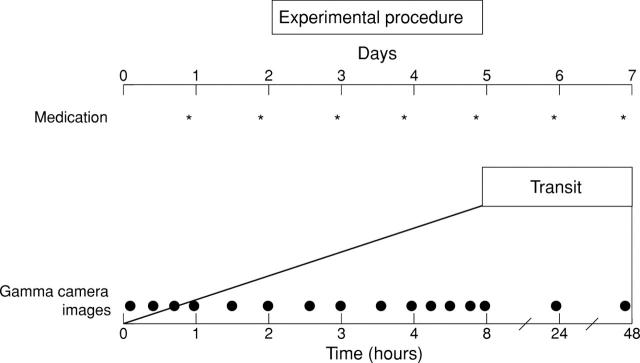
Methods: A validated scintigraphic technique was used to measure gastrointestinal and colonic transit over 48 hours in 50 healthy volunteers. For seven days, each subject received a daily dose of 0. 5, 1, 2, or 4 mg prucalopride, or placebo in a double blind, randomised fashion. The transit test was performed over the last 48 hours.
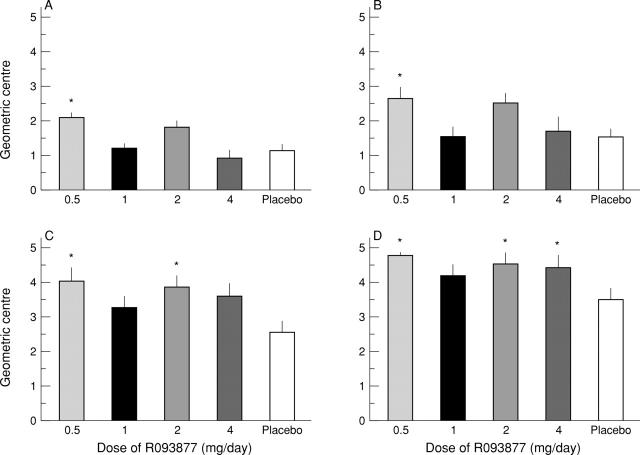
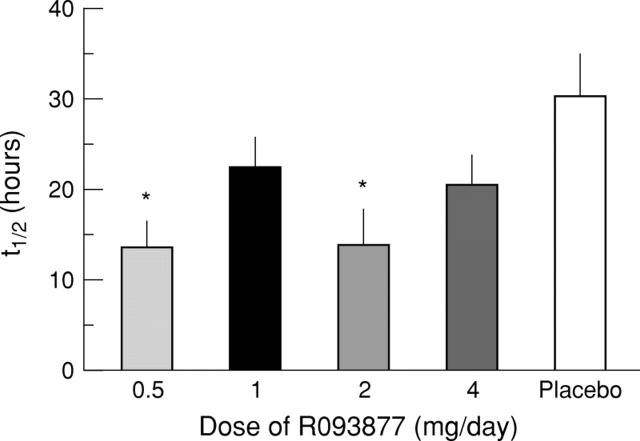
Results: There were significant accelerations of overall colonic transit at 4, 8, 24, and 48 hours (p<0.05) and proximal colonic emptying t1/2 (p<0.05). The 0.5, 2, and 4 mg doses of prucalopride were almost equally effective and accelerated colonic transit compared with placebo. Prucalopride did not significantly alter gastric emptying (p>0.5) or small bowel transit (overall p=0. 12). The medication appeared to be well tolerated during the seven day treatment of healthy subjects.
Conclusion: Prucalopride accelerates colonic transit, partly by stimulating proximal colonic emptying, but does not alter gastric or small bowel transit in healthy human subjects. Prucalopride deserves further study in patients with constipation.
Figures
References
Publication types
MeSH terms
Substances
Grants and funding
LinkOut - more resources
Full Text Sources
Other Literature Sources