


Targeted cytoplasmic irradiation with alpha particles induces mutations in mammalian cells
- PMID: 10220401
- PMCID: PMC21799
- DOI: 10.1073/pnas.96.9.4959
Targeted cytoplasmic irradiation with alpha particles induces mutations in mammalian cells
Abstract
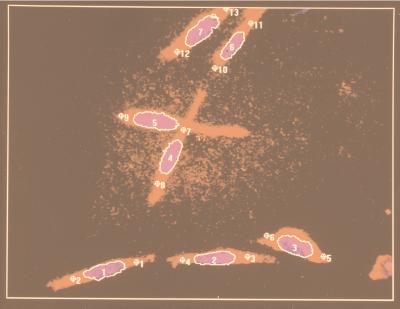
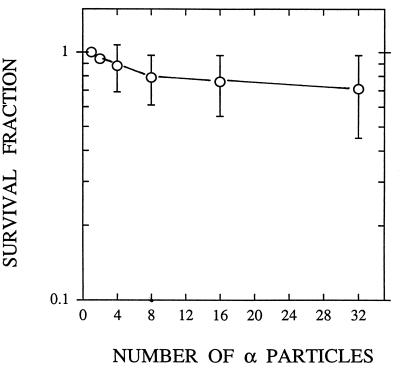
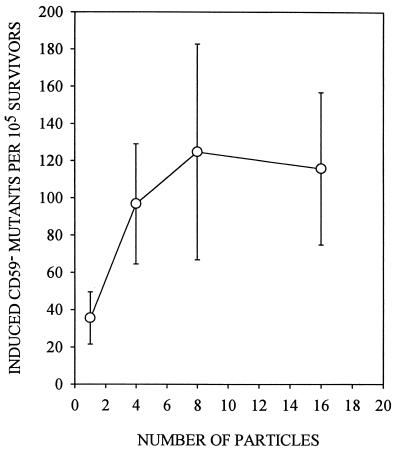
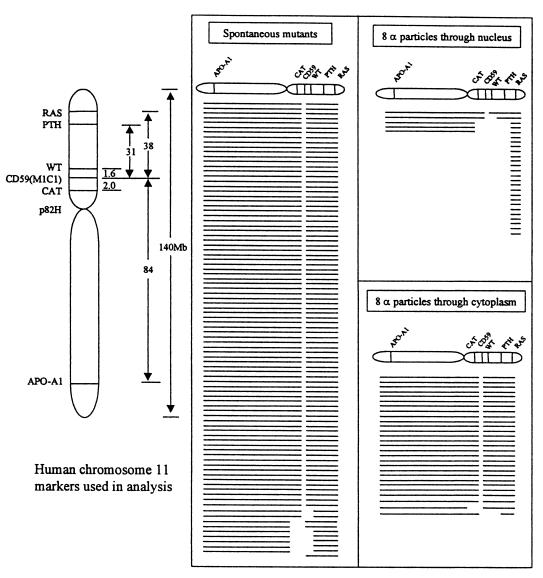
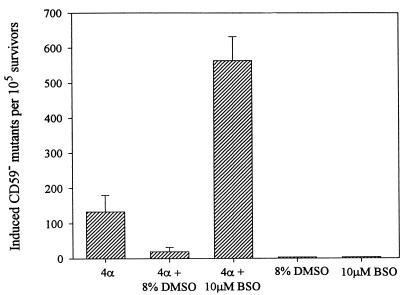
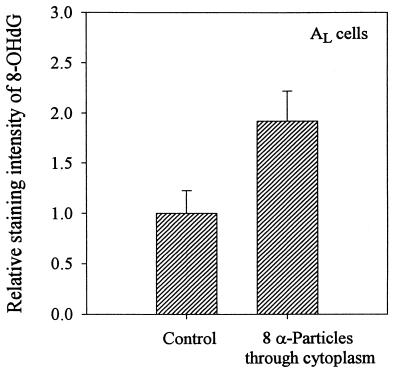
Ever since x-rays were shown to induce mutation in Drosophila more than 70 years ago, prevailing dogma considered the genotoxic effects of ionizing radiation, such as mutations and carcinogenesis, as being due mostly to direct damage to the nucleus. Although there was indication that alpha particle traversal through cellular cytoplasm was innocuous, the full impact remained unknown. The availability of the microbeam at the Radiological Research Accelerator Facility of Columbia University made it possible to target and irradiate the cytoplasm of individual cells in a highly localized spatial region. By using dual fluorochrome dyes (Hoechst and Nile Red) to locate nucleus and cellular cytoplasm, respectively, thereby avoiding inadvertent traversal of nuclei, we show here that cytoplasmic irradiation is mutagenic at the CD59 (S1) locus of human-hamster hybrid (AL) cells, while inflicting minimal cytotoxicity. The principal class of mutations induced are similar to those of spontaneous origin and are entirely different from those of nuclear irradiation. Furthermore, experiments with radical scavenger and inhibitor of intracellular glutathione indicated that the mutagenicity of cytoplasmic irradiation depends on generation of reactive oxygen species. These findings suggest that cytoplasm is an important target for genotoxic effects of ionizing radiation, particularly radon, the second leading cause of lung cancer in the United States. In addition, cytoplasmic traversal by alpha particles may be more dangerous than nuclear traversal, because the mutagenicity is accomplished by little or no killing of the target cells.
Figures
References
-
- Environmental Protection Agency. Technical Support Document for Citizen’s Guide to Radon EPA 400-R-92. Washington, DC: U.S. Environmental Protection Agency; 1992.
-
- National Council on Radiation Protection and Measurements. National Council on Radiation Protection and Measurements Report No. 79. Washington, DC: Natl. Acad. Sci.; 1984.
-
- Nagasawa H, Little J B. Cancer Res. 1992;52:6394–6396. - PubMed
-
- Deshpande A, Goodwin E H, Bailey S M, Marrone B L, Lehnert B E. Radiat Res. 1996;145:260–267. - PubMed
Publication types
MeSH terms
Substances
Grants and funding
LinkOut - more resources
Full Text Sources
Other Literature Sources
Miscellaneous
