


CD4(+) T cell-mediated control of a gamma-herpesvirus in B cell-deficient mice is mediated by IFN-gamma
- PMID: 10220431
- PMCID: PMC21829
- DOI: 10.1073/pnas.96.9.5135
CD4(+) T cell-mediated control of a gamma-herpesvirus in B cell-deficient mice is mediated by IFN-gamma
Abstract
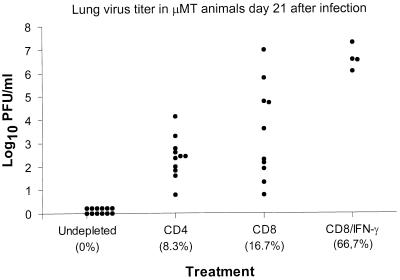
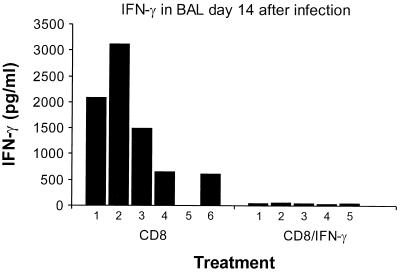
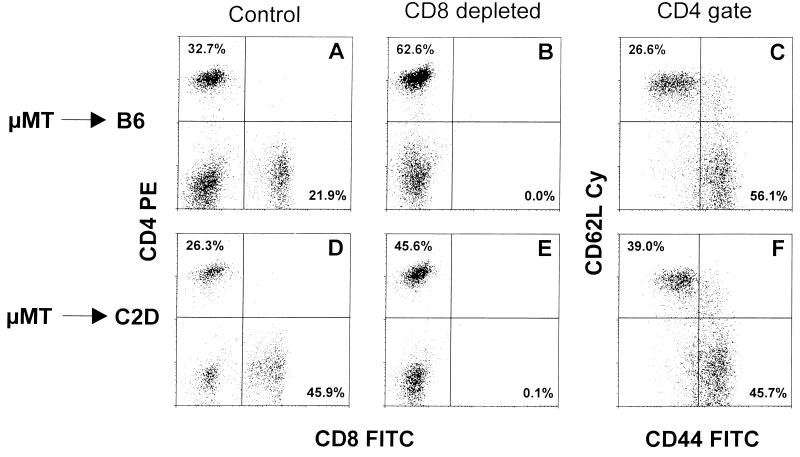
The lack of B cells and antibody does not prevent mice from dealing effectively with a pathogenic gamma-herpesvirus. Both CD4(+) and CD8(+) T cells contribute to the control of virus replication in the respiratory tract, with the depletion of either lymphocyte subset leading to increased titers in the lung. However, the further neutralization of IFN-gamma diminishes the effectiveness of the CD4(+) T cell response and causes substantially increased mortality. Experiments with bone marrow radiation chimeras indicate that the immune CD4(+) effectors operate optimally when there is the potential for direct interaction with virus-infected targets expressing MHC class II glycoproteins, suggesting that the IFN-gamma produced by these lymphocytes is functioning at short range. The numbers of latently infected cells in the spleens of carrier mice are also significantly increased by the concurrent depletion of both the CD4(+) population and IFN-gamma. These experiments raise the possibility that the defective control of intercurrent gamma-herpesvirus infections in patients with AIDS not only is due solely to the absence of helper T cells but also reflects the loss of an important set of CD4(+) effectors.
Figures
References
-
- Borysiewicz L K, Sissons J G. Curr Top Microbiol Immunol. 1994;189:123–150. - PubMed
-
- Klein G. Cell. 1994;77:791–793. - PubMed
-
- Rickinson A B, Moss D J. Annu Rev Immunol. 1997;15:405–431. - PubMed
-
- Ganem D. Curr Biol. 1995;5:469–471. - PubMed
-
- Heslop H E, Brenner M K, Rooney C. Hum Gene Ther. 1994;5:381–397. - PubMed
Publication types
MeSH terms
Substances
Grants and funding
LinkOut - more resources
Full Text Sources
Molecular Biology Databases
Research Materials
