


Tracking the intracellular path of poly(ethylenimine)/DNA complexes for gene delivery
- PMID: 10220439
- PMCID: PMC21837
- DOI: 10.1073/pnas.96.9.5177
Tracking the intracellular path of poly(ethylenimine)/DNA complexes for gene delivery
Abstract
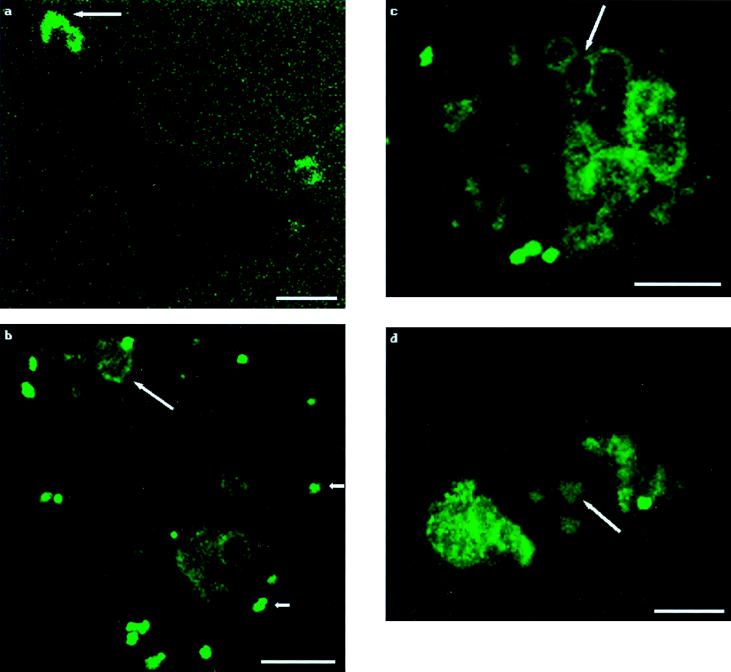
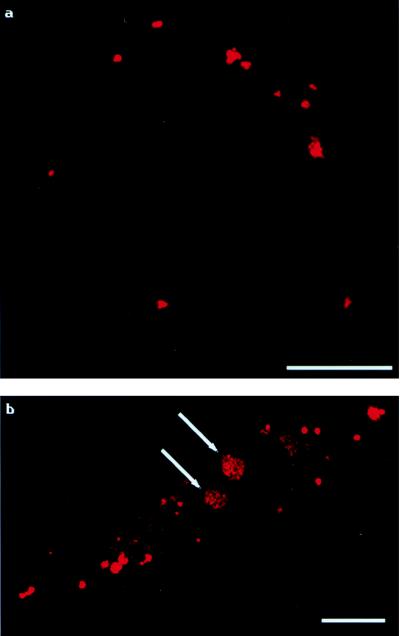
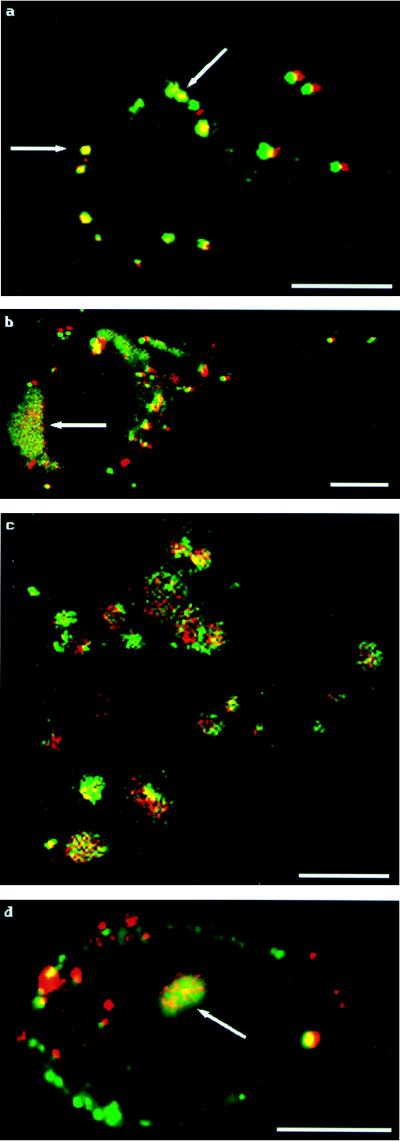
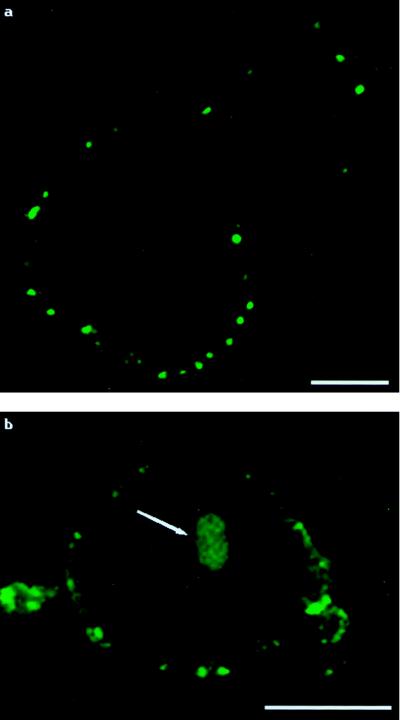
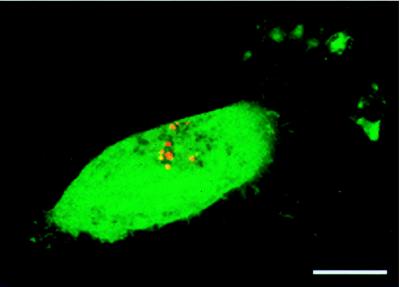
Poly(ethylenimine) (PEI) is one of a number of polycations that has been used successfully to transfer genes into living cells. Although PEI shows promise in the field of gene therapy, to date no rigorous proof of mechanism has been published regarding the fate of PEI/DNA administered for transfection. Here we show, by using fluorescent labeling and confocal microscopy, the paths of PEI/DNA complexes from endocytosis to gene expression. We found that complexes attach to cell surfaces and migrate into clumps that are endocytosed. The endocytotic vesicles grow in number and size and are occasionally seen to lyse. Most interesting is the fact that endocytosed PEI, whether administered with or without DNA, undergoes nuclear localization in the form of ordered structures.
Figures
References
-
- Lambert R C, Maulet Y, Dupont J-L, Mykita S, Craig P, Volsen S, Feltz A. Mol Cell Neurosci. 1996;7:239–246. - PubMed
-
- Boussif O, Zanta M A, Behr J P. Gene Ther. 1996;3:1074–1080. - PubMed
-
- Abdallah B, Hassan A, Benoist C, Goula D, Behr J P, Demeneix B A. Hum Gene Ther. 1996;7:1947–1954. - PubMed
-
- Boletta A, Benigni A, Lutz J, Remuzzi G, Soria M, Monaco L. Hum Gene Ther. 1997;8:1243–1251. - PubMed
Publication types
MeSH terms
Substances
LinkOut - more resources
Full Text Sources
Other Literature Sources
