


Contributions of the brain angiotensin IV-AT4 receptor subtype system to spatial learning
- PMID: 10234025
- PMCID: PMC6782731
- DOI: 10.1523/JNEUROSCI.19-10-03952.1999
Contributions of the brain angiotensin IV-AT4 receptor subtype system to spatial learning
Abstract
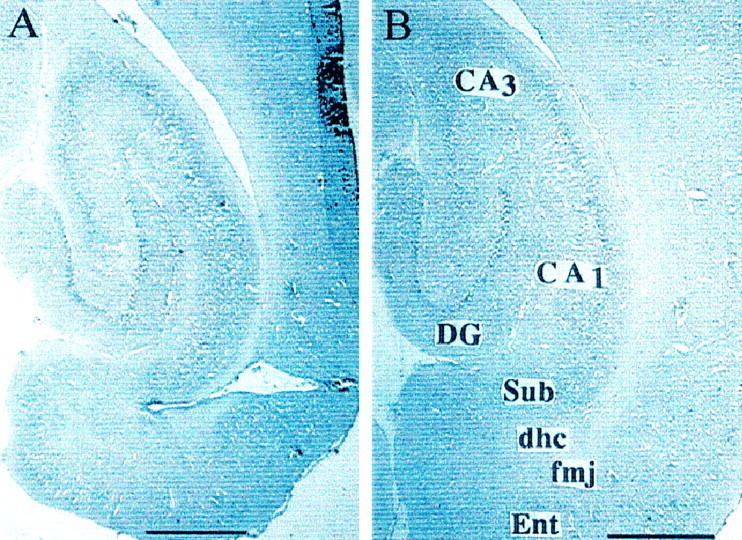
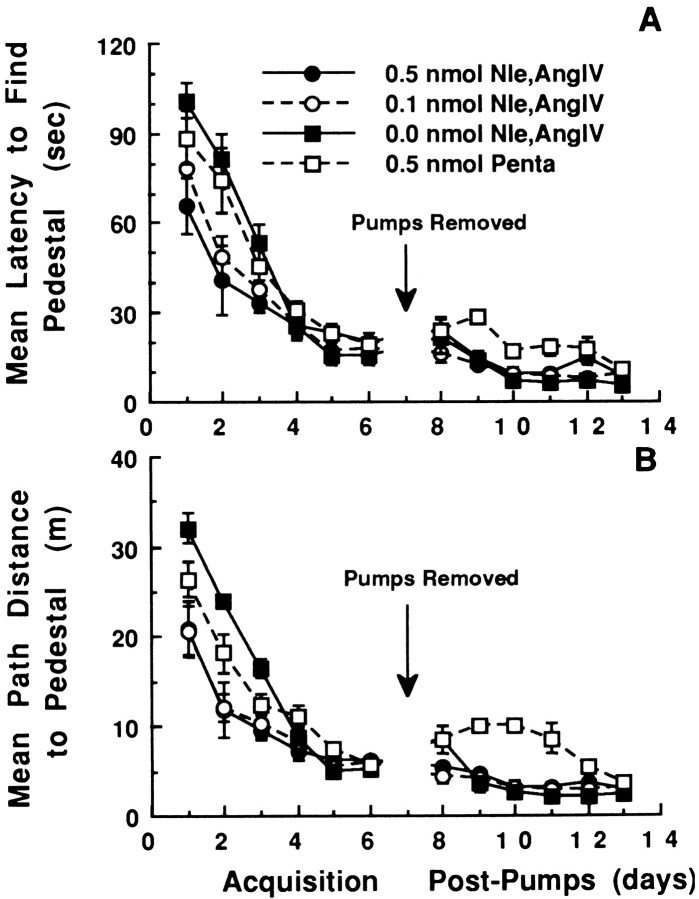
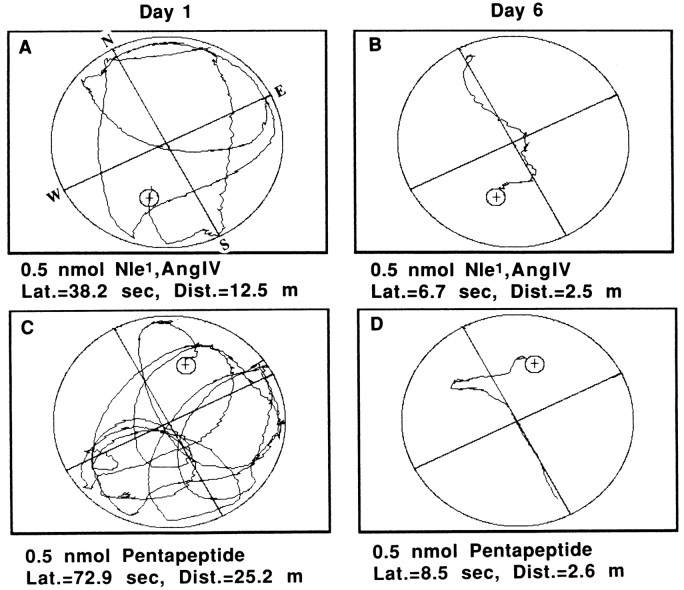
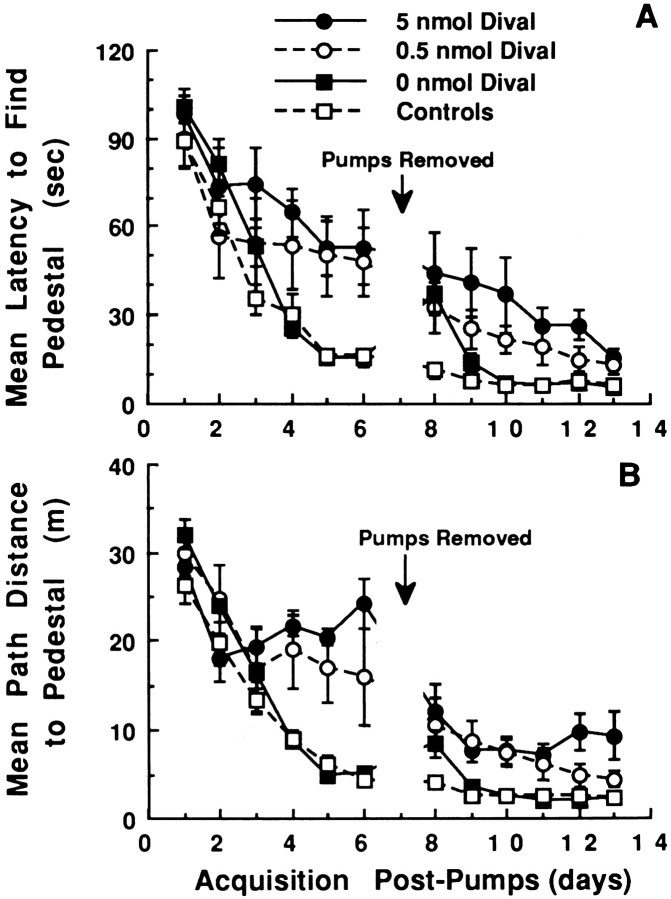
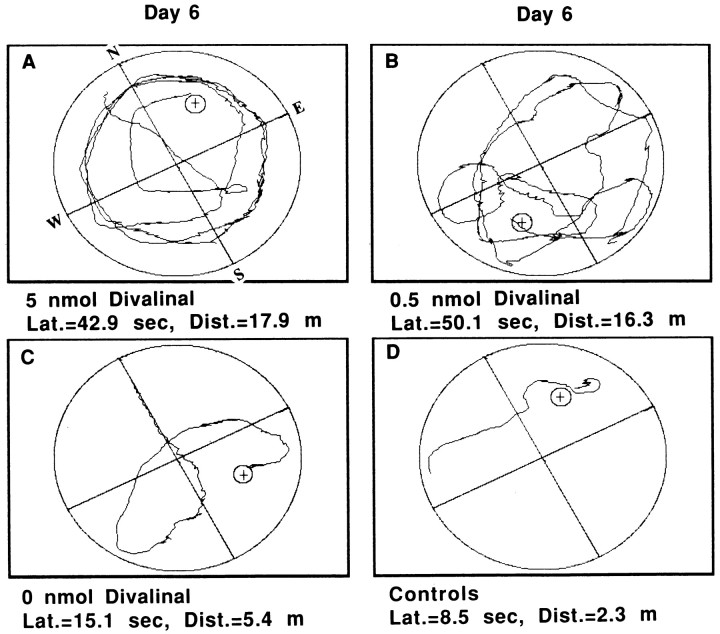
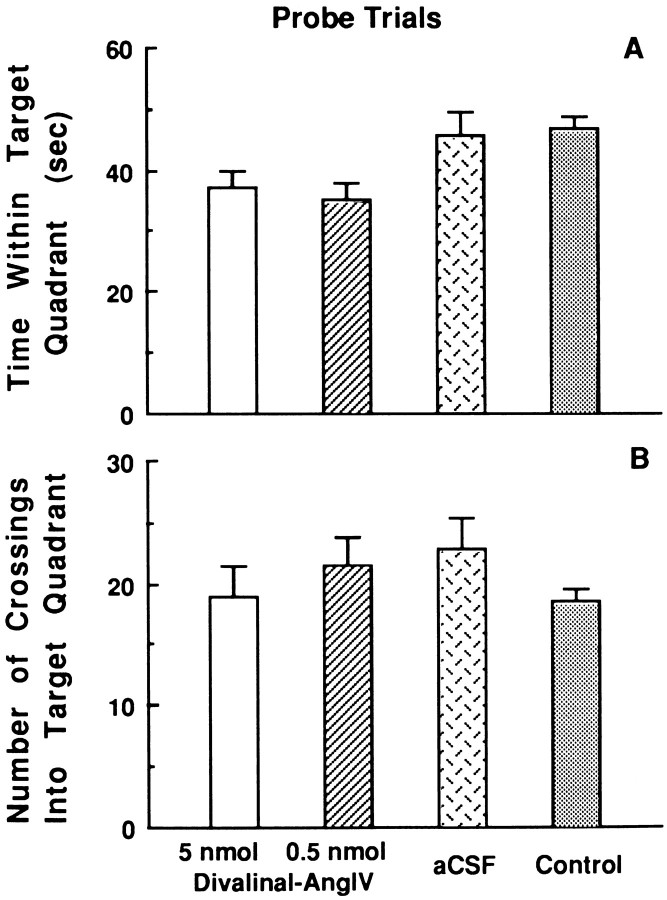
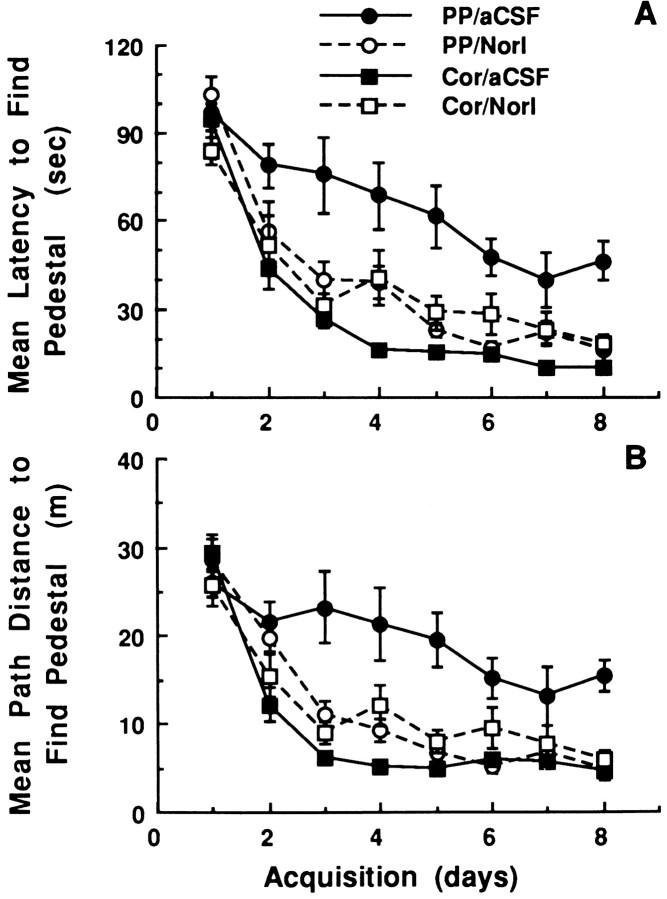
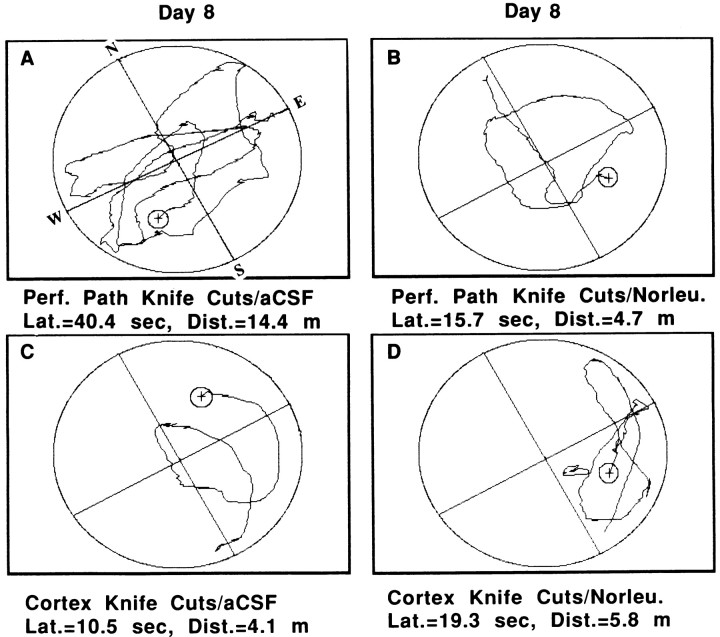
The development of navigational strategies to solve spatial problems appears to be dependent on an intact hippocampal formation. The circular water maze task requires the animal to use extramaze spatial cues to locate a pedestal positioned just below the surface of the water. Presently, we investigated the role of a recently discovered brain angiotensin receptor subtype (AT4) in the acquisition of this spatial learning task. The AT4 receptor subtype is activated by angiotensin IV (AngIV) rather than angiotensins II or III, as documented for the AT1 and AT2 receptor subtypes, and is heavily distributed in the CA1-CA3 fields of the hippocampus. Chronic intracerebroventricular infusion of a newly synthesized AT4 agonist (Norleucine1-AngIV) via osmotic pump facilitated the rate of acquisition to solve this task, whereas treatment with an AT4 receptor antagonist (Divalinal) significantly interfered with the acquisition of successful search strategies. Animals prepared with bilateral knife cuts of the perforant path, a major afferent hippocampal fiber bundle originating in the entorhinal cortex, displayed deficits in solving this task. This performance deficit could be reversed with acute intracerebroventricular infusion of a second AT4 receptor agonist (Norleucinal). These results suggest that the brain AngIV-AT4 system plays a role in the formation of spatial search strategies and memories. Further, application of an AT4 receptor agonist compensated for spatial memory deficits in performance accompanying perforant path knife cuts. Possible mechanisms underlying this compensatory effect are discussed.
Figures
Similar articles
-
A role for the angiotensin AT4 receptor subtype in overcoming scopolamine-induced spatial memory deficits.Regul Pept. 2001 Dec 15;102(2-3):147-56. doi: 10.1016/s0167-0115(01)00312-3. Regul Pept. 2001. PMID: 11730987
-
The effects of angiotensin IV analogs on long-term potentiation within the CA1 region of the hippocampus in vitro.Brain Res. 2001 Apr 6;897(1-2):114-21. doi: 10.1016/s0006-8993(01)02100-x. Brain Res. 2001. PMID: 11282364
-
Angiotensin II- and IV-induced changes in cerebral blood flow. Roles of AT1, AT2, and AT4 receptor subtypes.Regul Pept. 1997 Jan 29;68(2):131-8. doi: 10.1016/s0167-0115(96)02116-7. Regul Pept. 1997. PMID: 9110385
-
The brain angiotensin system and extracellular matrix molecules in neural plasticity, learning, and memory.Prog Neurobiol. 2004 Mar;72(4):263-93. doi: 10.1016/j.pneurobio.2004.03.003. Prog Neurobiol. 2004. PMID: 15142685 Review.
-
Important role for angiotensin III and IV in the brain renin-angiotensin system.Brain Res Brain Res Rev. 1997 Sep 30;25(1):96-124. doi: 10.1016/s0165-0173(97)00019-2. Brain Res Brain Res Rev. 1997. PMID: 9370053 Review.
Cited by
-
The effects of para-chloromercuribenzoic acid and different oxidative and sulfhydryl agents on a novel, non-AT1, non-AT2 angiotensin binding site identified as neurolysin.Regul Pept. 2013 Jun 10;184:104-14. doi: 10.1016/j.regpep.2013.03.021. Epub 2013 Mar 16. Regul Pept. 2013. PMID: 23511333 Free PMC article.
-
Central administration of angiotensin IV rapidly enhances novel object recognition among mice.Neuropharmacology. 2013 Jul;70:247-53. doi: 10.1016/j.neuropharm.2013.01.025. Epub 2013 Feb 14. Neuropharmacology. 2013. PMID: 23416700 Free PMC article.
-
A Role for the Brain RAS in Alzheimer's and Parkinson's Diseases.Front Endocrinol (Lausanne). 2013 Oct 25;4:158. doi: 10.3389/fendo.2013.00158. Front Endocrinol (Lausanne). 2013. PMID: 24298267 Free PMC article. Review.
-
Identification and development of specific inhibitors for insulin-regulated aminopeptidase as a new class of cognitive enhancers.Br J Pharmacol. 2011 Sep;164(1):37-47. doi: 10.1111/j.1476-5381.2011.01402.x. Br J Pharmacol. 2011. PMID: 21470200 Free PMC article. Review.
-
Angiotensin receptor subtype mediated physiologies and behaviors: new discoveries and clinical targets.Prog Neurobiol. 2008 Feb;84(2):157-81. doi: 10.1016/j.pneurobio.2007.10.009. Epub 2007 Nov 19. Prog Neurobiol. 2008. PMID: 18160199 Free PMC article. Review.
References
-
- Agnihotri N, Lopez-Garcia JC, Hawkins RD, Arancio O. Morphological changes associated with long-term potentiation. Histol Histopathol. 1998;13:1155–1162. - PubMed
-
- Albrecht D, Broser M, Kruger H. Excitatory action of angiotensins II and IV on hippocampal neuronal activity in urethane anesthetized rats. Regul Pept. 1997a;70:105–109. - PubMed
-
- Albrecht D, Broser M, Kruger H, Bader M. Effects of angiotensin II and IV on geniculate activity in nontransgenic and transgenic rats. Eur J Pharmacol. 1997b;332:53–63. - PubMed
-
- Braszko JJ, Kupryszewski G, Witczuk B, Wisniewski K. Angiotensin II-(3–8)-hexapeptide affects motor activity, performance of passive avoidance and a conditioned avoidance response in rats. Neuroscience. 1988;27:777–783. - PubMed
Publication types
MeSH terms
Substances
LinkOut - more resources
Full Text Sources
Other Literature Sources
Research Materials
Miscellaneous
