


Genetic diversity of the streptococcal competence (com) gene locus
- PMID: 10322016
- PMCID: PMC93770
- DOI: 10.1128/JB.181.10.3144-3154.1999
Genetic diversity of the streptococcal competence (com) gene locus
Abstract
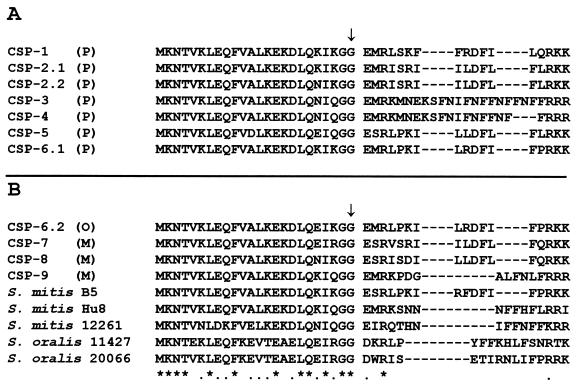
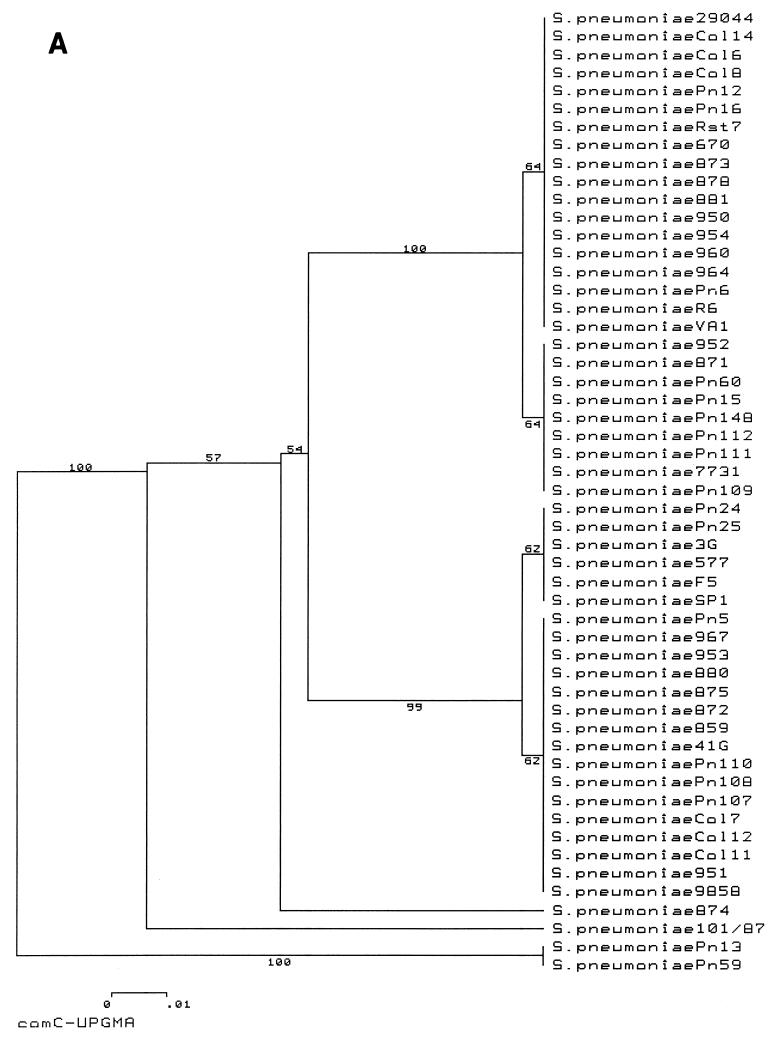
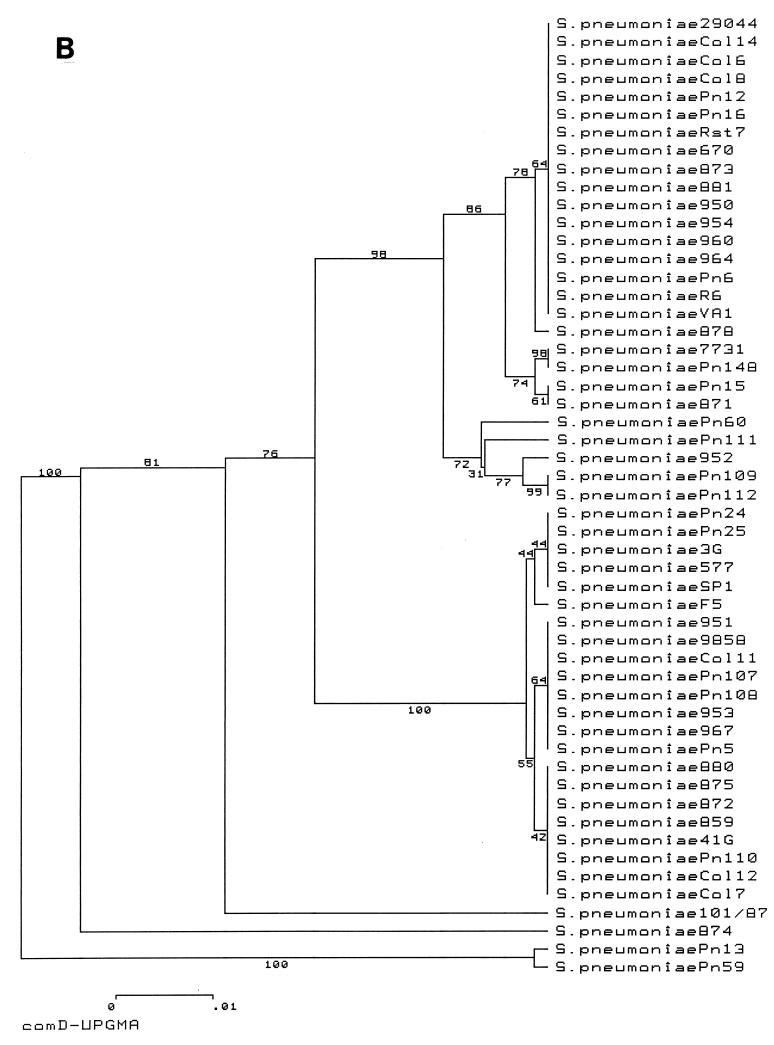
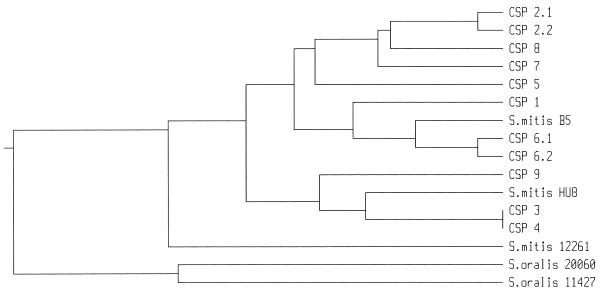
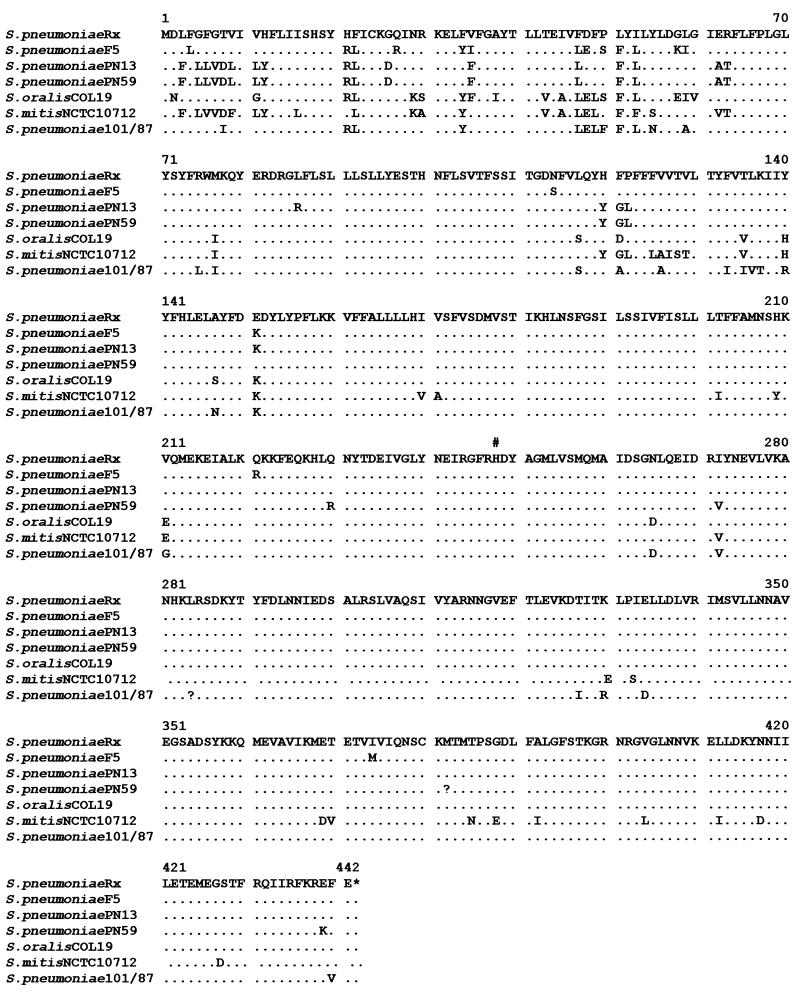
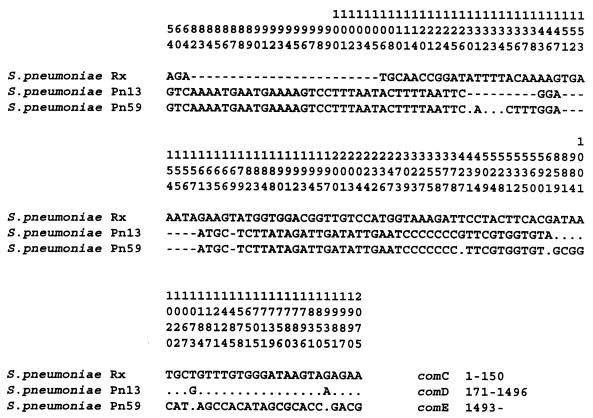
The com operon of naturally transformable streptococcal species contains three genes, comC, comD, and comE, involved in the regulation of competence. The comC gene encodes a competence-stimulating peptide (CSP) thought to induce competence in the bacterial population at a critical extracellular concentration. The comD and comE genes are believed to encode the transmembrane histidine kinase and response regulator proteins, respectively, of a two-component regulator, with the comD-encoded protein being a receptor for CSP. Here we report on the genetic variability of comC and comD within Streptococcus pneumoniae isolates. Comparative analysis of sequence variations of comC and comD shows that, despite evidence for horizontal gene transfer at this locus and the lack of transformability of many S. pneumoniae strains in the laboratory, there is a clear correlation between the presence of a particular comC allele and the cognate comD allele. These findings effectively rule out the possibility that the presence of noncognate comC and comD alleles may be responsible for the inability to induce competence in many isolates and indicate the importance of a functional com pathway in these isolates. In addition, we describe a number of novel CSPs from disease-associated strains of S. mitis and S. oralis. The CSPs from these isolates are much more closely related to those from S. pneumoniae than to most CSPs previously reported from S. mitis and S. oralis, suggesting that these particular organisms may be a potential source of DNA in recombination events generating the mosaic structures commonly reported in genes of S. pneumoniae that are under strong selective pressure.
Figures
References
-
- Cheng Q, Campbell E A, Naughton A M, Johnson S, Masure H R. The com locus controls genetic transformation in Streptococcus pneumoniae. Mol Microbiol. 1997;23:683–692. - PubMed
-
- Dowson C G, Coffey T J, Kell C, Whiley R A. Evolution of penicillin resistance in Streptococcus pneumoniae; the role of Streptococcus mitis in the formation of a low affinity PBP2B in S. pneumoniae. Mol Microbiol. 1993;9:635–643. - PubMed
-
- Dowson C G, Coffey T J, Spratt B G. Origin and molecular epidemiology of penicillin-binding-protein-mediated resistance to β-lactam antibiotics. Trends Microbiol. 1994;2:361–366. - PubMed
-
- Dowson C G, Barcus V, King S, Pickerill P, Whatmore A, Yeo M. Horizontal gene transfer and the evolution of resistance and virulence determinants in Streptococcus. J Appl Microbiol. 1997;83:42S–51S. - PubMed
Publication types
MeSH terms
Substances
Associated data
- Actions
- Actions
- Actions
- Actions
- Actions
- Actions
- Actions
- Actions
- Actions
- Actions
- Actions
- Actions
- Actions
- Actions
- Actions
- Actions
- Actions
- Actions
- Actions
- Actions
- Actions
- Actions
- Actions
- Actions
- Actions
- Actions
- Actions
- Actions
- Actions
- Actions
Grants and funding
LinkOut - more resources
Full Text Sources
