


Orthotopic liver transplantation for hepatitis C: outcome, effect of immunosuppression, and causes of retransplantation during an 8-year single-center experience
- PMID: 10363896
- PMCID: PMC1420829
- DOI: 10.1097/00000658-199906000-00009
Orthotopic liver transplantation for hepatitis C: outcome, effect of immunosuppression, and causes of retransplantation during an 8-year single-center experience
Abstract
Objective: To determine the outcome of orthotopic liver transplantation (OLT) for end-stage liver disease caused by hepatitis C virus (HCV).
Summary background data: HCV has become the leading cause of cirrhosis and hepatic failure leading to OLT. Recurrent HCV after OLT is associated with significant complications and may lead to graft loss that requires retransplantation (re-OLT). The authors studied the outcome of transplantation for HCV, the effect of primary immunotherapy, and causes of retransplantation.
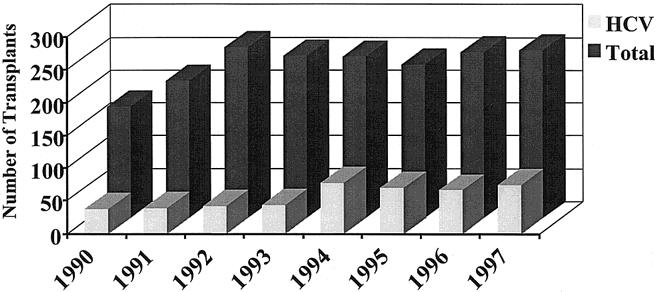
Methods: The authors conducted a retrospective review of their experience during an 8-year period (1990-1997), during which 374 patients underwent transplants for HCV (298 [79.6%] received one OLT; 76 [20.4%] required re-OLT). Median follow-up was 2 years (range 0 to 8.3). Immunosuppression was based on cyclosporine in 190 patients and tacrolimus in 132 patients. In a third group of patients, therapy was switched from cyclosporine to tacrolimus or from tacrolimus to cyclosporine (cyclosporine/tacrolimus group).
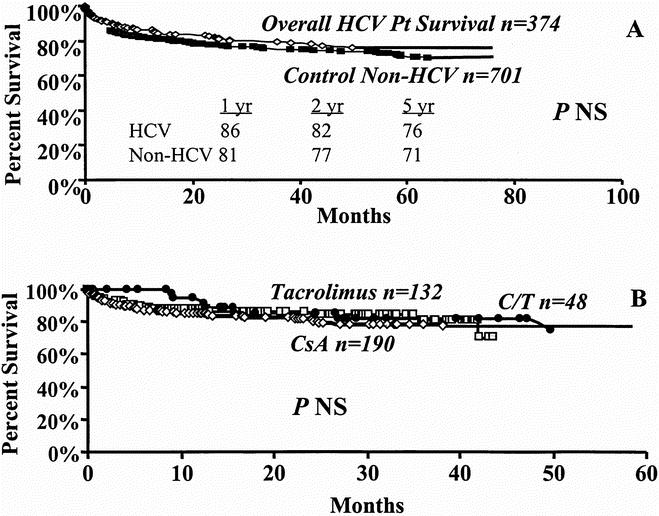
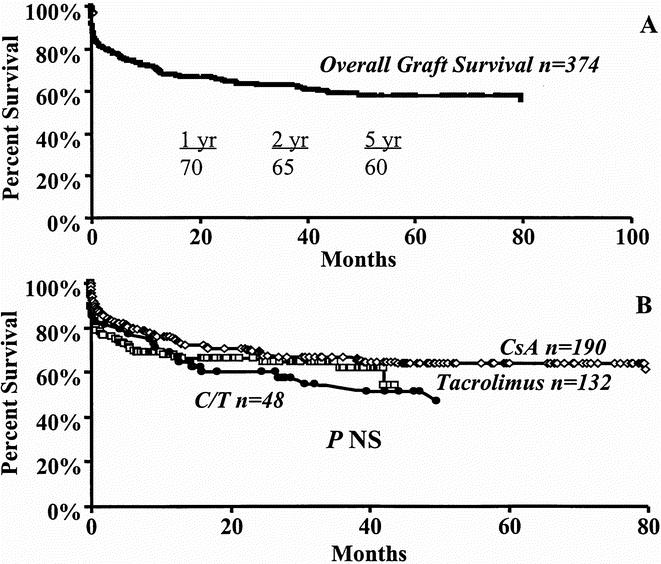
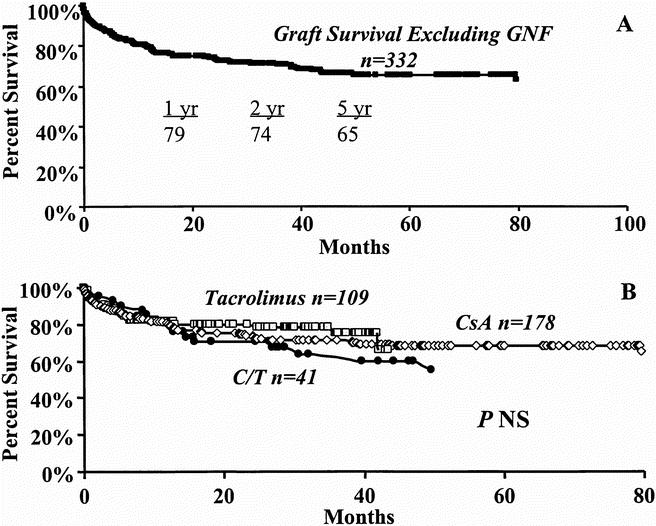
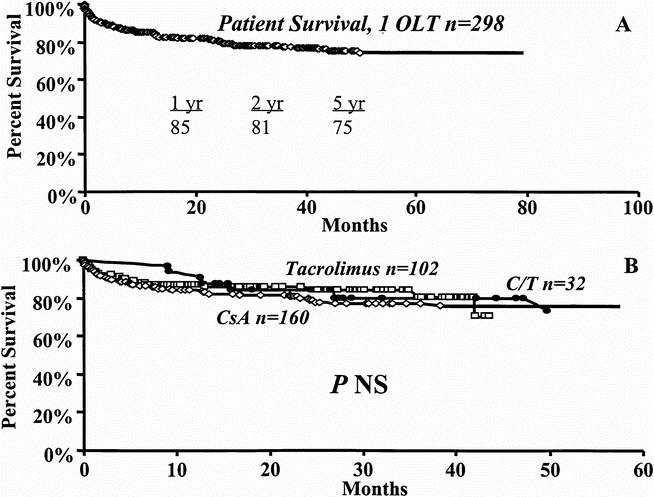
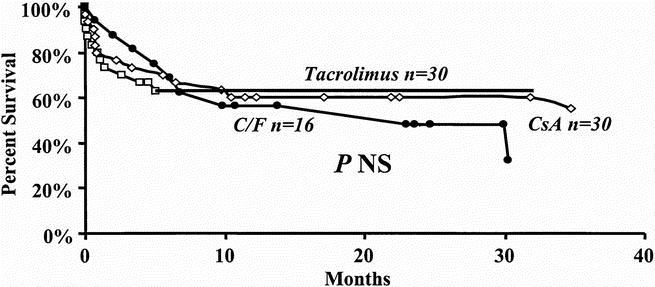
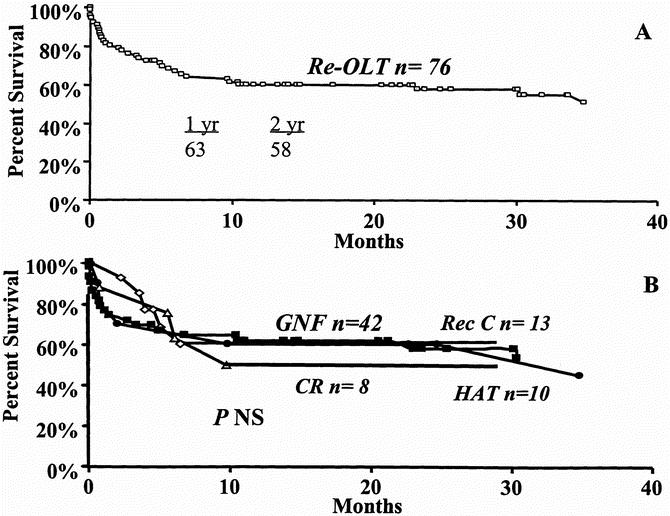
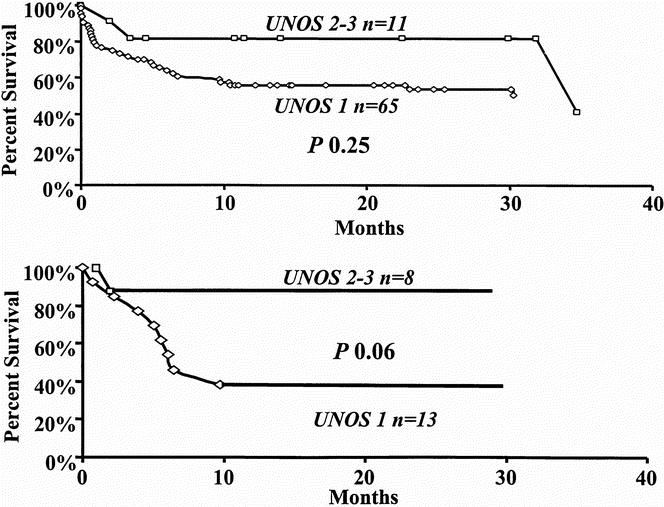
Results: Overall, 1-, 2-, and 5-year actuarial patient survival rates were 86%, 82%, and 76%, respectively. The 2-year patient survival rate was 81 % in the cyclosporine group, 85% in the tacrolimus group, and 82% in the cyclosporine/tacrolimus group. In patients receiving one OLT, overall 1-, 2-, and 5-year patient survival rates were 85%, 81%, and 75%, respectively. The 2-year patient survival rate was 79% in the cyclosporine group, 84% in the tacrolimus group, and 80% in the cyclosporine/tacrolimus group. The overall graft survival rates were 70%, 65%, and 60% at 1, 2, and 5 years, respectively. The graft survival rate at 2 years was similar under cyclosporine (68.5%), tacrolimus (64%), or cyclosporine/tacrolimus (60%) therapy. Re-OLT was required in 42 (11.2%) patients for graft dysfunction in the initial 30 days after OLT. Other causes for re-OLT included hepatic artery thrombosis in 10 (2.6%), chronic rejection in 8 (2.1%), and recurrent HCV in 13 (3.4%) patients. The overall survival rates after re-OLT were 63% and 58% at 1 and 2 years. The 1-year survival rate after re-OLT was 61 % for graft dysfunction, 50% for chronic rejection, 60% for hepatic artery thrombosis, and 60% for recurrent HCV. At re-OLT, 85.3% of the patients were critically ill (United Network for Organ Sharing [UNOS] status 1); only 14.7% of the patients were UNOS status 2 and 3. In re-OLT for chronic rejection and recurrent HCV, the 1-year survival rate of UNOS 1 patients was 38.4%, compared with 87.5% for UNOS 2 and 3 patients. In patients requiring re-OLT, there was no difference in the 1-year patient survival rate after re-OLT when cyclosporine (60%), tacrolimus (63%), or cyclosporine/tacrolimus (56%) was used for primary therapy. With cyclosporine, three patients (1.5%) required re-OLT for chronic rejection versus one patient (0.7%) with tacrolimus. Re-OLT for recurrent HCV was required in four (3%) and seven (3.6%) patients with tacrolimus and cyclosporine therapy, respectively.
Conclusions: Orthotopic liver transplantation for HCV is performed with excellent results. There are no distinct advantages to the use of cyclosporine versus tacrolimus immunosuppression when patient and graft survival are considered. Re-OLT is an important option in the treatment of recurrent HCV and should be performed early in the course of recurrent disease. Survival after re-OLT is not distinctively affected by cyclosporine or tacrolimus primary immunotherapy. The incidence of re-OLT for recurrent HCV or chronic rejection is low after either tacrolimus or cyclosporine therapy.
Figures
References
-
- Alter MJ. Epidemiology of hepatitis C. Hepatology 1997; 26 62S–65S. - PubMed
-
- Wright TL. Liver transplantation in patients with chronic hepatitis B and C. In Maddrey WC, Sorrell MF, eds. Transplantation of the liver, 2d ed. Norwalk, CT: Appleton and Lange; 1995: 477.
-
- Gretch DR. Diagnostic tests for hepatitis C. Hepatology 1997; 26: 43S. - PubMed
-
- Chazouilleres O, Kim M, Combs C, et al. Quantitation of hepatitis C virus RNA in liver transplant recipients. Gastroenterology 1994; 106: 994–999. - PubMed
MeSH terms
Substances
LinkOut - more resources
Full Text Sources
Medical
