


Virulent Salmonella typhimurium has two periplasmic Cu, Zn-superoxide dismutases
- PMID: 10377444
- PMCID: PMC22115
- DOI: 10.1073/pnas.96.13.7502
Virulent Salmonella typhimurium has two periplasmic Cu, Zn-superoxide dismutases
Abstract
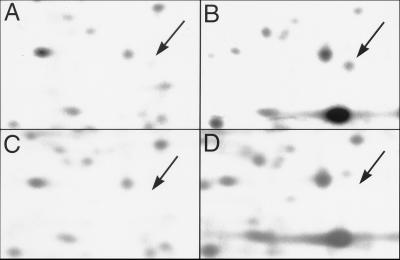
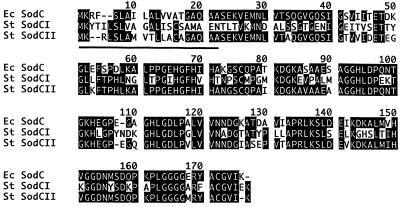
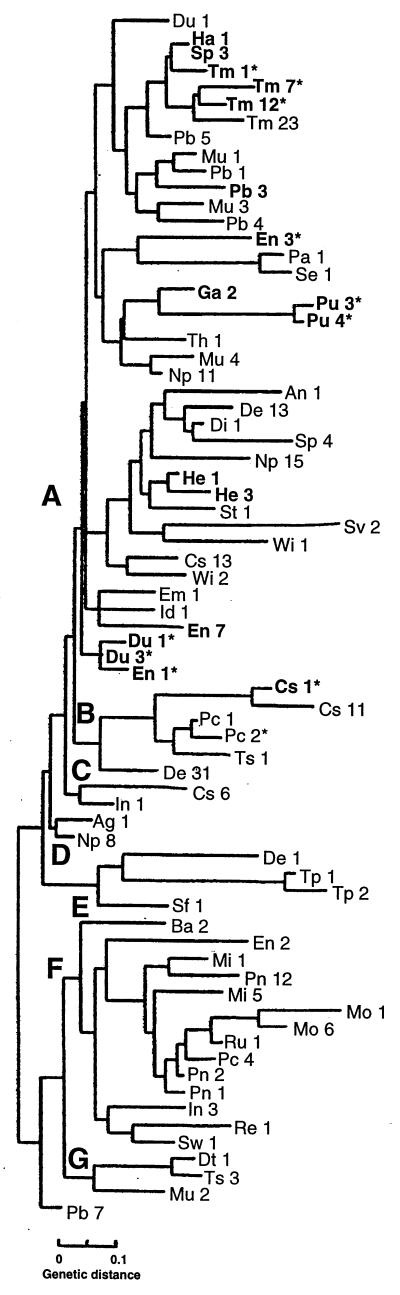
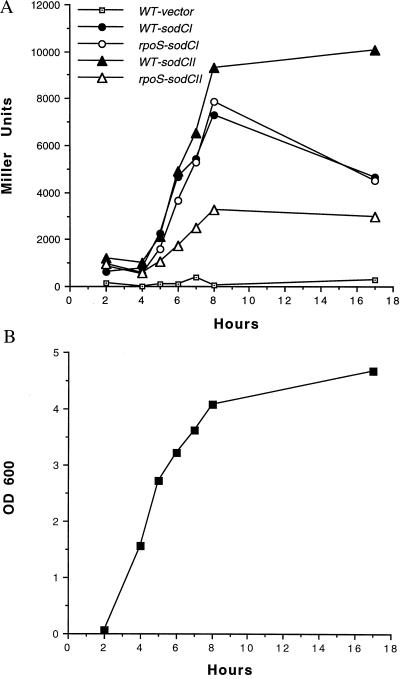
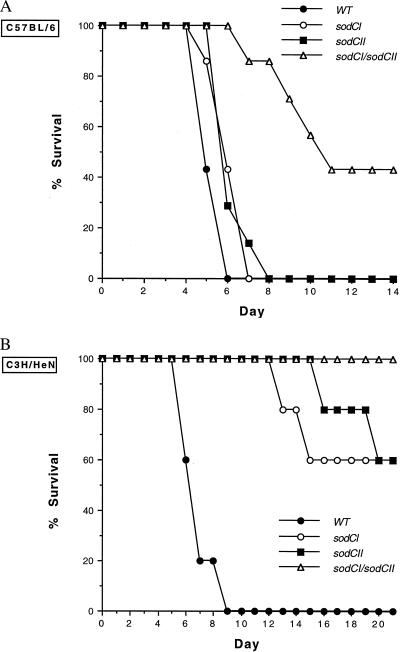
Periplasmic Cu, Zn-cofactored superoxide dismutase (SodC) protects Gram-negative bacteria from exogenous oxidative damage. The virulent Salmonella typhimurium strain ATCC 14028s has been found to contain two discrete periplasmic Cu, Zn-SOD enzymes that are only 57% identical at the amino acid level. SodCI is carried by a cryptic bacteriophage, and SodCII is closely related to the Cu, Zn-superoxide dismutase of Escherichia coli. All Salmonella serotypes appear to carry the sodCII locus, but the phage-associated sodCI gene is found only in certain strains belonging to the most highly pathogenic serotypes. Expression of either sodC locus appears to be enhanced during stationary phase, but only sodCII is regulated by the alternative sigma factor sigmas (RpoS). Mutants lacking both sodC genes are less lethal for mice than mutants possessing either sodC locus alone, indicating that both Cu, Zn-SOD enzymes contribute to Salmonella pathogenicity. The evolutionary acquisition of an additional sodC gene has contributed to the enhanced virulence of selected Salmonella strains.
Figures
References
Publication types
MeSH terms
Substances
Associated data
- Actions
LinkOut - more resources
Full Text Sources
Other Literature Sources
Molecular Biology Databases
