


Plasmodium falciparum isolates from infected pregnant women and children are associated with distinct adhesive and antigenic properties
- PMID: 10395863
- PMCID: PMC2613477
- DOI: 10.1086/314899
Plasmodium falciparum isolates from infected pregnant women and children are associated with distinct adhesive and antigenic properties
Abstract
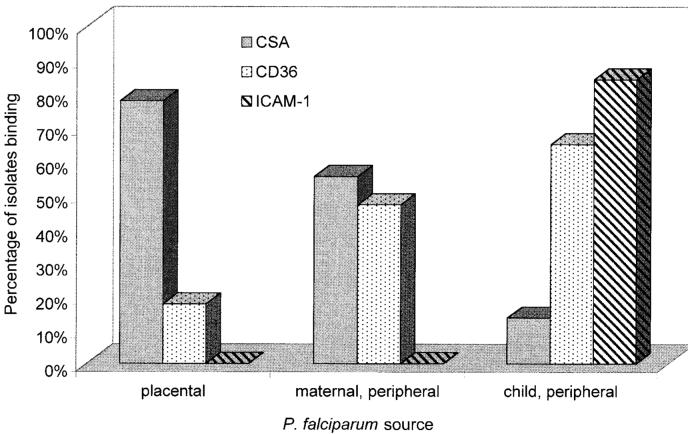
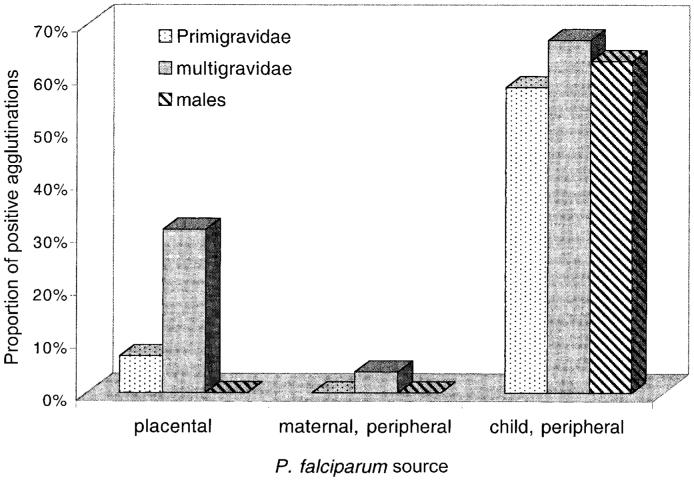
Plasmodium falciparum malaria during pregnancy is an important cause of maternal and infant morbidity and mortality. Accumulation of large numbers of P. falciparum-infected erythrocytes in the maternal blood spaces of the placenta may be mediated by adhesion of infected erythrocytes to molecules presented on the syncytiotrophoblast surface. In this study, isolates from placentas and peripheral blood of infected pregnant women and from children were tested for binding to purified receptors and for agglutination with adult sera. Results suggest that adhesion to chondroitin sulfate A may be involved in placental parasite sequestration in most cases, but other factors are also likely to be important. Agglutination assay results suggest that parasites infecting pregnant women are antigenically distinct from those common in childhood disease. The prevalence of agglutinating antibodies to pregnancy isolates was generally low, but it was highest in multigravidae who are likely to have had the greatest exposure.
Figures
References
-
- McGregor IA. Epidemiology, malaria and pregnancy. Am J Trop Med Hyg. 1984;33:517–25. - PubMed
-
- Fleming AF. Tropical obstetrics and gynaecology. 1. Anaemia in pregnancy in tropical Africa. Trans R Soc Trop Med Hyg. 1989;83:441–8. - PubMed
-
- Granja AC, Machungo F, Gomes A, Bergstrom S, Brabin B. Malaria-related maternal mortality in urban Mozambique. Ann Trop Med Parasitol. 1998;92:257–63. - PubMed
-
- McDermott JM, Wirima JJ, Steketee RW, Breman JG, Heyman DL. The effect of placental malaria infection on perinatal mortality in rural Malawi. Am J Trop Med Hyg. 1996;55:61–5. - PubMed
