


B-cell proliferation activity of pectic polysaccharide from a medicinal herb, the roots of Bupleurum falcatum L. and its structural requirement
- PMID: 10447779
- PMCID: PMC2326847
- DOI: 10.1046/j.1365-2567.1999.00774.x
B-cell proliferation activity of pectic polysaccharide from a medicinal herb, the roots of Bupleurum falcatum L. and its structural requirement
Abstract
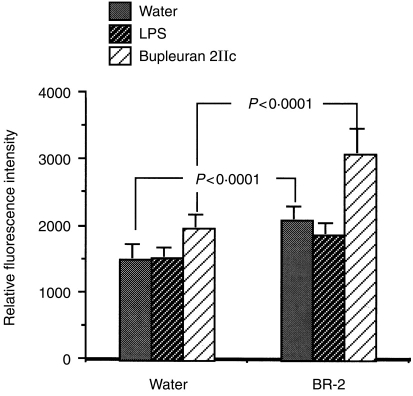
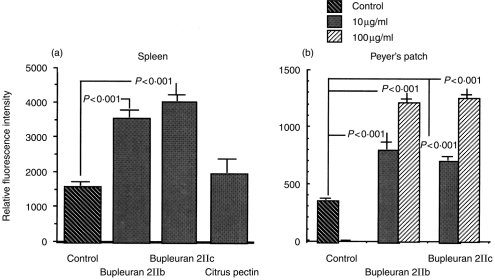
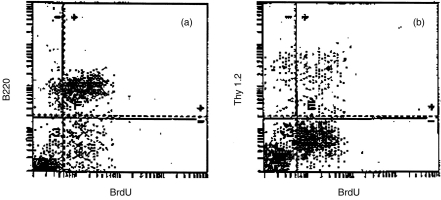
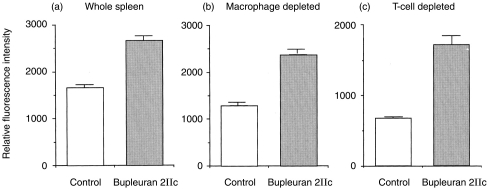
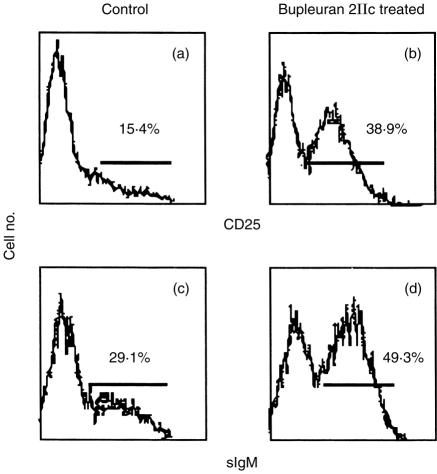
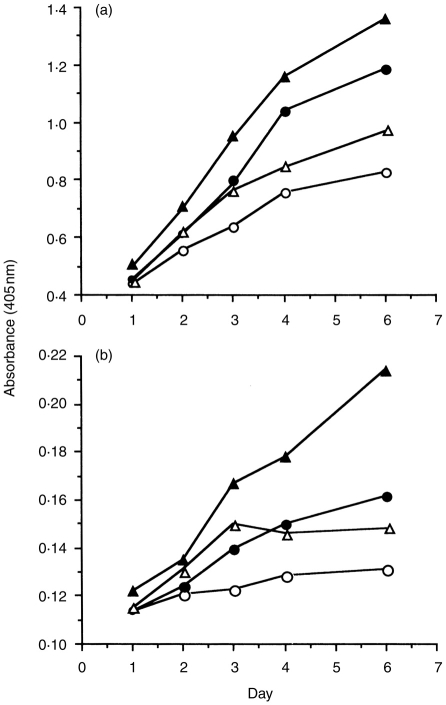
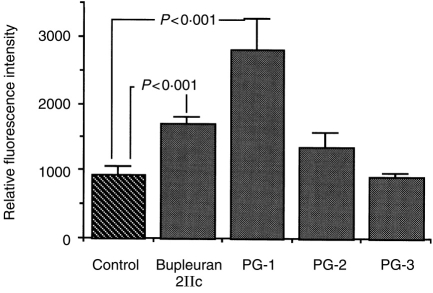
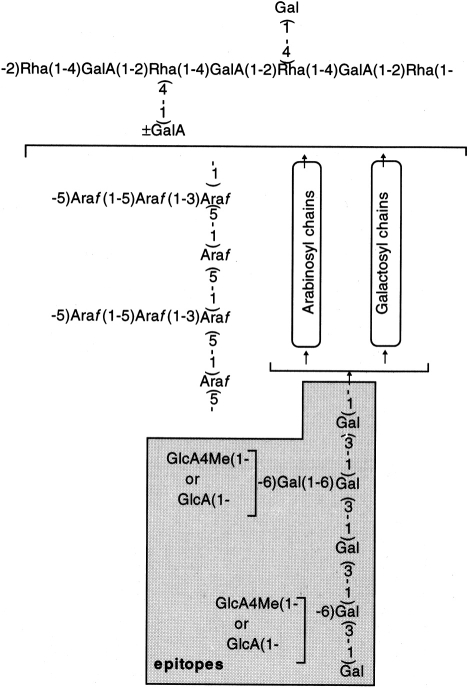
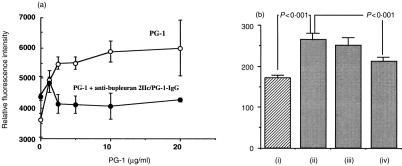
Pectic polysaccharide fraction (BR-2) containing pharmacologically active pectic polysaccharide, bupleuran 2IIc, which was prepared from a medicinal herb, the roots of Bupleurum falcatum L., was administered orally to C3H/HeJ mice for 7 consecutive days. Proliferative responses of spleen cells were enhanced in the presence of the purified pectic polysaccharide, bupleuran 2IIc, but another B-cell mitogen, lipopolysaccharide (LPS) did not give a similar effect. In vitro studies using spleen cells showed that bupleuran 2IIc also stimulated lymphocytes, depleted of adherent cells or T cells. Bupleuran 2IIc treatment increased subpopulation of CD25+ and surface immunoglobulin M-positive (sIgM+) lymphocytes. Non-specific immunoglobulin secretion of spleen cells treated with bupleuran 2IIc was increased according to the culture time, and coexistence of interleukin-6 (IL-6) enhanced the secretion more than that of bupleuran 2IIc alone. These results suggest that bupleuran 2IIc proliferates B cells in the absence of macrophages, and the resulting activated B cells are then induced into antibody-forming cells in the presence of IL-6. Among the structural region of bupleuran 2IIc, ramified region (PG-1), which consists of rhamnogalacturonan core rich in neutral sugar chain, showed the potent mitogenic activity suggesting it to be an active site. Mitogenic activity of bupleuran 2IIc was reduced in the presence of antipolysaccharide antibody (antibupleuran 2IIc/PG-1-IgG), which recognizes the ramified region of bupleuran 2IIc as the antigenic epitope. Mitogenic activity of bupleuran 2IIc was also reduced by the addition of beta-d-GlcpA-(1-->6)-beta-d-Galp-(1-->6)-d-Galp or beta-d-GlcpA-(1-->6)-d-Galp, which are a part of the epitopes of antibupleuran 2IIc/PG-1-IgG. These results suggest that the epitopes in bupleuran 2IIc act as active sites of the polysaccharide during mitogenic activity.
Figures
References
-
- Yamada H. Contribution of pectins on health care. In: Visser J, Voragen A G J, editors. Pectin and Pectinases. Amsterdam: Elsevier Science; 1996. p. 173.
-
- Yamada H, Ra K-S, Kiyohara H, Cyong J-C, Otsuka Y. Structural characterization of an anti-complementary pectic polysaccharide from the roots of Bupleurum falcatum L. Carbohydr Res. 1989;189:209. - PubMed
-
- Matsumoto T, Cyong J-C, Kiyohara H, et al. The pectic polysaccharides from Bupleurum falcatum L. enhances immune-complexes binding to peritoneal macrophages through Fc receptor expression. Int J Immunopharmacol. 1993;15:683. - PubMed
-
- Yamada H, Sun X-B, Matsumoto T, Ra K-S, Hirano M, Kiyohara H. Purification of anti-ulcer polysaccharides from the roots of Bupleurum falcatum L. Planta Med. 1991;57:555. - PubMed
-
- Sun X-B, Matsumoto T, Yamada H. Effects of a polysaccharide fraction from the roots of Bupleurum falcatum L. on experimental gastric ulcer models in rats and mice. J Pharm Pharmacol. 1991;43:699. - PubMed
Publication types
MeSH terms
Substances
LinkOut - more resources
Full Text Sources
Other Literature Sources
