


PCR-Based methods for genotyping viridans group streptococci
- PMID: 10449450
- PMCID: PMC85375
- DOI: 10.1128/JCM.37.9.2772-2776.1999
PCR-Based methods for genotyping viridans group streptococci
Abstract
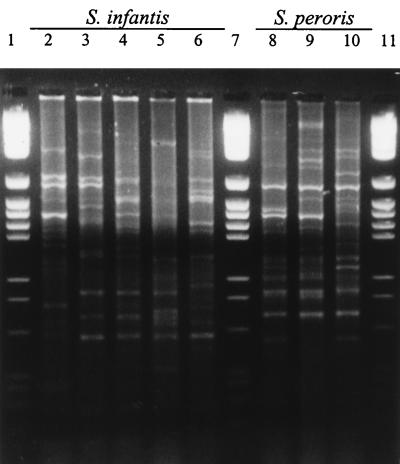
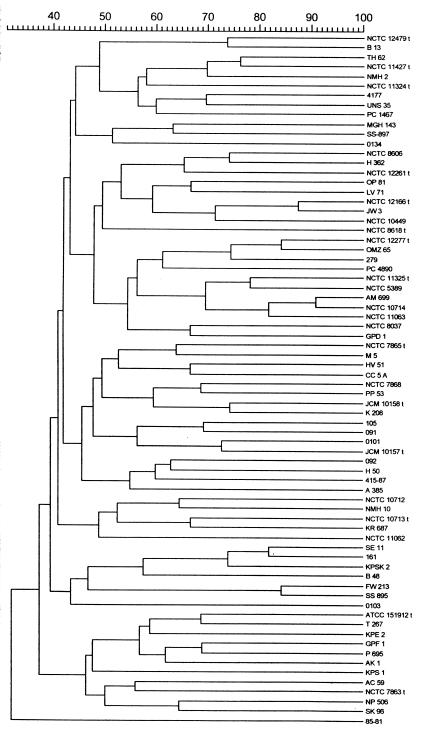
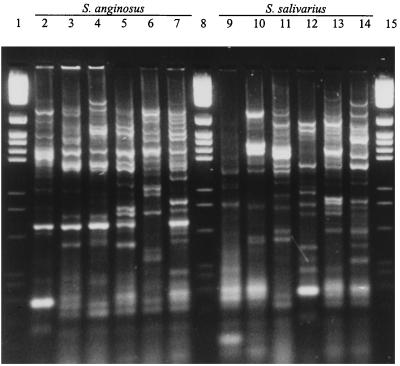
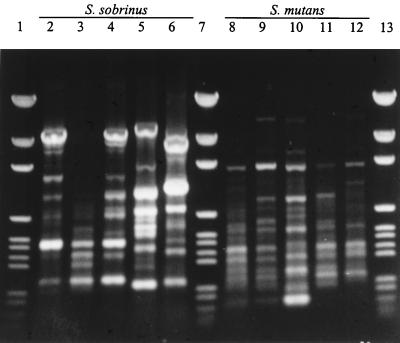
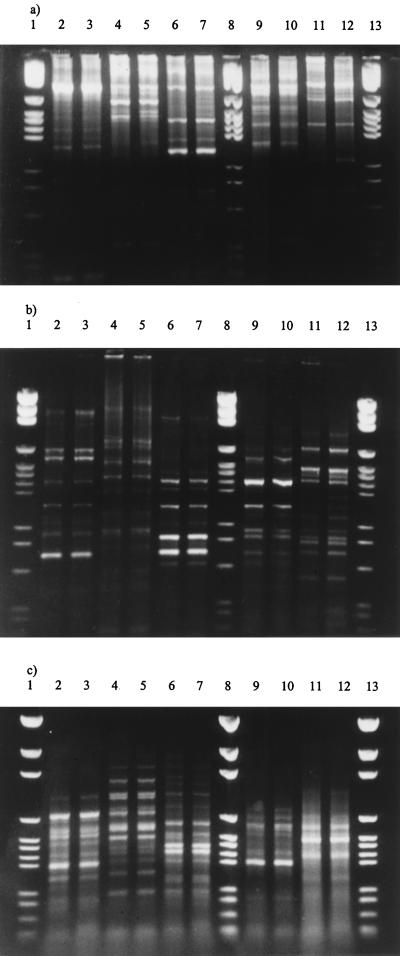
Standard repetitive extragenic palindromic (REP)-PCR, enterobacterial repetitive intergenic consensus-PCR, and Salmonella enteritidis repetitive element-PCR methods for bacterial strain typing were performed with DNA extracted by boiling members of each of the currently recognized species of human viridans group streptococci. Each of the methods was reproducible. The unique isolates (n = 72) from 15 species of viridans group streptococci were readily distinguishable, with no two isolates showing greater than 90% per cent similarity. The majority of strains exhibited much less than 90% similarity. Isolates identical by REP-PCR were also identical by the other two methods. These PCR-based typing methods, although they do not permit determination of the species of the isolates, are simple to perform and are suitable for clinical and ecological investigations of viridans group streptococci.
Figures
References
-
- Beighton D, Carr A D, Oppenheim B A. Identification of viridans streptococci associated with bacteraemia in neutropenic cancer patients. J Med Microbiol. 1994;40:202–204. - PubMed
-
- Beighton D, Hardie J M, Whiley R A. A scheme for the identification of viridans streptococci. J Med Microbiol. 1991;35:367–372. - PubMed
-
- Bochud P Y, Calandra T, Francioli P. Bacteremia due to viridans streptococci in neutropenic patients: a review. Am J Med. 1994;97:256–264. - PubMed
-
- Bouvet A, Durand A, Devine C, Etienne J, Leport C . the Groupe d’Enquêsue l’Endocardite en France 1990–1991. In vitro susceptibility to antibiotics of 200 strains of streptococci and enterococci isolated during infective endocarditis. In: Totalian A, editor. Pathogenic streptococci: present and future. St. Petersburg, Russia: Lancer Publications; 1994. pp. 72–73.
MeSH terms
LinkOut - more resources
Full Text Sources
Other Literature Sources
Molecular Biology Databases
