


Elucidating the origins of nosocomial infections with Candida albicans by DNA fingerprinting with the complex probe Ca3
- PMID: 10449459
- PMCID: PMC85387
- DOI: 10.1128/JCM.37.9.2817-2828.1999
Elucidating the origins of nosocomial infections with Candida albicans by DNA fingerprinting with the complex probe Ca3
Abstract
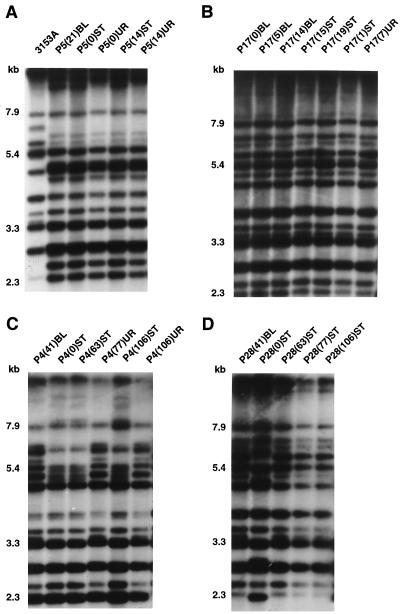
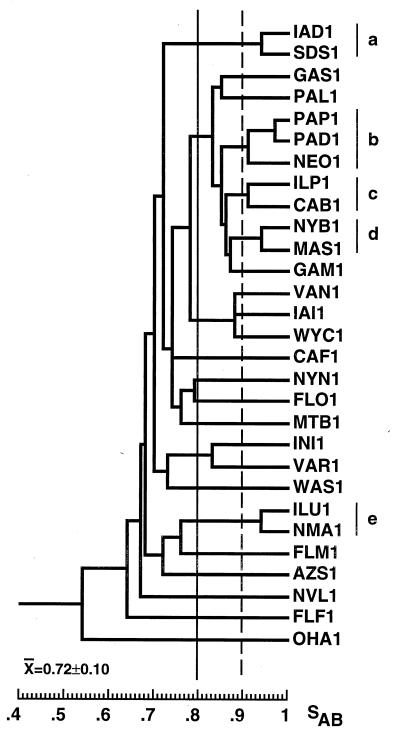
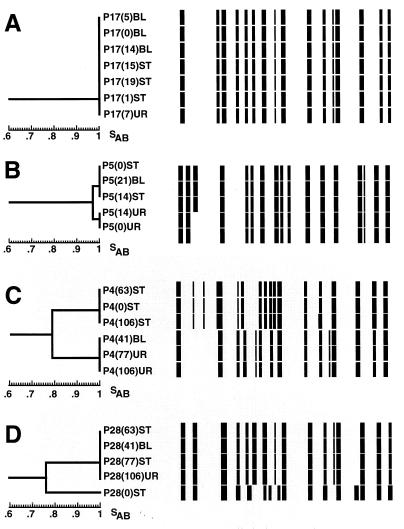
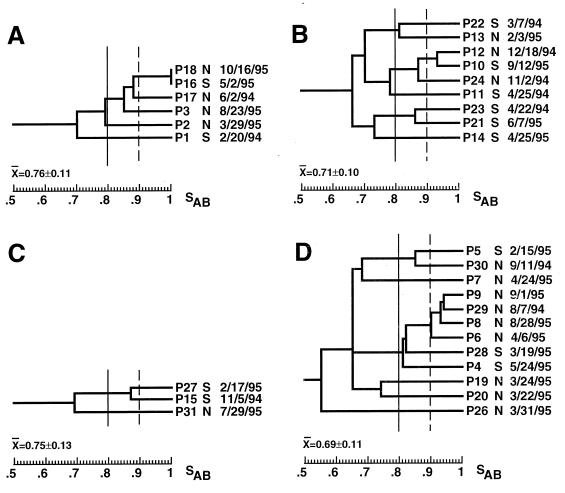
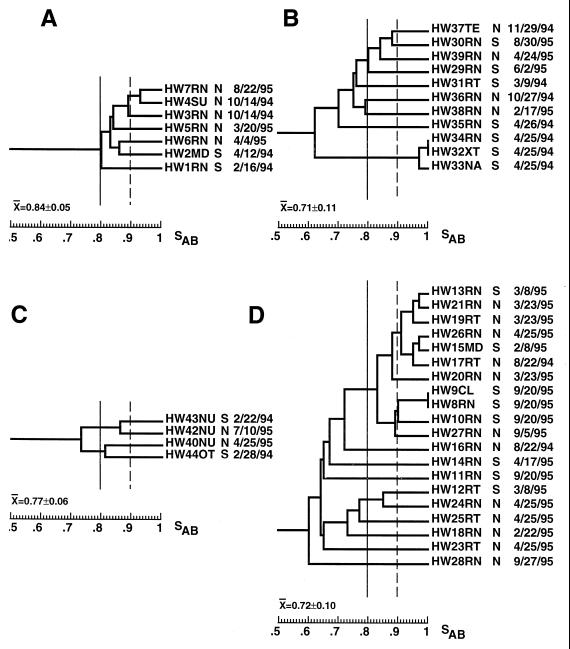
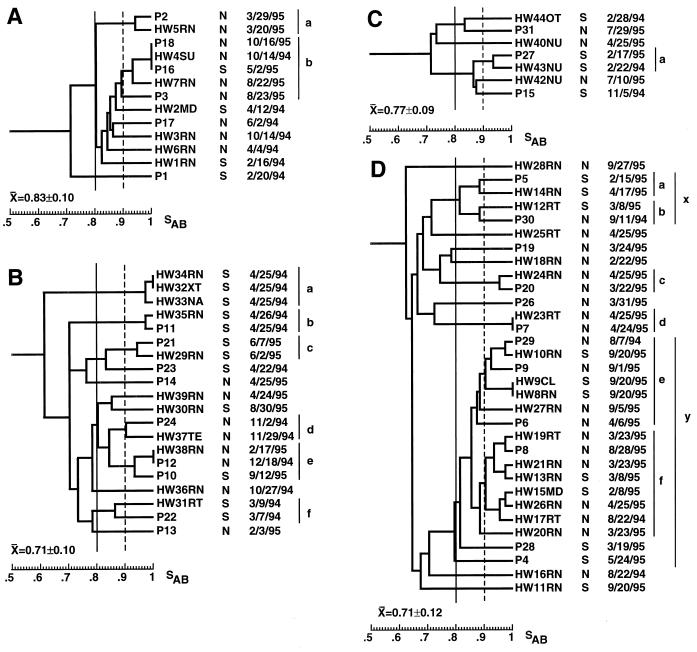
Computer-assisted DNA fingerprinting with the complex probe Ca3 has been used to analyze the relatedness of isolates collected from individuals with nosocomial bloodstream infections (BSIs) and hospital care workers (HCWs) in the surgical and neonatal intensive care units (ICUs) of four hospitals. The results demonstrate that for the majority of patients (90%), isolates collected from commensal sites before and after collection of a BSI isolate were highly similar or identical to the BSI isolate. In addition, the average similarity coefficient for BSI isolates was similar to that for unrelated control isolates. However, the cluster characteristics of BSI isolates in dendrograms generated for each hospital compared to those of unrelated control isolates in a dendrogram demonstrated a higher degree of clustering of the former. In addition, a higher degree of clustering was observed in mixed dendrograms for HCV isolates and BSI isolates for each of the four test hospitals. In most cases, HCW isolates from an ICU were collected after the related BSI isolate, but in a few cases, the reverse was true. Although the results demonstrate that single, dominant endemic strains are not responsible for nosocomial BSIs in neonatal ICUs and surgical ICUs, they suggest that multiple endemic strains may be responsible for a significant number of cases. The results also suggest that cross-contamination occurs between patients and HCWs and between HCWs in the same ICU and in different ICUs. The temporal sequence of isolation also suggests that in the majority of cases HCWs are contaminated by isolates from colonized patients, but in a significant minority, the reverse is true. The results of this study provide the framework for a strategy for more definitive testing of the origins of Candida albicans strains responsible for nosocomial infections.
Figures
References
-
- Akova M, Akalin H E, Uzun Ö, Hayran M, Tekuzman G, Kansu E, Aslan S, Telatar H. Efficacy of fluconazole in the treatment of upper gastrointestinal candidiasis in neutropenic patients with cancer: factors influencing the outcome. Clin Infect Dis. 1994;18:298–304. - PubMed
-
- Arnaviehle A, Blanchard A, Mallie M, Quilci M, Bastide J M. Multilocus enzyme electrophoresis analysis of Candida albicans isolates from three intensive care units. An epidemiological study. Mycoses. 1997;40:159–167. - PubMed
-
- Backeljau T, Debruyn L, DeWolf H, Jordaens K, Van Dongen S, Winnepenninckx B. Multiple UPGMA and neighbor-joining trees and the performance of some computer packages. Mol Biol Evol. 1996;13:309–313.
Publication types
MeSH terms
Grants and funding
LinkOut - more resources
Full Text Sources
Medical
Miscellaneous
