


Impaired eye-blink conditioning in waggler, a mutant mouse with cerebellar BDNF deficiency
- PMID: 10454360
- PMCID: PMC311271
Impaired eye-blink conditioning in waggler, a mutant mouse with cerebellar BDNF deficiency
Abstract
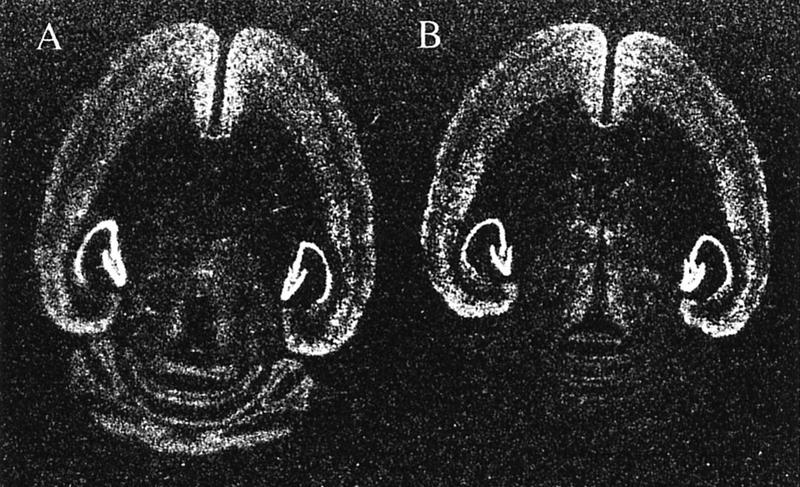
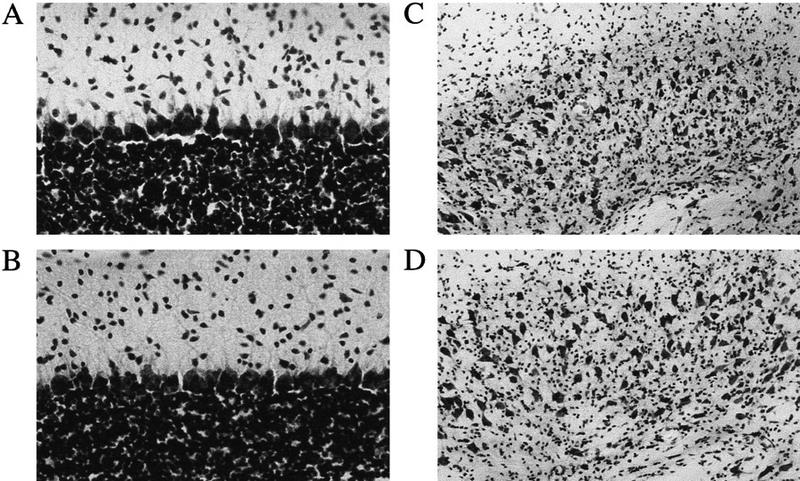
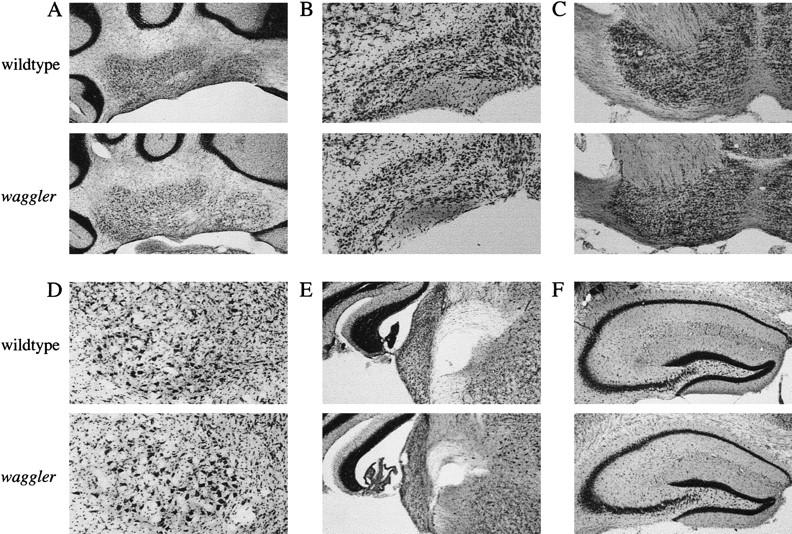
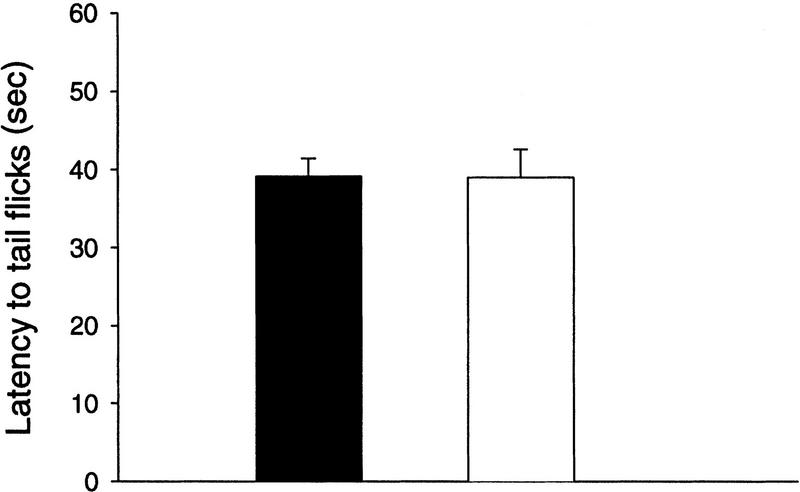
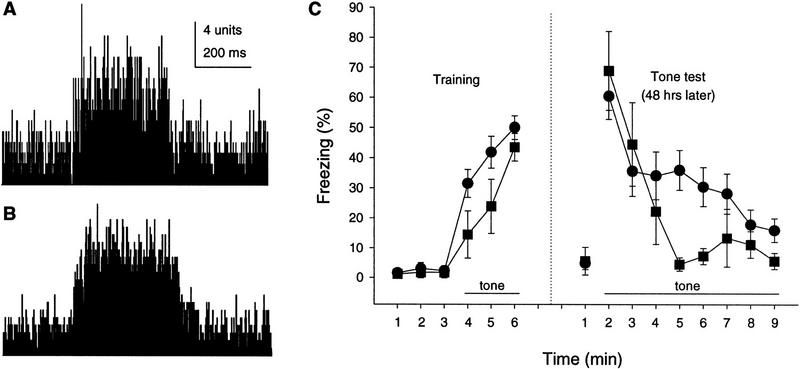
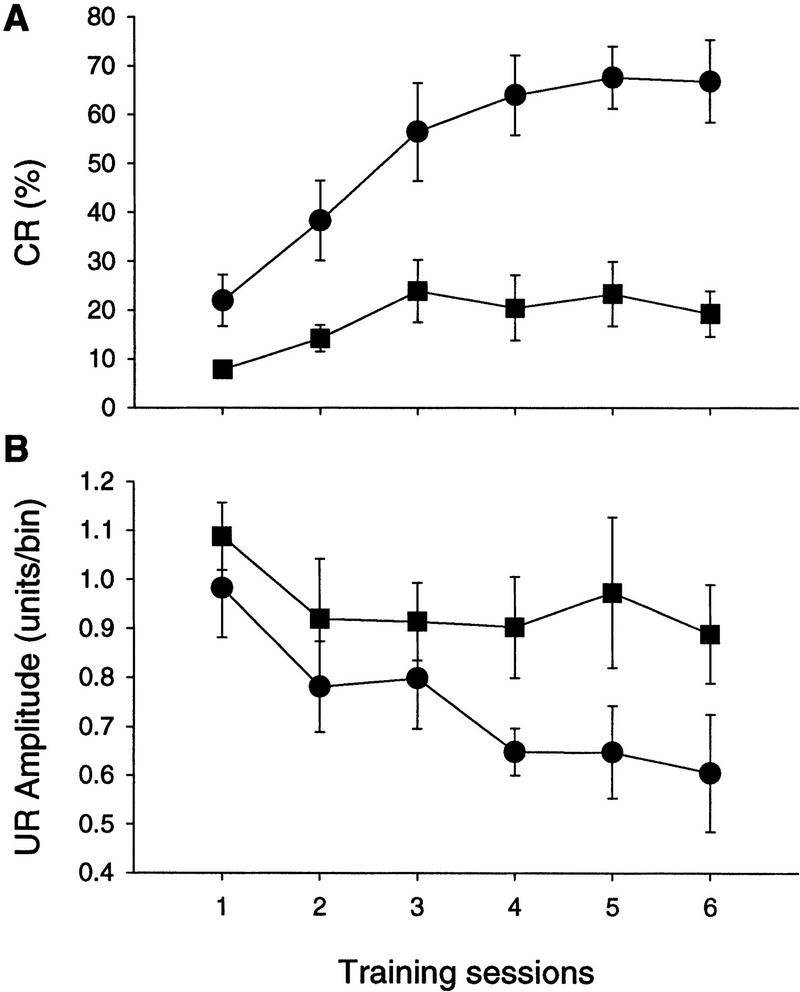
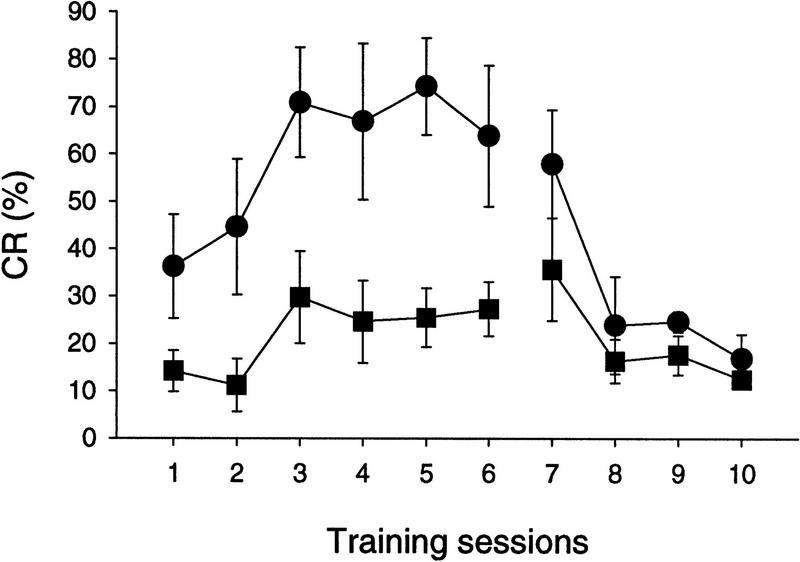
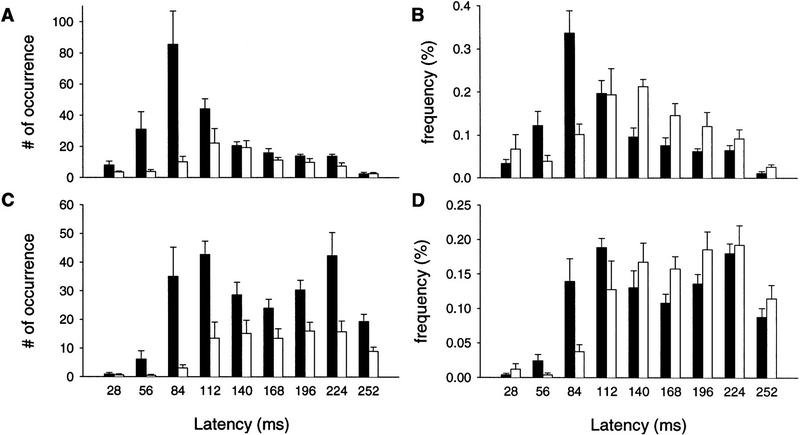
In addition to their trophic functions, neurotrophins are also implicated in synaptic modulation and learning and memory. Although gene knockout techniques have been used widely in studying the roles of neurotrophins at molecular and cellular levels, behavioral studies using neurotrophin knockouts are limited by the early-onset lethality and various sensory deficits associated with the gene knockout mice. In the present study, we found that in a spontaneous mutant mouse, waggler, the expression of brain-derived neurotrophic factor (BDNF) was selectively absent in the cerebellar granule cells. The cytoarchitecture of the waggler cerebellum appeared to be normal at the light microscope level. The mutant mice exhibited no sensory deficits to auditory stimuli or heat-induced pain. However, they were massively impaired in classic eye-blink conditioning. These results suggest that BDNF may have a role in normal cerebellar neuronal function, which, in turn, is essential for classic eye-blink conditioning.
Figures
References
-
- Aiba A, Kano M, Chen C, Stanton ME, Fox GD, Herrup K, Zwingman TA, Tonegawa S. Deficient cerebellar long-term depression and impaired motor learning in mGluR1 mutant mice. Cell. 1994;79:377–388. - PubMed
-
- Albus JS. A theory of cerebellar function. Math Biosci. 1971;10:25–61.
-
- Altman J. Postnatal development of the cerebellar cortex in the rat. II. Phases in the maturation of Purkinje cells and of the molecular layers. J Comp Neurol. 1972;145:399–464. - PubMed
-
- Bao S, Chen L, Thompson RF. Classical eyeblink conditioning in two strain of mice: Conditioned responses, sensitization and spontaneous eyeblinks. Behav Neurosci. 1998;112:714–718. - PubMed
-
- Chen C, Kano M, Abeliovich A, Chen L, Bao S, Kim JJ, Hashimoto K, Thompson RF, Tonegawa S. Impaired motor coordination correlates with persistent multiple climbing fiber innervation in PKC gamma mutant mice. Cell. 1995;83:1233–1242. - PubMed
Publication types
MeSH terms
Substances
Grants and funding
LinkOut - more resources
Full Text Sources
Molecular Biology Databases