


Targeted expression of the DNA binding domain of DRE-binding factor, a Drosophila transcription factor, attenuates DNA replication of the salivary gland and eye imaginal disc
- PMID: 10454549
- PMCID: PMC84493
- DOI: 10.1128/MCB.19.9.6020
Targeted expression of the DNA binding domain of DRE-binding factor, a Drosophila transcription factor, attenuates DNA replication of the salivary gland and eye imaginal disc
Abstract
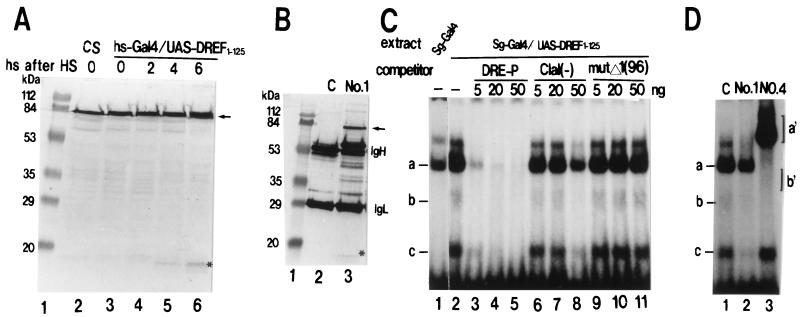
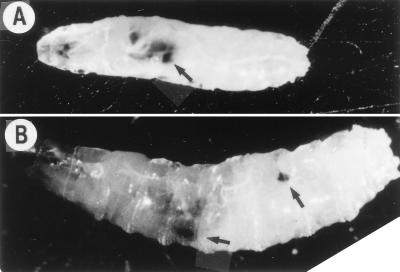
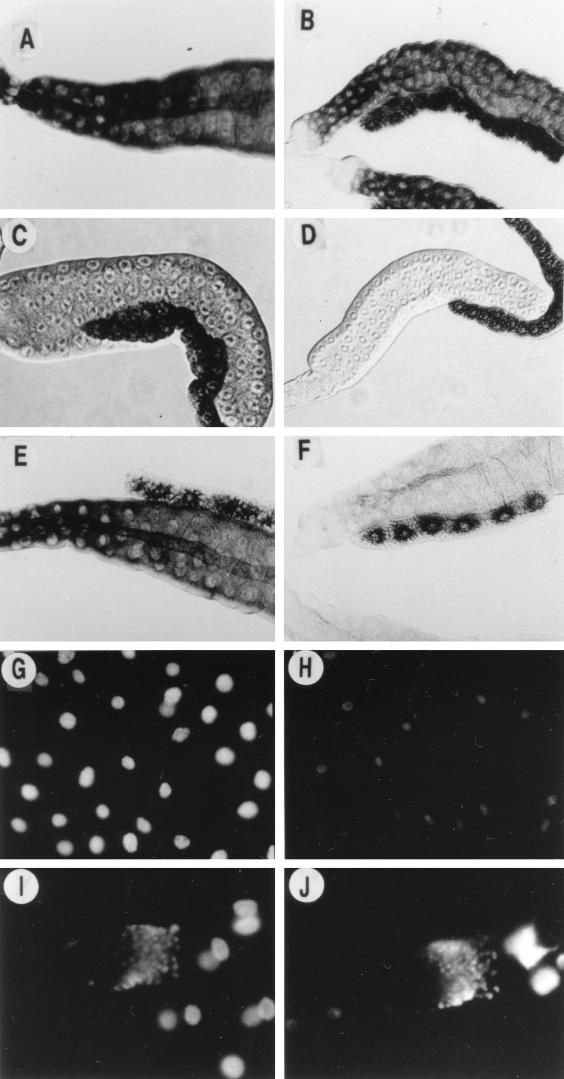
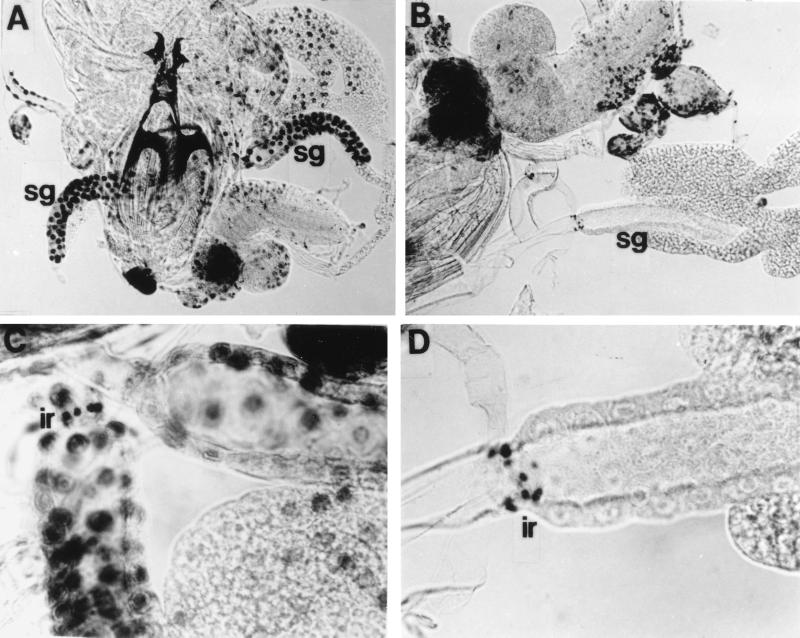
The promoters of Drosophila genes encoding DNA replication-related proteins contain transcription regulatory elements consisting of an 8-bp palindromic DNA replication-related element (DRE) sequence (5'-TATCGATA). The specific DRE-binding factor (DREF), a homodimer of the polypeptide with 709 amino acid residues, is a positive trans-acting factor for transcription of DRE-containing genes. Both DRE binding and dimer formation are associated with residues 16 to 115 of the N-terminal region. We have established transgenic flies expressing the full-length DREF polypeptide or its N-terminal fragment (amino acid residues 1 to 125) under the control of the heat shock promoter, the salivary gland-specific promoter, or the eye imaginal disc-specific promoter. Heat shock induction of the N-terminal fragment during embryonic, larval, or pupal stages caused greater than 50% lethality. This lethality was overcome by coexpression of the full-length DREF. In salivary glands of the transgenic larvae expressing the N-terminal fragment, this fragment formed a homodimer and a heterodimer with the endogenous DREF. Ectopic expression of the N-terminal fragment in salivary gland cells reduced the contents of mRNAs for the 180-kDa subunit of DNA polymerase alpha and for dE2F and the extent of DNA endoreplication. Ectopic expression of the N-terminal fragment in the eye imaginal discs significantly reduced DNA replication in cells at the second mitotic wave. The lines of evidence suggest that the N-terminal fragment can impede the endogenous DREF function in a dominant negative manner and that DREF is required for normal DNA replication in both mitotic cell cycle and endo cycle.
Figures


References
-
- Brand A, Perrimon N. Targeted gene expression as a means of altering cell fates and generating dominant phenotype. Development. 1993;118:401–415. - PubMed
-
- Brand A, Perrimon N. Raf acts downstream of the EGF receptor to determine dorso-ventral polarity during Drosophila oogenesis. Genes Dev. 1994;8:629–639. - PubMed
-
- Cox K H, DeLeon D Y, Angerer L M, Angerer R C. Detection of mRNAs in sea urchin embryos by in situ hybridization using asymmetric RNA probes. Dev Biol. 1984;101:485–502. - PubMed
-
- Duronio R J, O’Farrell P H, Xie J E, Brook A, Dyson N. The transcription factor E2F is required for S phase during Drosophila embryogenesis. Genes Dev. 1995;9:1445–1455. - PubMed
Publication types
MeSH terms
Substances
LinkOut - more resources
Full Text Sources
Molecular Biology Databases
