Zebrafish narrowminded suggests a genetic link between formation of neural crest and primary sensory neurons
- PMID: 10457007
- PMCID: PMC4059008
- DOI: 10.1242/dev.126.18.3969
Zebrafish narrowminded suggests a genetic link between formation of neural crest and primary sensory neurons
Abstract
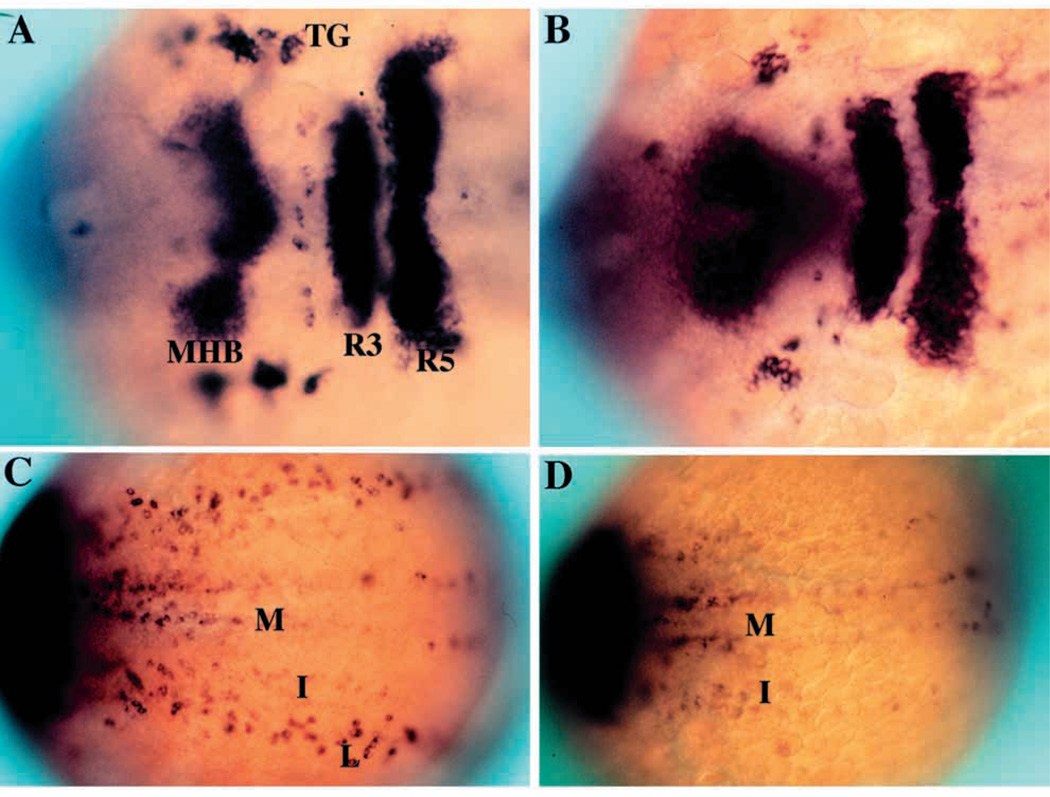
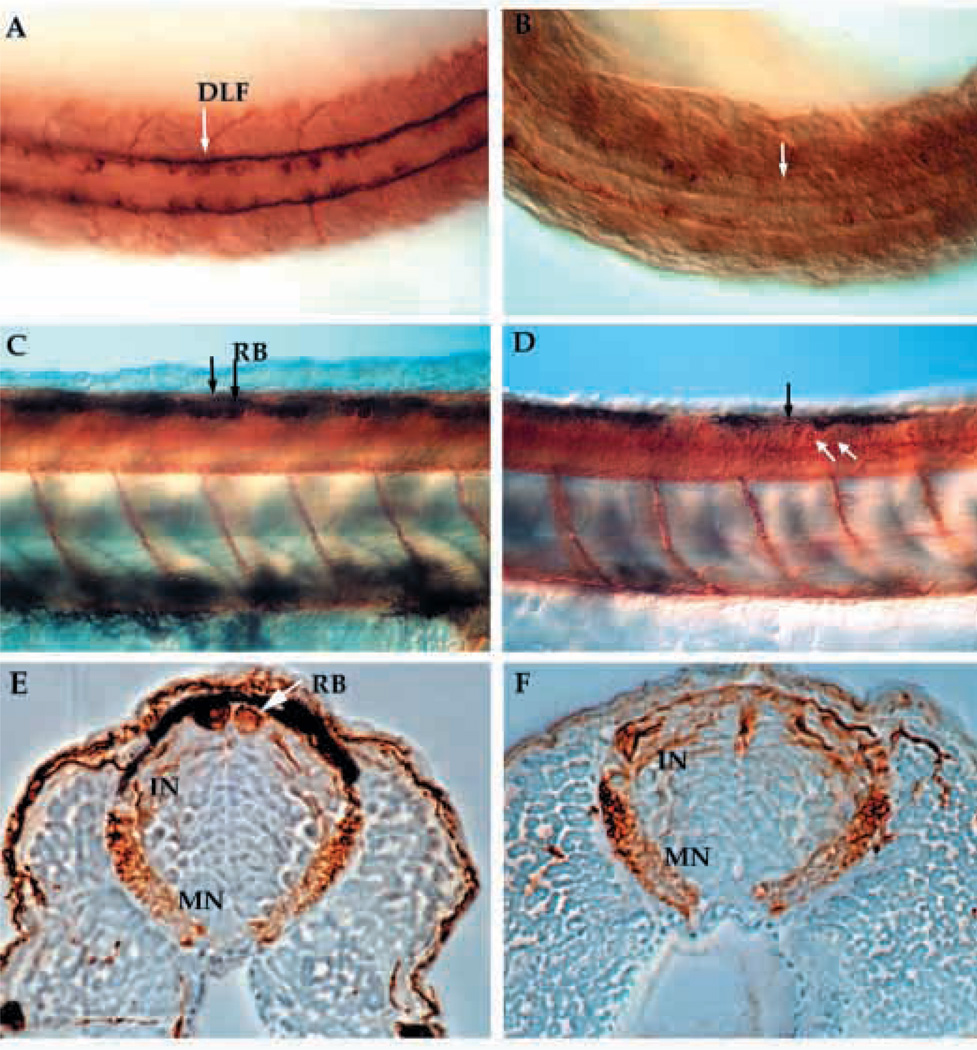
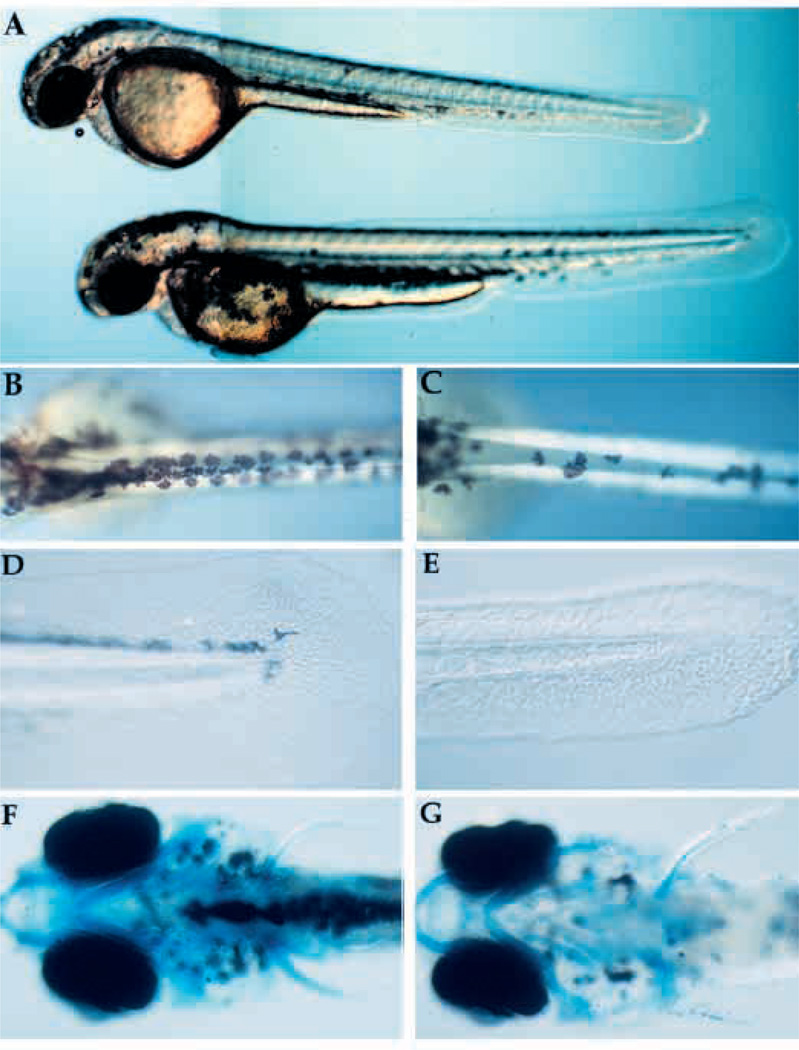
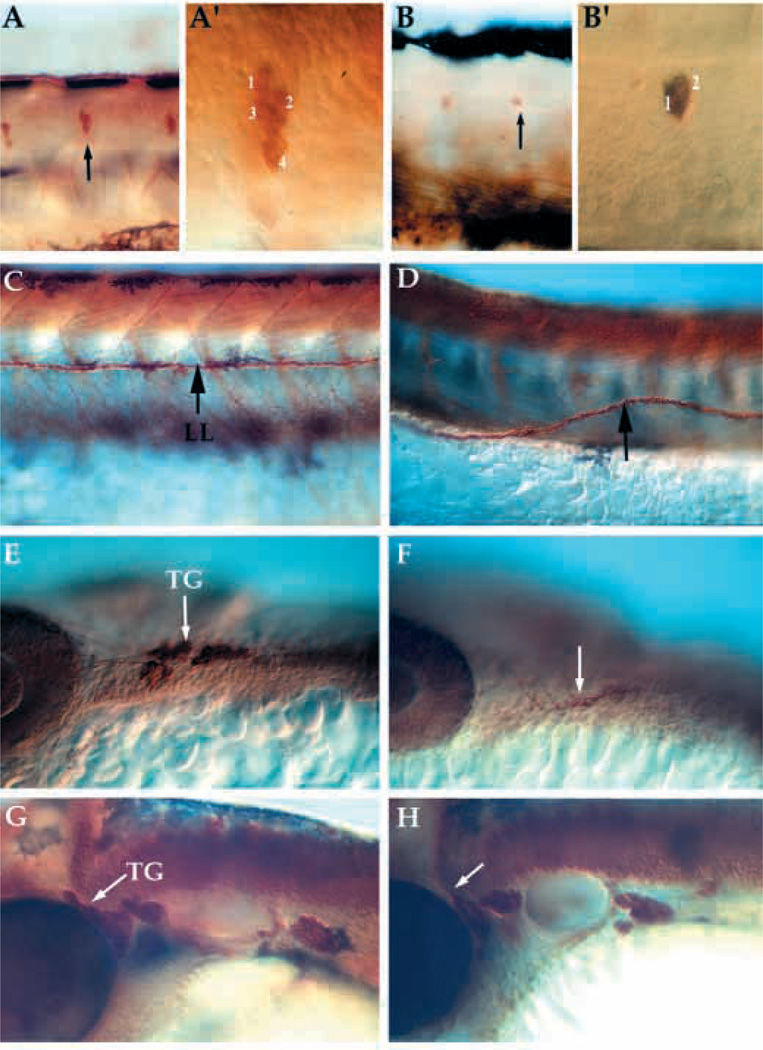
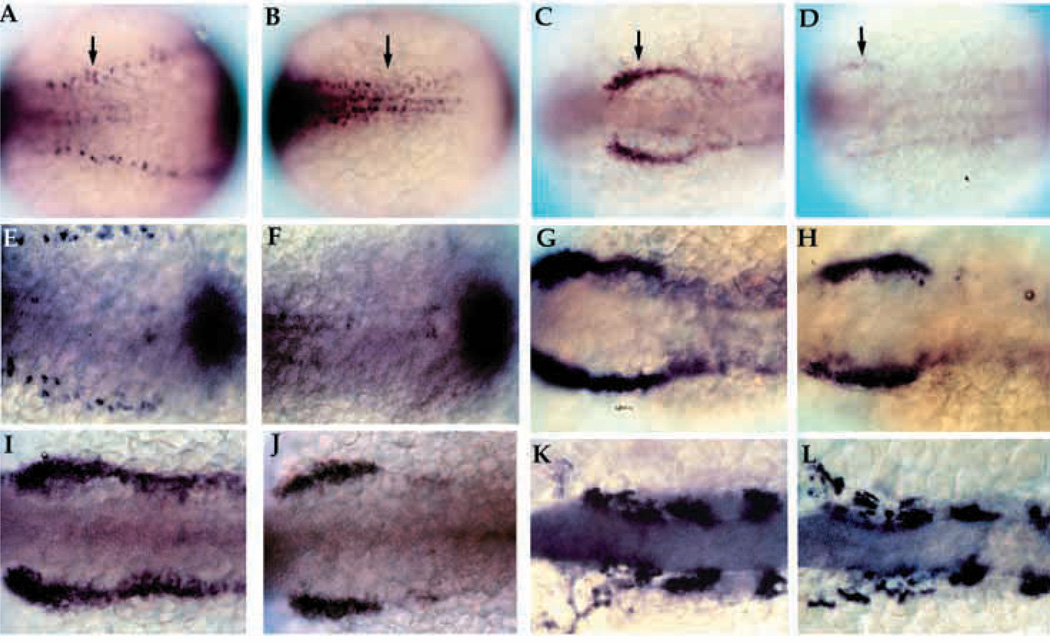
In the developing vertebrate nervous system, both neural crest and sensory neurons form at the boundary between non-neural ectoderm and the neural plate. From an in situ hybridization based expression analysis screen, we have identified a novel zebrafish mutation, narrowminded (nrd), which reduces the number of early neural crest cells and eliminates Rohon-Beard (RB) sensory neurons. Mosaic analysis has shown that the mutation acts cell autonomously suggesting that nrd is involved in either the reception or interpretation of signals at the lateral neural plate boundary. Characterization of the mutant phenotype indicates that nrd is required for a primary wave of neural crest cell formation during which progenitors generate both RB sensory neurons and neural crest cells. Moreover, the early deficit in neural crest cells in nrd homozygotes is compensated later in development. Thus, we propose that a later wave can compensate for the loss of early neural crest cells but, interestingly, not the RB sensory neurons. We discuss the implications of these findings for the possibility that RB sensory neurons and neural crest cells share a common evolutionary origin.
Figures

References
-
- Appel B, Eisen JS. Regulation of neuronal specification in the zebrafish spinal cord by Delta function. Development. 1998;135:371–380. - PubMed
-
- Artinger KB, Bronner-Fraser M. Partial restriction in the developmental potential of late emigrating neural crest cells. Dev. Biol. 1992;149:149–157. - PubMed
-
- Baker CV, Bronner-Fraser M. The origins of the neural crest. Part I: embryonic induction. Mech. Dev. 1997;69:3–11. - PubMed
-
- Baker CV, Bronner-Fraser M, Le Douarin NM, Teillet MA. Early- and late-migrating cranial neural crest cell populations have equivalent developmental potential in vivo. Development. 1997;124:3077–3087. - PubMed
Publication types
MeSH terms
Substances
Grants and funding
LinkOut - more resources
Full Text Sources
Molecular Biology Databases