. 1999 Sep 15;519 Pt 3(Pt 3):737-51.
doi: 10.1111/j.1469-7793.1999.0737n.x.

Control of apical membrane chloride permeability in the renal A6 cell line by nucleotides

Affiliations

Control of apical membrane chloride permeability in the renal A6 cell line by nucleotides

U Banderali et al. J Physiol. .

Abstract

1. The effect of extracellular nucleotides applied on the apical side of polarised A6 cells grown on permeant filters was investigated by measuring the changes in (i) the 36Cl efflux through the apical membranes, (ii) the intracellular chloride concentrations (aCli, measured with N-(6-methoxyquinolyl) acetoethyl ester, MQAE), (iii) ICl, the short-circuit current in the absence of Na+ transport and (iv) the characteristics of the apical chloride channels using a patch-clamp approach. 2. ATP or UTP (0.1-500 microM) transiently stimulated ICl. The sequence of purinergic agonist potencies was UTP = ATP > ADP >> the P2X-selective agonist beta,gamma-methylene ATP = the P2Y-selective agonist 2-methylthioATP. Suramin (100 microM) as the P2Y antagonist Reactive Blue 2 (10 microM) had no effect on the UTP (or ATP)-stimulated current. These findings are consistent with the presence of P2Y2-like receptors located on the apical membranes of A6 cells. Apical application of adenosine also transiently increased ICl. This effect was blocked by theophylline while the UTP-stimulated ICl was not. The existence of a second receptor, of the P1 type is proposed. 3. ATP (or UTP)-stimulated ICl was blocked by apical application of 200 microM N-phenylanthranilic acid (DPC) or 100 microM niflumic acid while 100 microM glibenclamide was ineffective. 4. Ionomycin and thapsigargin both transiently stimulated ICl; the nucleotide stimulation of ICl was not suppressed by pre-treatment with these agents. Chlorpromazin (50 microM), a Ca2+-calmodulin inhibitor strongly inhibited the stimulation of ICl induced either by apical UTP or by ionomycin application. BAPTA-AM pre-treatment of A6 cells blocked the UTP-stimulated ICl. Niflumic acid also blocked the ionomycin stimulated ICl. 5. A fourfold increase in 36Cl effluxes through the apical membranes was observed after ATP or UTP application. These increases of the apical chloride permeability could also be observed when following aCli changes. Apical application of DPC (1 mM) or 5-nitro-2(3-phenylpropylamino)benzoic acid (NPPB; 500 microM) produced an incomplete inhibition of 36Cl effluxes through the apical membranes in ATP-stimulated and in untreated monolayers. 6. In single channel patch-clamp experiments, an apical chloride channel with a unitary single channel conductance of 7.3 +/- 0.6 pS (n = 12) was usually observed. ATP application induced the activation of one or more of these channels within a few minutes. 7. These results indicate that multiple purinergic receptor subtypes are present in the apical membranes of A6 cells and that nucleotides can act as modulators of Cl- secretion in renal cells.


Figures
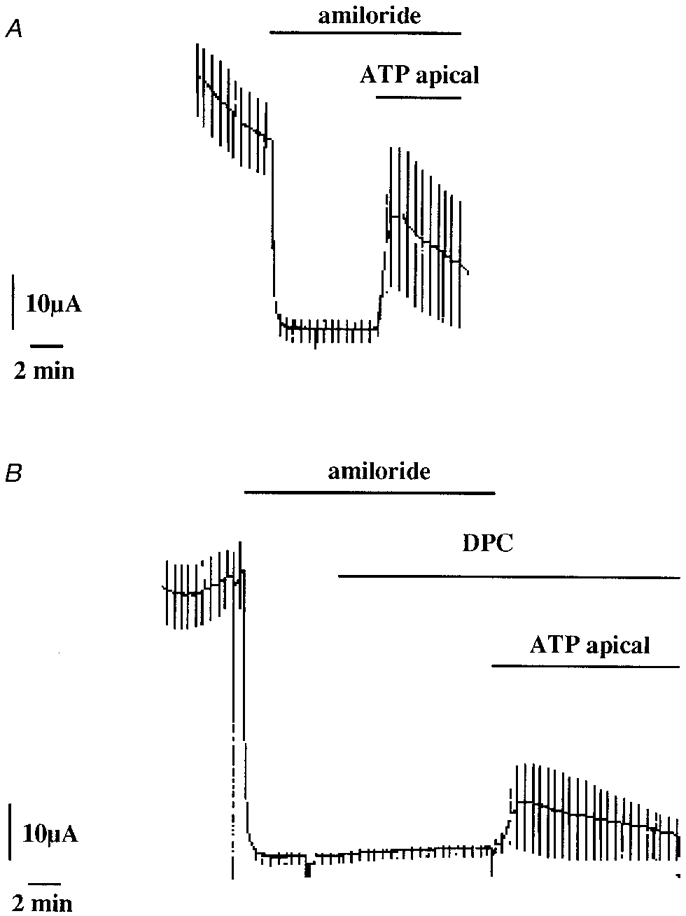
Figure 1
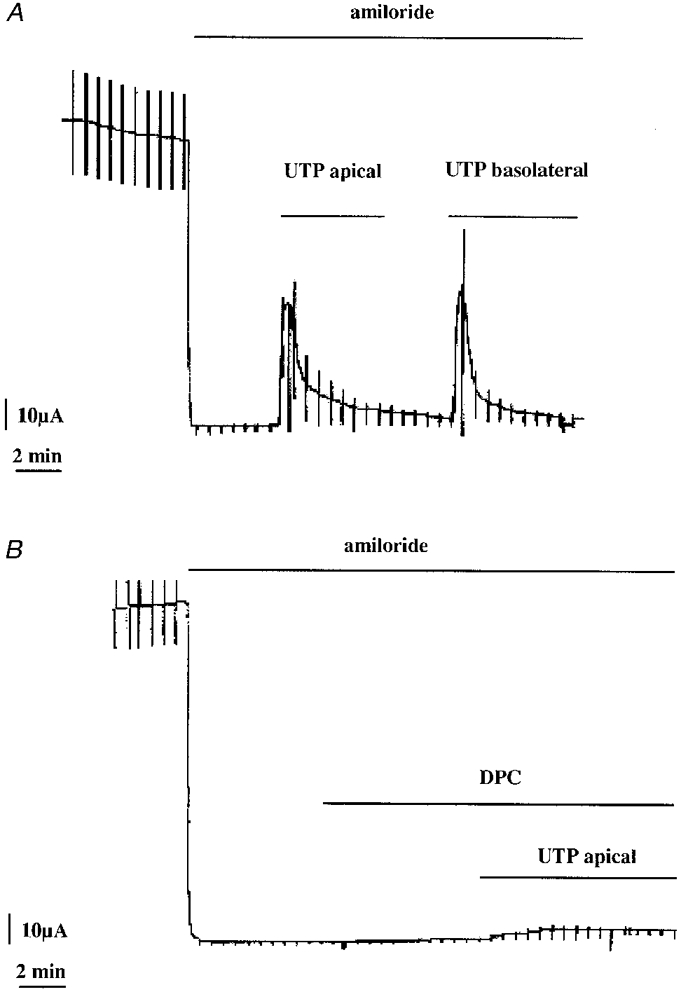
Figure 1. The effect of ATP application on the short-circuit current in A6 cell monolayers
ATP (300 μm) was applied on the apical side in the presence of 50 μm amiloride in order to block sodium transport (A). The ATP-stimulated short-circuit current was inhibited by the presence of 200 μm DPC in to the apical solution (B). The current is given in μA for a filter surface area of 4.9 cm2.
Figure 2
Figure 2. The effect of UTP application on the short-circuit current in A6 cell monolayers
UTP (300 μm) was applied on the apical side in the presence of 50 μm amiloride in order to block sodium transport (A). The UTP-stimulated short-circuit current was inhibited by the presence of 200 μm DPC in the apical solution (B).
Figure 3
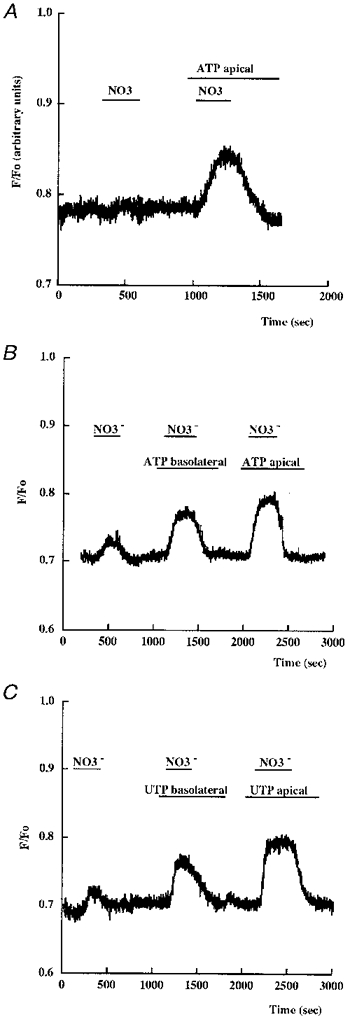
Figure 3. Effects of ATP and UTP on apical Cl permeability (aCli changes) in A6 cells
Changes in the F/Fo ratio of MQAE fluoresence were followed after substitution of nitrate for chloride in the apical perfusing medium. A typical experiment is shown representing F/Fo changes observed in the absence or presence of 300 μm ATP on the apical side of a monolayer presenting a very low Cl permeability before nucleotide addition (A). In B the effect of ATP applied first to the basolateral then to the apical side is reported for a monolayer presenting a low Cl permeability before nucleotide addition. The effect of UTP is shown in C.
Figure 4
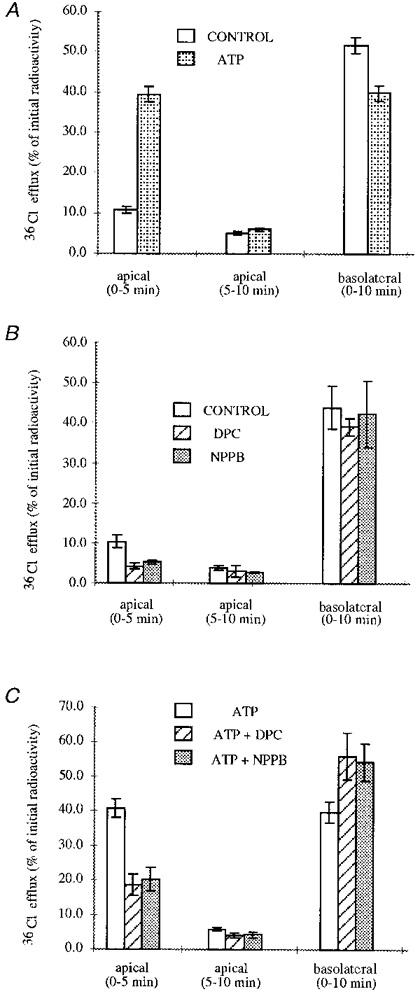
Figure 4. ATP stimulation of 36Cl effluxes through the apical membranes in A6 cells
Effects of DPC and NPPB. In untreated monolayers, 36Cl effluxes were much higher through the basolateral membrane than through the apical membrane. Apical application of 300 μm ATP stimulated 36Cl effluxes through these membranes. As a consequence, the Cl effluxes through the basolateral membranes were reduced since the 36Cl-specific radioactivity of the cell decreased (A). Apical applicationof DPC (1 mM) or NPPB (500 μm) produced a partial inhibition of 36Cl effluxes through the applical membranes in ATP-stimulated (C) or in untreated monolayers (B).
Figure 5
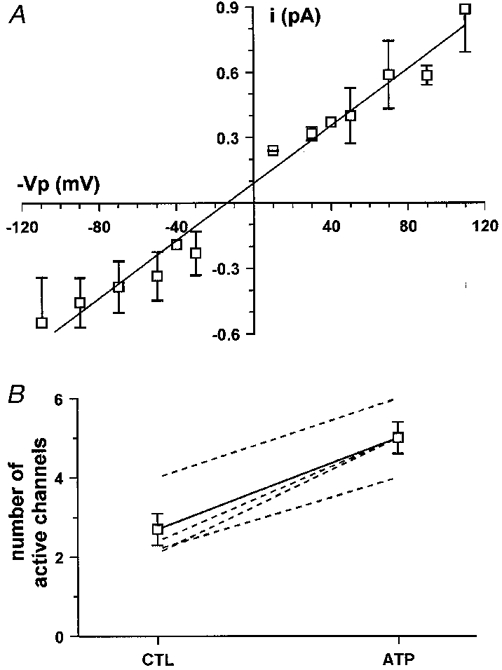
Figure 5. ATP stimulation of apical chloride channels and their I-V relationship
A, current-voltage relationship of the chloride channel stimulated by luminal ATP. The unitary conductance of the channel was 7.3 pS (Vp, pipette potential). B, luminal ATP increases the number of active channels. The number of active channels in the patch was evaluated using the NT estimator in the recording under control conditions (CTL) and the MAX estimator in the recording after ATP addition. Dashed lines are results from single experiments and the continuous line is the average.
Figure 6
Figure 6. Stimulation of apical chloride channel activity by luminal ATP
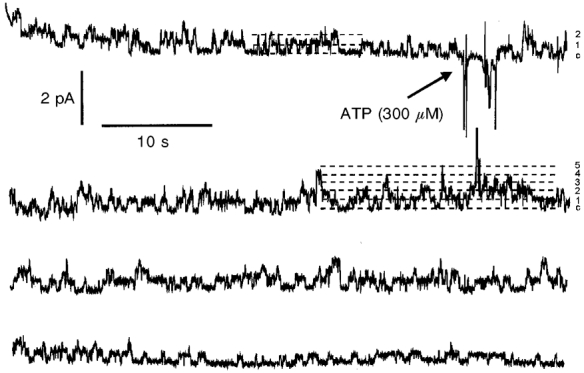
Recording showing apical chloride channel activity before and after addition of 300 μm ATP to the luminal solution. In control conditions, the signal revealed the activity of two channels. In contrast, up to five different channels could open simultaneously 1 min after addition of ATP. The dashed lines represent the current levels corresponding to all channels closed and up to five channels open at the same time.
Figure 7
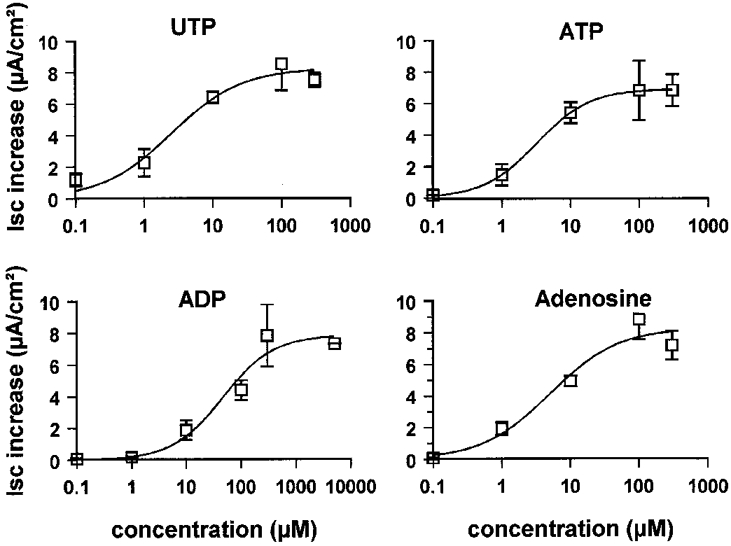
Figure 7. Concentration-response curves for UTP, ATP, ADP and adenosine
The nucleotides were added to the apical sides of cell monolayers. The curves represent the relation between maximal current increase (ordinate) and concentration (abscissa) of ATP (n = 5), UTP (n = 5), ADP (n = 6) and adenosine (n = 5). Means ±s.e.m. (vertical bars).
Figure 8
Figure 8. Effect of theophylline on the adenosine- or UTP-stimulated currents in A6 cell monolayers
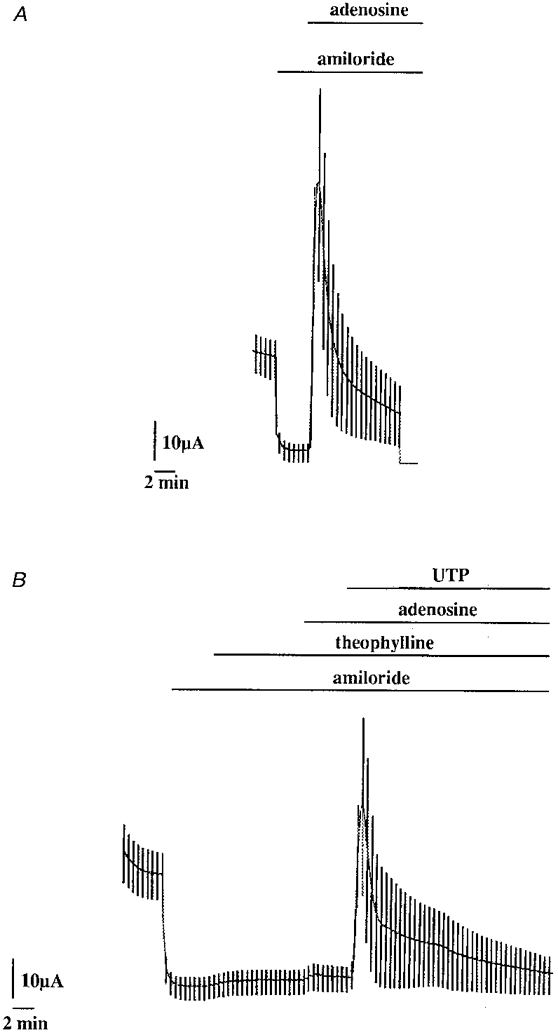
Typical experiments showing the inhibitory effect of 100 μm theophylline (B) before 100 μm adenosine application (compared with the paired experiment in the absence of theophylline (A). Theophylline had no effect on the 100 μm UTP response. Theophylline, adenosine and UTP were all applied on the apical side of the cell monolayer.
Figure 9
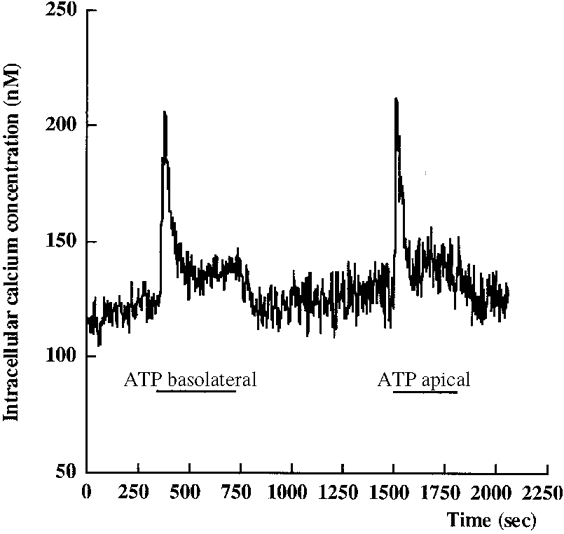
Figure 9. A transient increase in Cai2+ was observed after serosal or mucosal ATP application in A6 cell monolayers
A typical experiment is shown. The cell monolayer was continuously perfused.
Figure 10
Figure 10. Effect of thapsigargin on the short-circuit current in A6 cell monolayers
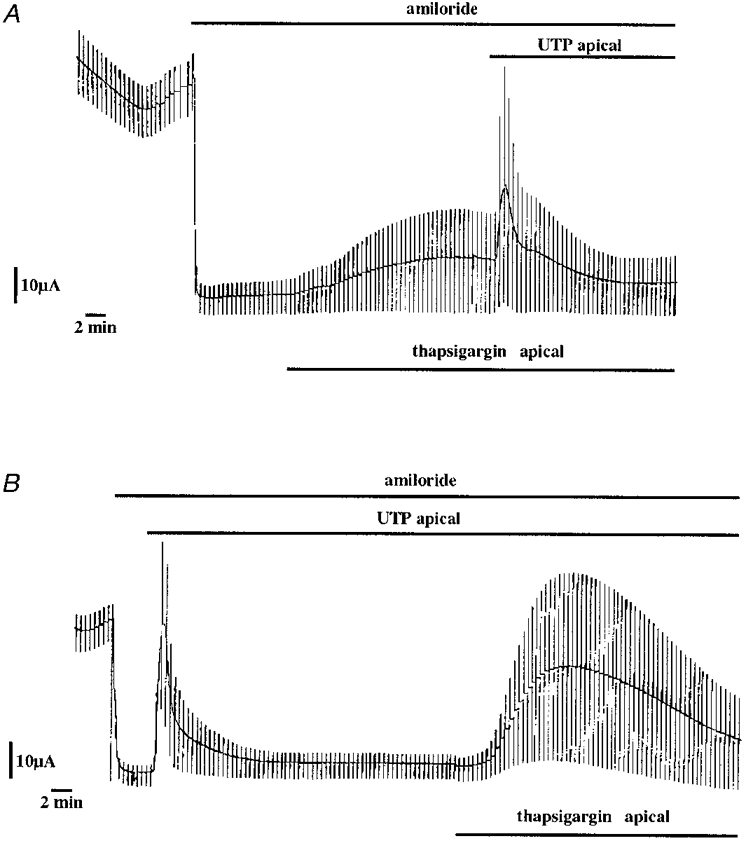
Thapsigargin (200 nM) was added before (A) or after (B) UTP application. Note that the thapsigargin stimulation of ISC was more progressive than the UTP response.
Figure 11
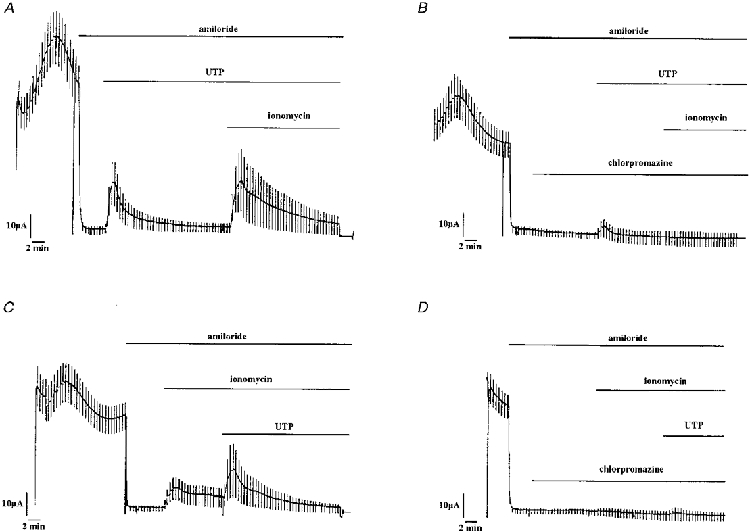
Figure 11. Effect of chlorpromazin on the UTP or ionomycin stimulated short-circuit current in A6 cell monolayers
Apical application of 50 μm chlorpromazin blocked UTP (300 μm)- or ionomycin (5 μm)-stimulated short-circuit currents. In A and B, UTP was applied before ionomycin whereas in C and D ionomycin was applied first.

References

    1. Ackerman MJ, Wickman KD, Clapham DE. Hypotonicity activates a native chloride current in Xenopus oocytes. Journal of General Physiology. 1994;103:153–179. - PMC - PubMed
    1. Barnard EA, Simon J, Webb TE. Nucleotide receptors in the nervous system. An abundant component using diverse transduction mechanisms. Review of Molecular Neurobiology. 1997;15:103–129. - PubMed
    1. Begenisich T, Melvin JE. Regulation of chloride channels in epithelia. Journal of Membrane Biology. 1998;163:77–85. - PubMed
    1. Bhagwat SS, Williams M. Purine and pyrimidine receptors: emerging superfamilies of G-protein-coupled and ligand-gated-ion channel receptors. European Journal of Medical Chemistry. 1997;32:183–193.
    1. Brochiero E, Banderali U, Lindenthal S, Raschi C, Ehrenfeld J. Basolateral membrane chloride permeability of A6 cells: implication in cell volume regulation. Pflügers Archiv. 1995a;431:32–46. - PubMed

Publication types

LinkOut - more resources