


Risk factors for treatment outcome of suspected microbial keratitis. Ofloxacin Study Group
- PMID: 10460769
- PMCID: PMC1723169
- DOI: 10.1136/bjo.83.9.1027
Risk factors for treatment outcome of suspected microbial keratitis. Ofloxacin Study Group
Abstract
Background: Primary treatment for suspected microbial keratitis is generally successful. Although risks such as contact lens use are well recognised as causative factors for microbial keratitis, little is known about the risk factors that influence treatment outcome. The present study evaluates the risk factors assessed at diagnosis as prognostic indicators of primary treatment failure.
Methods: Patients were prospectively enrolled in the ofloxacin treatment trial and data concerning symptoms, treatments, past and concurrent eye disease were collected along with the measurement of corneal ulcer size at the slit lamp. All patients were scraped for microbiological investigation, and treated with either ofloxacin (0. 3%) or standard therapy of fortified cefuroxime and gentamicin drops. Treatment success was complete healing of the ulcer with zero dimensions of the epithelial defect within 2 weeks of start of treatment. The important prognostic indicators were selected by comparison among those who failed treatment, had delayed healing, or were culture positive with other patients using univariate and stratified analysis. These were then used in a Poisson model for multiple regression analysis to estimate the relative risk of the main prognostic variables.
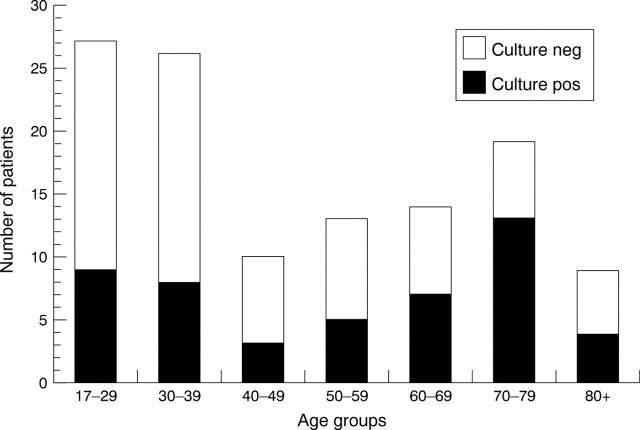
Results: Of the 118 patients enrolled in the study, 14 were identified as primary treatment failures, 17 had slow healing, and 15 indolent ulcers. There were 49 culture positive patients. The multivariate analysis identified that large culture positive ulcers in patients 60 years or older had 5.5 times the risk of primary treatment failure (p<0.001). Significant predictors of slow healing were previous ocular disease and a positive culture; significant predictors of indolent ulceration were previous ocular disease and steroid use at diagnosis; the main predictor of a culture positive result was ulcer size.
Conclusions: Elderly patients with large ulcers were more likely to be culture positive, fail primary therapy, and require surgical intervention. A positive microbial culture provided prognostic information regardless of the organism isolated. However, this information was of less value for those with small ulcers and for younger patients.
Figures
References
Publication types
MeSH terms
Substances
LinkOut - more resources
Full Text Sources
Miscellaneous
