


Amplified fragment length polymorphism fingerprinting of Pseudomonas strains from a poultry processing plant
- PMID: 10473382
- PMCID: PMC99707
- DOI: 10.1128/AEM.65.9.3828-3833.1999
Amplified fragment length polymorphism fingerprinting of Pseudomonas strains from a poultry processing plant
Abstract
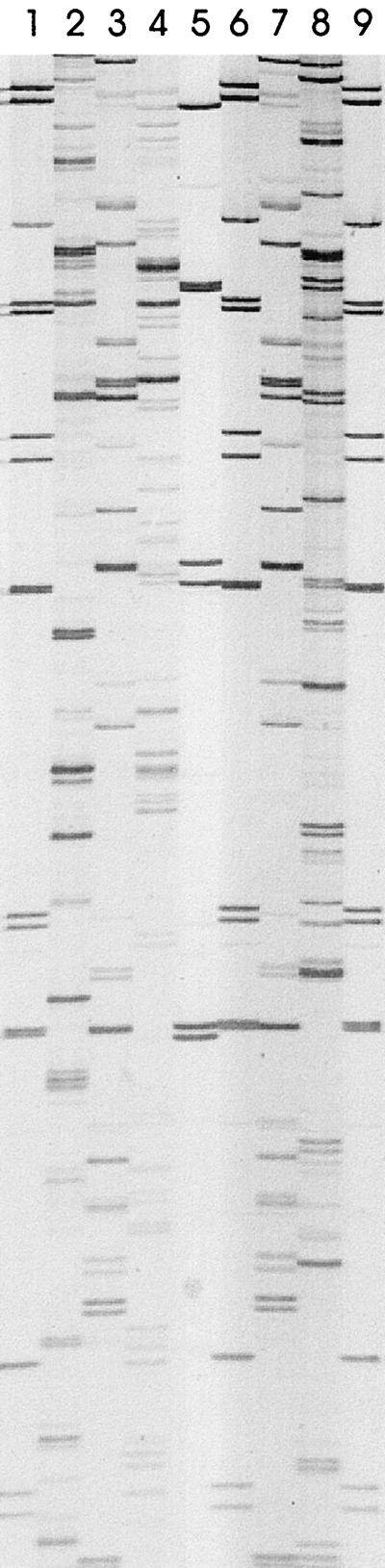
Molecular typing has been used previously to identify and trace dissemination of pathogenic and spoilage bacteria associated with food processing. Amplified fragment length polymorphism (AFLP) is a novel DNA fingerprinting technique which is considered highly reproducible and has high discriminatory power. This technique was used to fingerprint 88 Pseudomonas fluorescens and Pseudomonas putida strains that were previously isolated from plate counts of carcasses at six processing stages and various equipment surfaces and environmental sources of a poultry abattoir. Clustering of the AFLP patterns revealed a high level of diversity among the strains. Six clusters (clusters I through VI) were delineated at an arbitrary Dice coefficient level of 0.65; clusters III (31 strains) and IV (28 strains) were the largest clusters. More than one-half (52.3%) of the strains obtained from carcass samples, which may have represented the resident carcass population, grouped together in cluster III. By contrast, 43.2% of the strains from most of the equipment surfaces and environmental sources grouped together in cluster IV. In most cases, the clusters in which carcass strains from processing stages grouped corresponded to the clusters in which strains from the associated equipment surfaces and/or environmental sources were found. This provided evidence that there was cross-contamination between carcasses and the abattoir environment at the DNA level. The AFLP data also showed that strains were being disseminated from the beginning to the end of the poultry processing operation, since many strains associated with carcasses at the packaging stage were members of the same clusters as strains obtained from carcasses after the defeathering stage.
Figures

References
-
- Aarts H J M, van Lith L A J T, Keijer J. High-resolution genotyping of Salmonella strains by AFLP-fingerprinting. Lett Appl Microbiol. 1998;26:131–135. - PubMed
-
- Arimi S M, Ryser E T, Pritchard T J, Donnelly C W. Diversity of Listeria ribotypes recovered from dairy cattle, silage, and dairy processing environments. J Food Prot. 1997;60:811–816. - PubMed
-
- Barnes E M. Microbiological problems of poultry at refrigerator temperatures—a review. J Sci Food Agric. 1976;27:777–782. - PubMed
-
- Bassam B J, Caetano-Anollés G, Gresshoff P M. Fast and sensitive silver staining of DNA in polyacrylamide gels. Anal Biochem. 1991;196:80–83. - PubMed
Publication types
MeSH terms
Substances
LinkOut - more resources
Full Text Sources
