


Studies in B7-deficient mice reveal a critical role for B7 costimulation in both induction and effector phases of experimental autoimmune encephalomyelitis
- PMID: 10477557
- PMCID: PMC2195617
- DOI: 10.1084/jem.190.5.733
Studies in B7-deficient mice reveal a critical role for B7 costimulation in both induction and effector phases of experimental autoimmune encephalomyelitis
Abstract
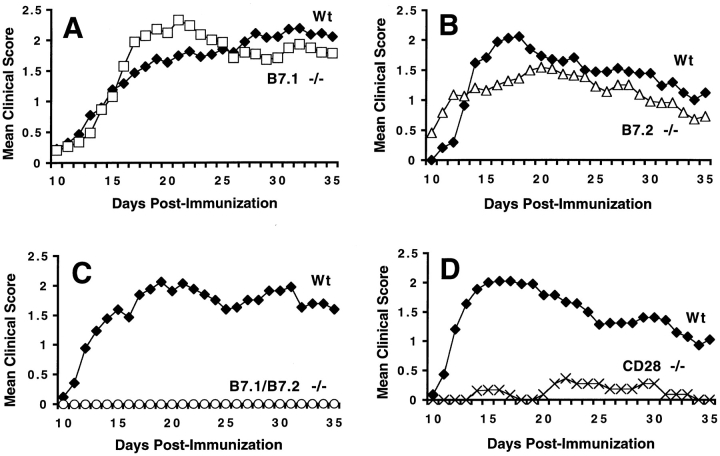
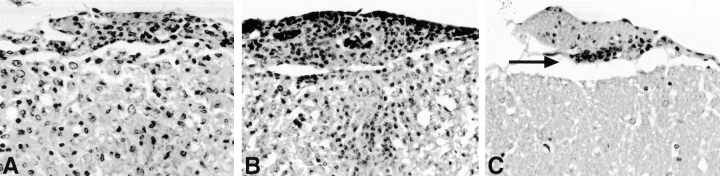
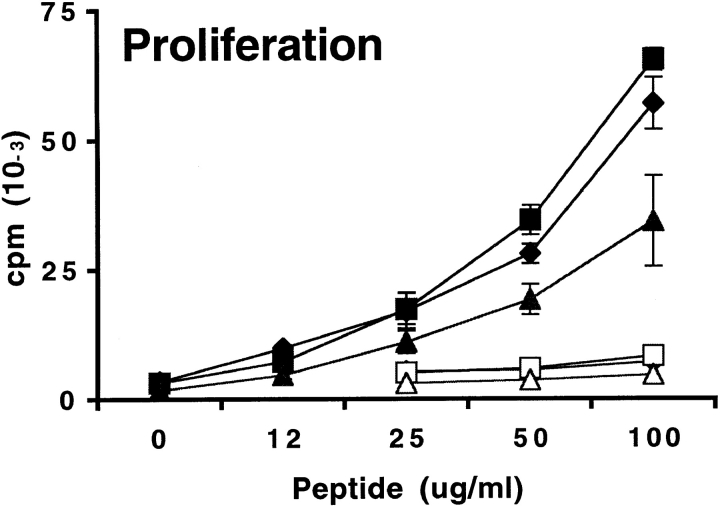
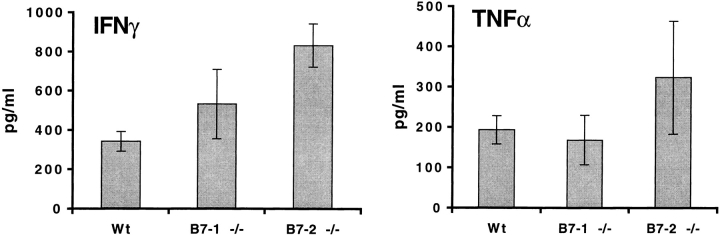
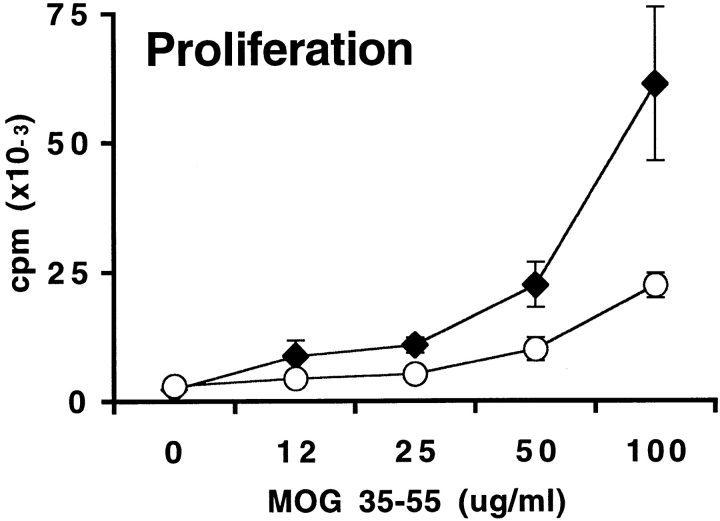
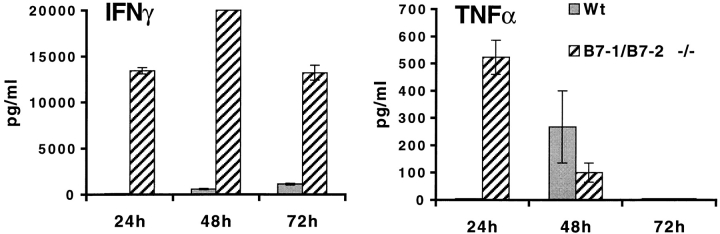
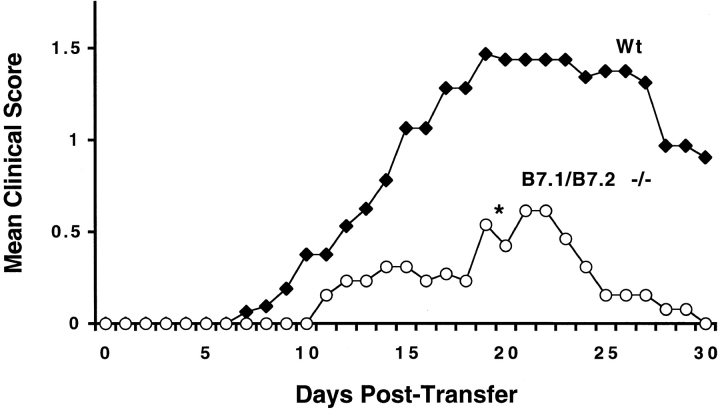
The importance of B7 costimulation in regulating T cell expansion and peripheral tolerance suggests that it may also play a significant regulatory role in the development of autoimmune disease. It is unclear whether B7 costimulation is involved only in the expansion of autoreactive T cells in the periphery, or if it is also required for effector activation of autoreactive T cells in the target organ for mediating tissue injury and propagating autoimmune disease. In this study, the role of B7-CD28 costimulation and the relative importance of B7 costimulators for the induction and effector phases of experimental autoimmune encephalomyelitis (EAE) induced by myelin oligodendrocyte glycoprotein (MOG) peptide were examined. Wild-type, B7-1/B7-2-deficient mice, or CD28-deficient C57BL/6 mice were immunized with MOG 35-55 peptide. Mice lacking both B7-1 and B7-2 or CD28 showed no or minimal clinical signs of EAE and markedly reduced inflammatory infiltrates in the brain and spinal cord. However, mice lacking either B7-1 or B7-2 alone developed clinical and pathologic EAE that was comparable to EAE in wild-type mice, indicating overlapping functions for B7-1 and B7-2. Resistance to EAE was not due to a lack of induction of T helper type 1 (Th1) cytokines, since T cells from B7-1/B7-2(-/-) mice show reduced proliferative responses, but greater interferon gamma production compared with T cells from wild-type mice. To study the role of B7 molecules in the effector phase of the disease, MOG 35-55-specific T lines were adoptively transferred into the B7-1/B7-2(-/-) and wild-type mice. Clinical and histologic EAE were markedly reduced in B7-1/B7-2(-/-) compared with wild-type recipient mice. These results demonstrate that B7 costimulation has critical roles not only in the initial activation and expansion of MOG-reactive T cells, but also in the effector phase of encephalitogenic T cell activation within the central nervous system.
Figures
References
-
- McAdam A.J., Schweitzer A.N., Sharpe A.H. The role of B7 co-stimulation in activation and differentiation of CD4+ and CD8+ T cells. Immunol. Rev. 1998;165:231–247. - PubMed
-
- Kuchroo V., Das M.P., Brown J.A., Ranger A.M., Zamvil S.S., Sobel R.A., Weiner H.L., Nabavi N., Glimcher L.H. B7-1 and B7-2 costimulatory molecules activate differentially the Th1/Th2 developmental pathwaysapplication to autoimmune disease therapy. Cell. 1995;80:707–718. - PubMed
-
- Miller S.D., Vanderlugt C.L., Lenschow D.J., Pope J.G., Karandikar N.J., Dal Canto M.C., Bluestone J.A. Blockade of CD28/B7-1 interaction prevents epitope spreading and clinical relapses of murine EAE. Immunity. 1995;3:739–745. - PubMed
-
- Borriello F., Sethna M.P., Boyd S.D., Schweitzer A.N., Tivol E.A., Jacoby D., Strom T.B., Simpson E.M., Freeman G.J., Sharpe A.H. B7-1 and B7-2 have overlapping, critical roles in immunoglobulin class switching and germinal center formation. Immunity. 1997;6:303–313. - PubMed
Publication types
MeSH terms
Substances
Grants and funding
LinkOut - more resources
Full Text Sources
Other Literature Sources
Molecular Biology Databases
