


Target structures of the CD8(+)-T-cell response to human cytomegalovirus: the 72-kilodalton major immediate-early protein revisited
- PMID: 10482568
- PMCID: PMC112835
- DOI: 10.1128/JVI.73.10.8179-8184.1999
Target structures of the CD8(+)-T-cell response to human cytomegalovirus: the 72-kilodalton major immediate-early protein revisited
Abstract
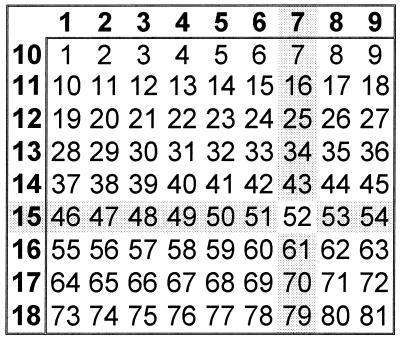
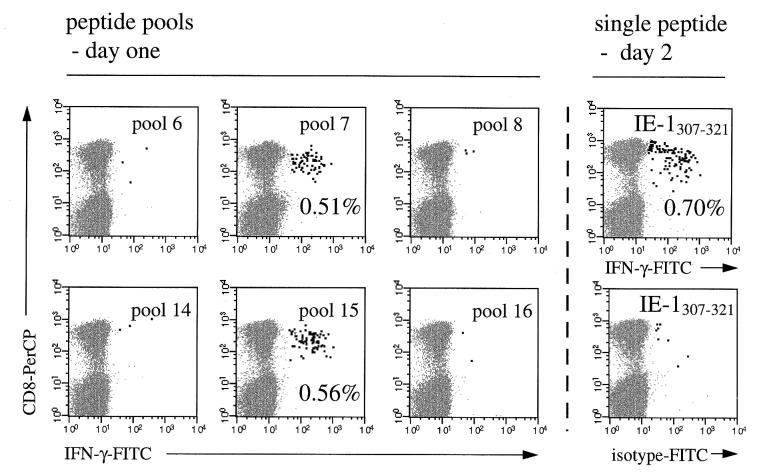
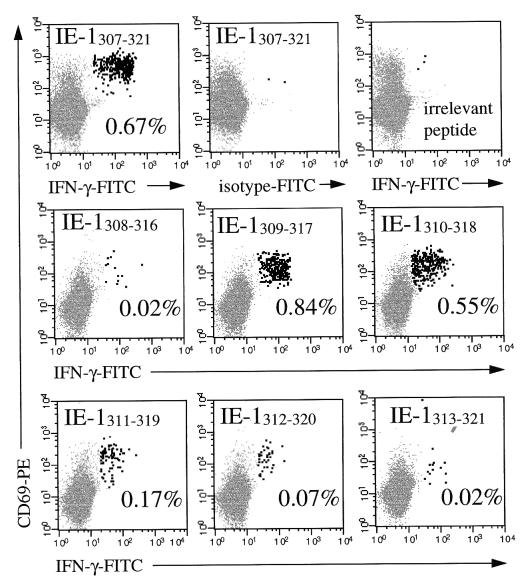
Cell-mediated immunity plays an essential role in the control of infection with the human cytomegalovirus (HCMV). However, only a few CD8(+)-T-cell epitopes are known, with the majority being contained in the pp65 phosphoprotein, which is believed to dominate the CD8(+)-T-cell response to HCMV. Here, we have readdressed the issue of CD8(+) T cells specific for the 72-kDa major immediate-early protein (IE-1), which is nonstructural but is found very early and throughout the replicative cycle. Using a novel flow-cytometric assay, we were able to identify CD8(+)-T-cell epitopes (by IE-1 peptide-specific induction of cytokine synthesis) and simultaneously measure the frequency of cells directed against them. For this purpose, 81 pentadecamer peptides covering the complete 491-amino-acid sequence of IE-1 were tested on peripheral blood mononuclear cells of anti-HCMV immunoglobulin G-seropositive donors. At least 10 new epitopes were identified, and the fine specificity and presenting HLA molecule of the first of them was determined. The frequencies of CD8(+) T cells directed against IE-1 were similar to those directed against pp65 in donors tested with known pp65-derived peptides. Importantly, additional testing of a corresponding set of peptides covering the complete sequence of pp65 on 10 of these donors identified individuals whose CD8(+) T cells recognized IE-1 but not pp65 and vice versa, clearly illustrating that either protein may be a major target. In summary, our results suggest that IE-1 is far more important as a CD8(+)-T-cell target than current opinion suggests.
Figures
References
-
- Borysiewicz L K, Hickling J K, Graham S, Sinclair J, Cranage M P, Smith G L, Sissons J G. Human cytomegalovirus-specific cytotoxic T cells. Relative frequency of stage-specific CTL recognizing the 72-kD immediate early protein and glycoprotein B expressed by recombinant vaccinia viruses. J Exp Med. 1988;168:919–931. - PMC - PubMed
-
- Burns L J, Pooley J C, Walsh D J, Vercellotti G M, Weber M L, Kovacs A. Intercellular adhesion molecule-1 expression in endothelial cells is activated by cytomegalovirus immediate early proteins. Transplantation. 1999;67:137–144. - PubMed
-
- Craigen J L, Grundy J E. Cytomegalovirus induced up-regulation of LFA-3 (CD58) and ICAM-1 (CD54) is a direct viral effect that is not prevented by ganciclovir or foscarnet treatment. Transplantation. 1996;62:1102–1108. - PubMed
-
- Diamond D J, York J, Sun J Y, Wright C L, Forman S J. Development of a candidate HLA A*0201 restricted peptide-based vaccine against human cytomegalovirus infection. Blood. 1997;90:1751–1767. - PubMed
MeSH terms
Substances
LinkOut - more resources
Full Text Sources
Other Literature Sources
Medical
Research Materials
