


Synergistic fungistatic effects of lactoferrin in combination with antifungal drugs against clinical Candida isolates
- PMID: 10543740
- PMCID: PMC89536
- DOI: 10.1128/AAC.43.11.2635
Synergistic fungistatic effects of lactoferrin in combination with antifungal drugs against clinical Candida isolates
Abstract
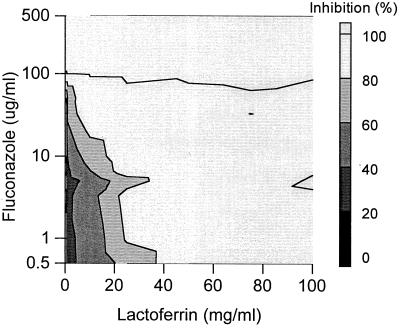
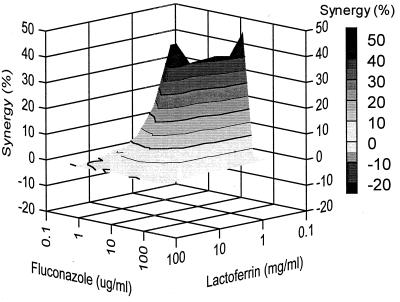
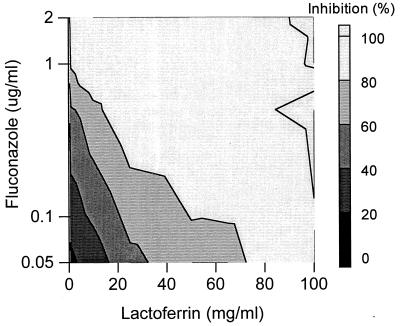
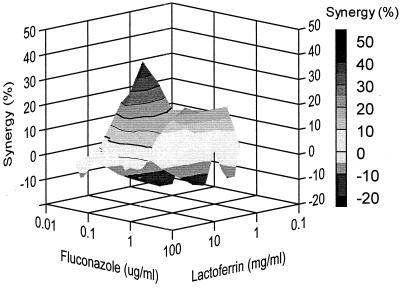
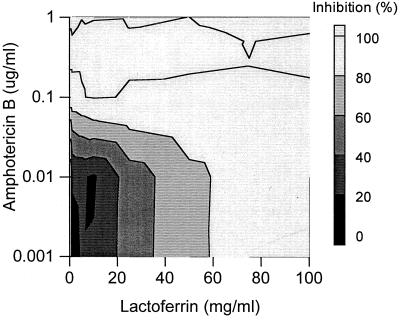
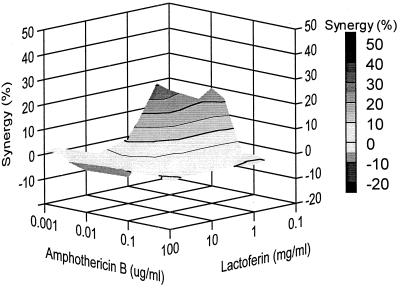
Because of the rising incidence of failures in the treatment of oropharyngeal candidosis in the case of severely immunosuppressed patients (mostly human immunodeficiency virus [HIV]-infected patients), there is need for the development of new, more effective agents and/or compounds that support the activity of the common antifungal agents. Since lactoferrin is one of the nonspecific host defense factors present in saliva that exhibit antifungal activity, we studied the antifungal effects of human, bovine, and iron-depleted lactoferrin in combination with fluconazole, amphotericin B, and 5-fluorocytosine in vitro against clinical isolates of Candida species. Distinct antifungal activities of lactoferrin were observed against clinical isolates of Candida. The MICs generally were determined to be in the range of 0.5 to 100 mg. ml(-1). Interestingly, in the combination experiments we observed pronounced cooperative activity against the growth of Candida by using lactoferrin and the three antifungals tested. Only in a limited concentration range was minor antagonism detected. The use of lactoferrin and fluconazole appeared to be the most successful combination. Significant reductions in the minimal effective concentrations of fluconazole were found when it was combined with a relatively low lactoferrin concentration (1 mg/ml). Such combinations still resulted in complete growth inhibition, while synergy of up to 50% against several Candida species was observed. It is concluded that the combined use of lactoferrin and antifungals against severe infections with Candida is an attractive therapeutic option. Since fluconazole-resistant Candida species have frequently been reported, especially in HIV-infected patients, the addition of lactoferrin to the existing fluconazole therapy could postpone the occurrence of species resistance against fluconazole. Clinical studies to further elucidate the potential utility of this combination therapy have been initiated.
Figures
References
-
- Baily G G, Perry F M, Denning D W, Mandal B K. Fluconazole-resistant candidosis in an HIV cohort. AIDS. 1994;8:787–792. - PubMed
-
- Barchiesi F, DiFrancesco L F, Compagnucci P, Arzeni D, Giacometti A, Scalise G. In-vitro interaction of terbinafine with amphotericin B, fluconazole and itraconazole against clinical isolates of Candida albicans. J Antimicrob Chemother. 1998;41:59–65. - PubMed
-
- Bellamy W, Wakabayashi H, Takase M, Kawase K, Shimamura S, Tomita M. Killing of Candida albicans by lactoferrin B, a potent antimicrobial peptide derived from the N-terminal region of bovine lactoferrin. Med Microbiol Immunol. 1993;182:97–105. - PubMed
-
- Brummer E, Stevens D A. Synergy of human neutrophils with fluconazole in killing Candida species. Mycopathologia. 1996;134:115–120. - PubMed
Publication types
MeSH terms
Substances
LinkOut - more resources
Full Text Sources
Other Literature Sources
