


Diversity of TEM mutants in Proteus mirabilis
- PMID: 10543745
- PMCID: PMC89541
- DOI: 10.1128/AAC.43.11.2671
Diversity of TEM mutants in Proteus mirabilis
Abstract
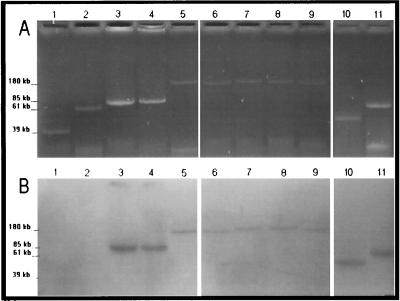
In a survey of resistance to amoxicillin among clinical isolates of Proteus mirabilis, 10 TEM-type beta-lactamases were characterized: (i) the well-known penicillinases TEM-1 and TEM-2, the extended-spectrum beta-lactamases (ESBLs) TEM-3 and TEM-24, and the inhibitor-resistant TEM (IRT) TEM-44 and (ii) five novel enzymes, a penicillinase TEM-57 similar to TEM-1, an ESBL TEM-66 similar to TEM-3, and three IRTs, TEM-65, TEM-73, and TEM-74. The penicillinase TEM-57 and the ESBL TEM-66 differed from TEM-1 and TEM-3, respectively, by the amino acid substitution Gly-92-->Asp (nucleotide mutation G-477-->A). This substitution could have accounted for the decrease in pIs (5.2 for TEM-57 and 6.0 for TEM-66) but did not necessarily affect the intrinsic activities of these enzymes. The IRT TEM-65 was an IRT-1-like IRT (Cys-244) related to TEM-2 (Lys-39). The two other IRTs, TEM-73 and TEM-74, were related to IRT-1 (Cys-244) and IRT-2 (Ser-244), respectively, and harbored the amino acid substitutions Leu-21-->Phe and Thr-265-->Met. In this study, the ESBLs TEM-66, TEM-24, and TEM-3 were encoded by large (170- to 180-kb) conjugative plasmids that exhibited similar patterns after digestion and hybridization with the TEM and AAC(6')I probes. The three IRTs TEM-65, TEM-73, and TEM-74 were encoded by plasmids that ranged in size from 42 to 70 kb but for which no transfer was obtained. The characterization of five new plasmid-mediated TEM-type beta-lactamases and the first report of TEM-24 in P. mirabilis are evidence of the wide diversity of beta-lactamases produced in this species and of its possible role as a beta-lactamase-encoding plasmid reservoir.
Figures
References
-
- Bret L, Chanal C, Sirot D, Labia R, Sirot J. Characterization of an inhibitor-resistant enzyme IRT-2 derived from TEM-2 β-lactamase produced by Proteus mirabilis strains. J Antimicrob Chemother. 1996;38:183–191. - PubMed
Publication types
MeSH terms
Substances
LinkOut - more resources
Full Text Sources
Molecular Biology Databases
Miscellaneous
