


Evaluation and optimization of DNA extraction and purification procedures for soil and sediment samples
- PMID: 10543776
- PMCID: PMC91634
- DOI: 10.1128/AEM.65.11.4715-4724.1999
Evaluation and optimization of DNA extraction and purification procedures for soil and sediment samples
Abstract
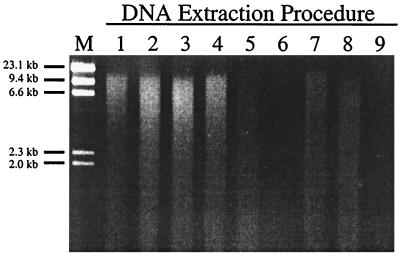
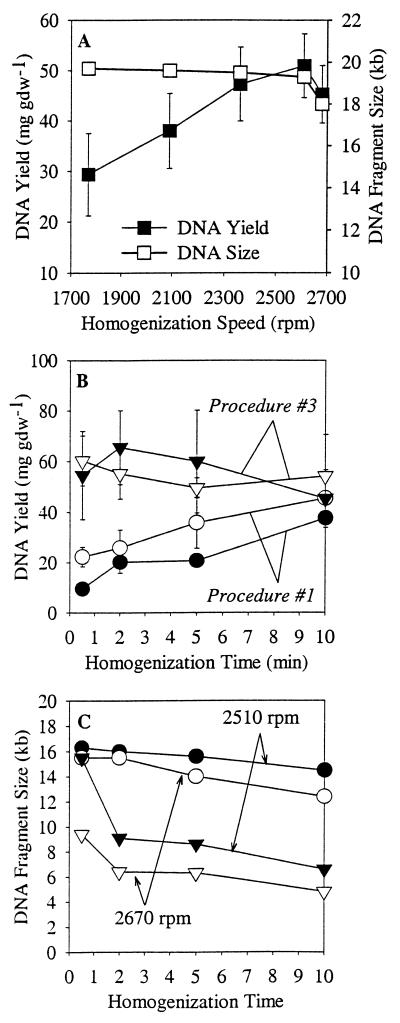
We compared and statistically evaluated the effectiveness of nine DNA extraction procedures by using frozen and dried samples of two silt loam soils and a silt loam wetland sediment with different organic matter contents. The effects of different chemical extractants (sodium dodecyl sulfate [SDS], chloroform, phenol, Chelex 100, and guanadinium isothiocyanate), different physical disruption methods (bead mill homogenization and freeze-thaw lysis), and lysozyme digestion were evaluated based on the yield and molecular size of the recovered DNA. Pairwise comparisons of the nine extraction procedures revealed that bead mill homogenization with SDS combined with either chloroform or phenol optimized both the amount of DNA extracted and the molecular size of the DNA (maximum size, 16 to 20 kb). Neither lysozyme digestion before SDS treatment nor guanidine isothiocyanate treatment nor addition of Chelex 100 resin improved the DNA yields. Bead mill homogenization in a lysis mixture containing chloroform, SDS, NaCl, and phosphate-Tris buffer (pH 8) was found to be the best physical lysis technique when DNA yield and cell lysis efficiency were used as criteria. The bead mill homogenization conditions were also optimized for speed and duration with two different homogenizers. Recovery of high-molecular-weight DNA was greatest when we used lower speeds and shorter times (30 to 120 s). We evaluated four different DNA purification methods (silica-based DNA binding, agarose gel electrophoresis, ammonium acetate precipitation, and Sephadex G-200 gel filtration) for DNA recovery and removal of PCR inhibitors from crude extracts. Sephadex G-200 spin column purification was found to be the best method for removing PCR-inhibiting substances while minimizing DNA loss during purification. Our results indicate that for these types of samples, optimum DNA recovery requires brief, low-speed bead mill homogenization in the presence of a phosphate-buffered SDS-chloroform mixture, followed by Sephadex G-200 column purification.
Figures

References
-
- Ausubel F, Brent R, Kingston R E, Moore D D, Seidman J G, Smith J A, Struhl K. Short protocols in molecular biology. New York, N.Y: John Wiley and Sons, Inc.; 1997.
-
- Beloin R M, Sinclair J L, Ghiorse W C. Distribution and activity of microorganisms in subsurface sediments of a pristine study site in Oklahoma. Microb Ecol. 1988;16:85–97. - PubMed
-
- Boccuzzi V M, Straube W L, Ravel J, Colwell R R, Hill R T. Abstracts of the 95th General Meeting of the American Society for Microbiology 1995. Washington, D.C.: American Society for Microbiology; 1995. Removal of contaminating substances from environmental samples prior to PCR by Sephadex G-200 Spun columns, abstr. N-168; p. 361.
Publication types
MeSH terms
Substances
Grants and funding
LinkOut - more resources
Full Text Sources
Other Literature Sources
