


Cytokine-mediated Bax deficiency and consequent delayed neutrophil apoptosis: a general mechanism to accumulate effector cells in inflammation
- PMID: 10557320
- PMCID: PMC23947
- DOI: 10.1073/pnas.96.23.13330
Cytokine-mediated Bax deficiency and consequent delayed neutrophil apoptosis: a general mechanism to accumulate effector cells in inflammation
Abstract
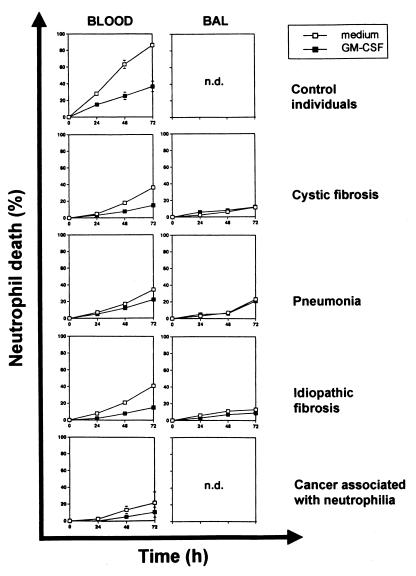
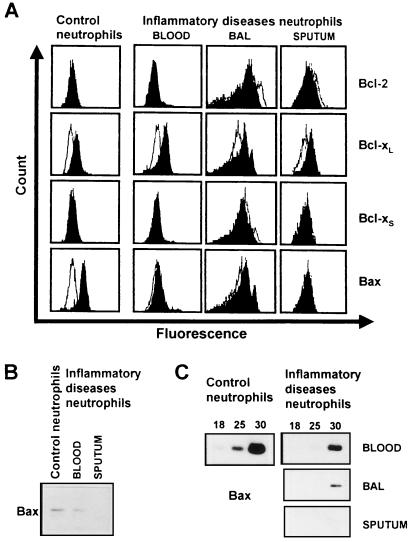
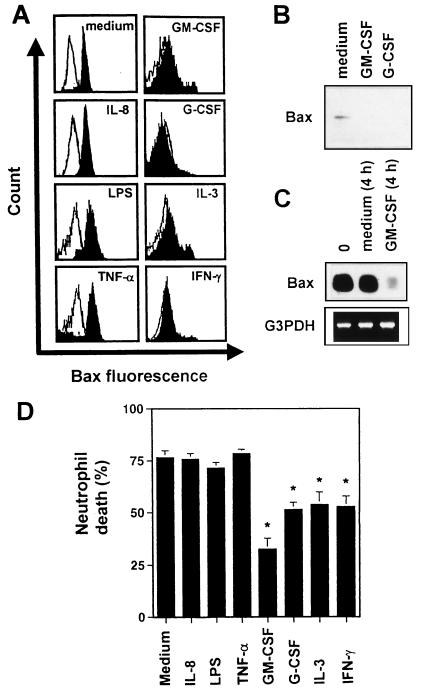
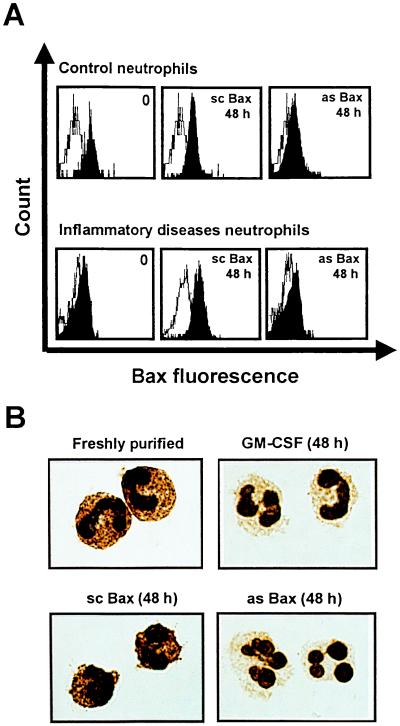
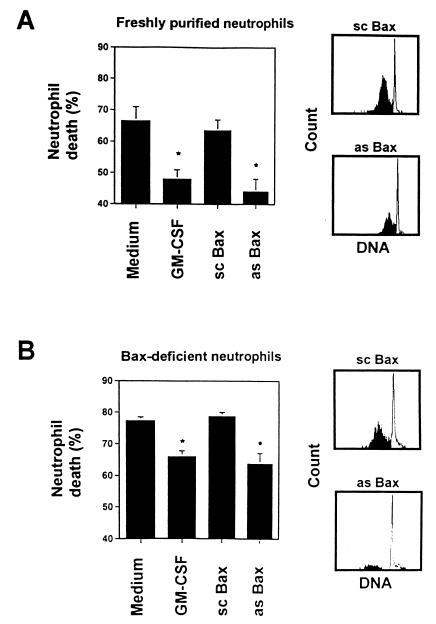
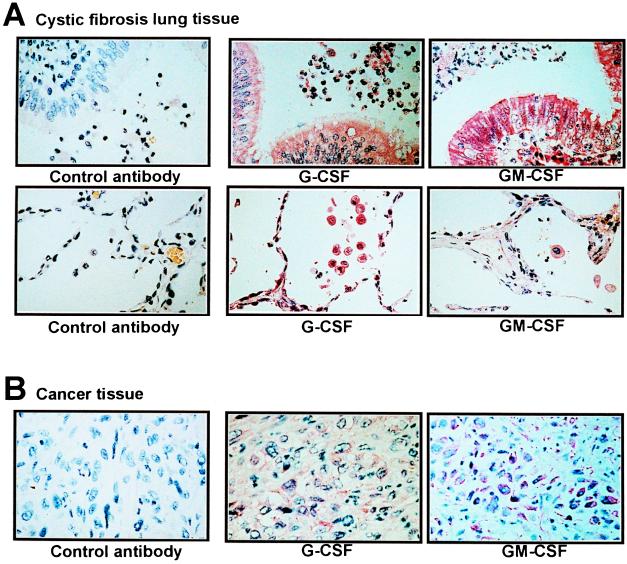
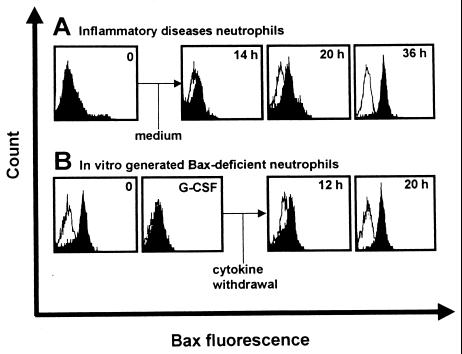
Neutrophils are important effector cells in immunity to microorganisms, particularly bacteria. Here, we show that the process of neutrophil apoptosis is delayed in several inflammatory diseases, suggesting that this phenomenon may represent a general feature contributing to the development of neutrophilia, and, therefore, in many cases to host defense against infection. The delay of neutrophil apoptosis was associated with markedly reduced levels of Bax, a pro-apoptotic member of the Bcl-2 family. Such Bax-deficient cells were also observed upon stimulation of normal neutrophils with cytokines present at sites of neutrophilic inflammation, such as granulocyte and granulocyte-macrophage colony-stimulating factors, in vitro. Moreover, Bax-deficient neutrophils generated by using Bax antisense oligodeoxynucleotides demonstrated delayed apoptosis, providing direct evidence for a role of Bax as a pro-apoptotic molecule in these cells. Interestingly, the Bax gene was reexpressed in Bax-deficient neutrophils under conditions of cytokine withdrawal. Thus, both granulocyte expansion and the resolution of inflammation appear to be regulated by the expression of the Bax gene in neutrophils.
Figures
References
Publication types
MeSH terms
Substances
LinkOut - more resources
Full Text Sources
Other Literature Sources
Medical
Research Materials
