


Functional circuitry of the retinal ganglion cell's nonlinear receptive field
- PMID: 10559385
- PMCID: PMC6782950
- DOI: 10.1523/JNEUROSCI.19-22-09756.1999
Functional circuitry of the retinal ganglion cell's nonlinear receptive field
Abstract
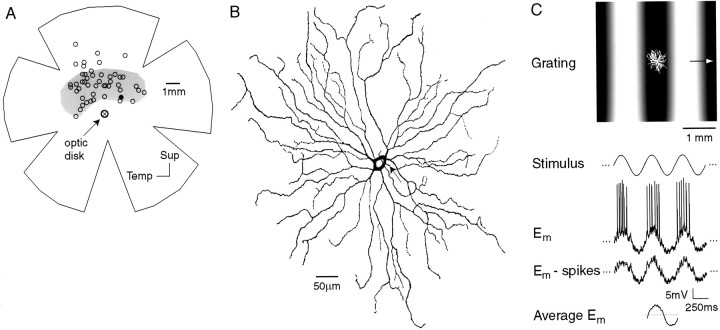
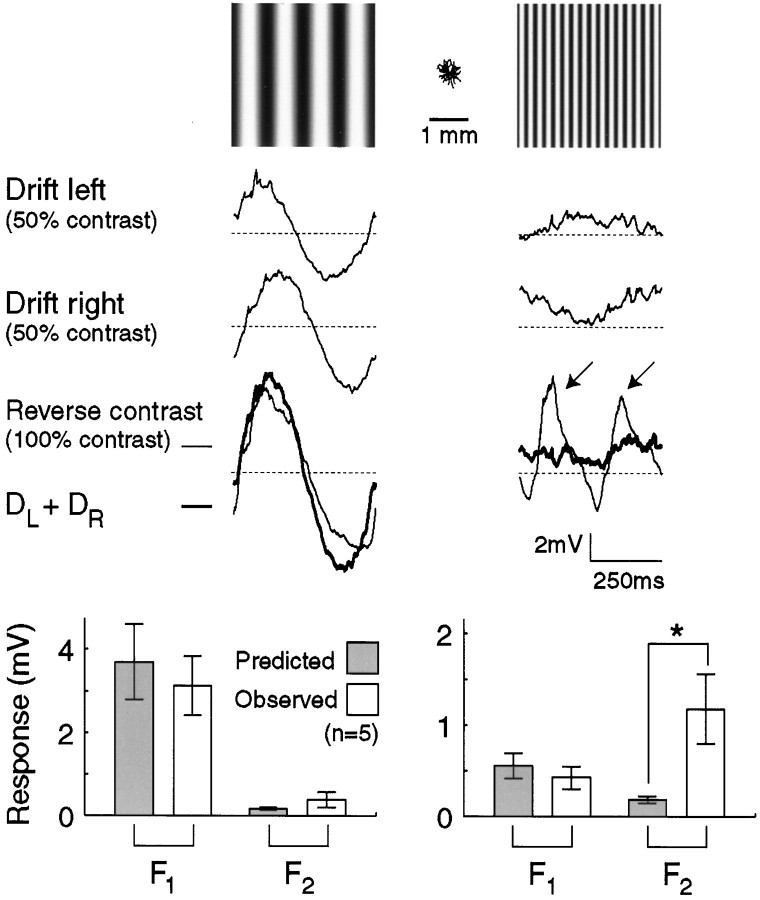
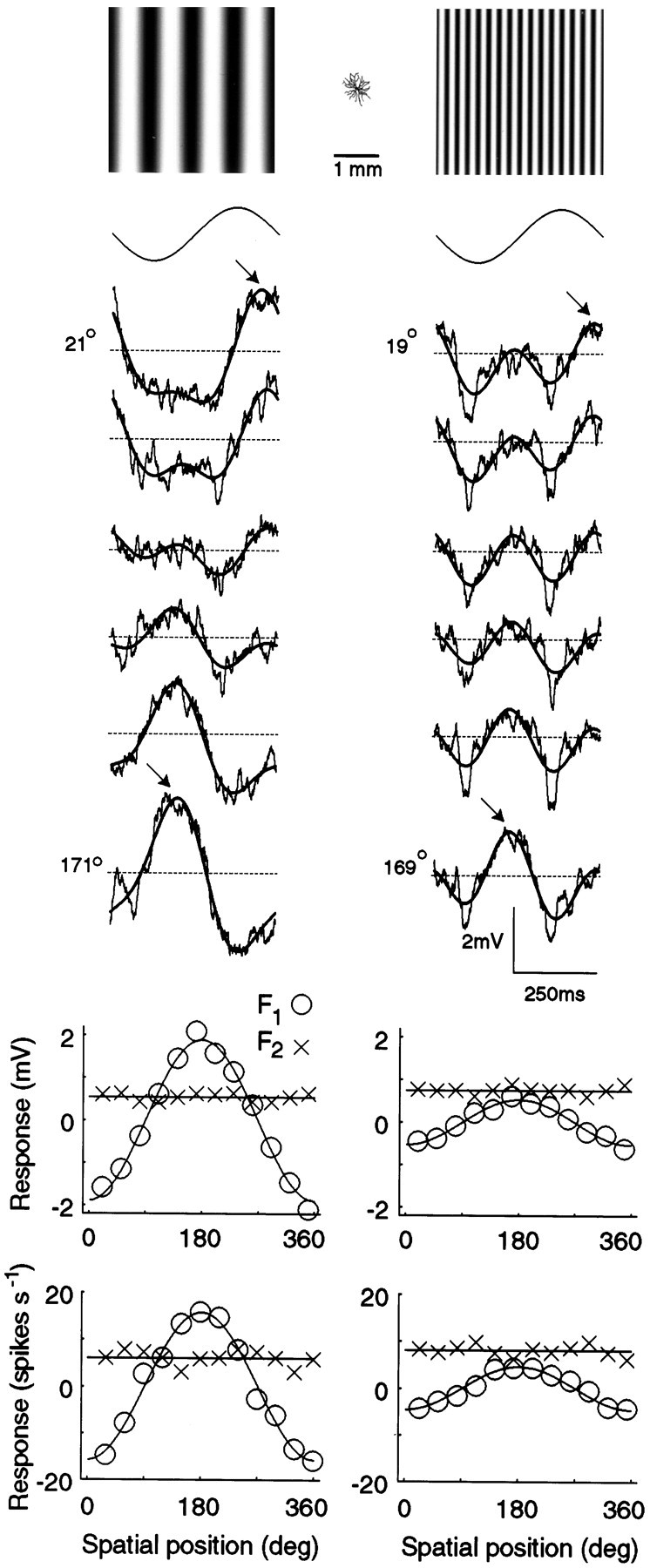
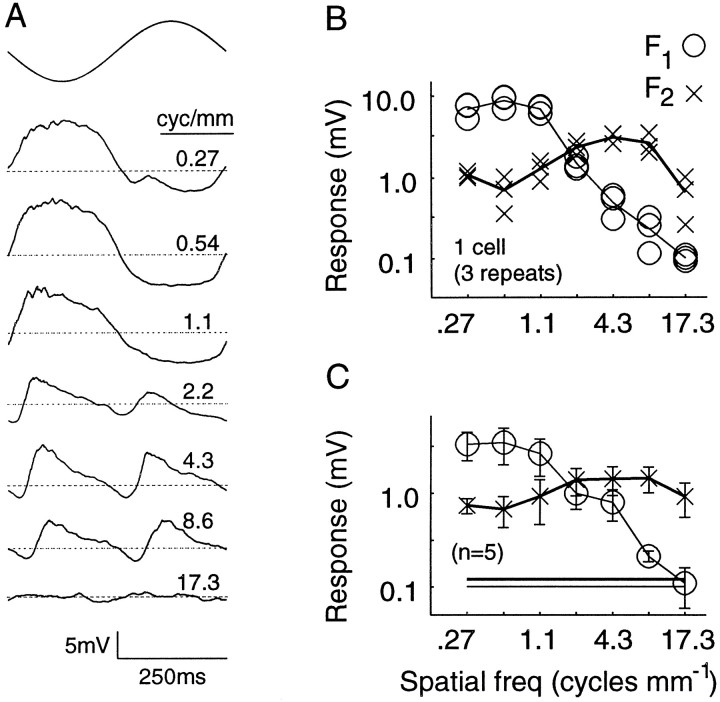
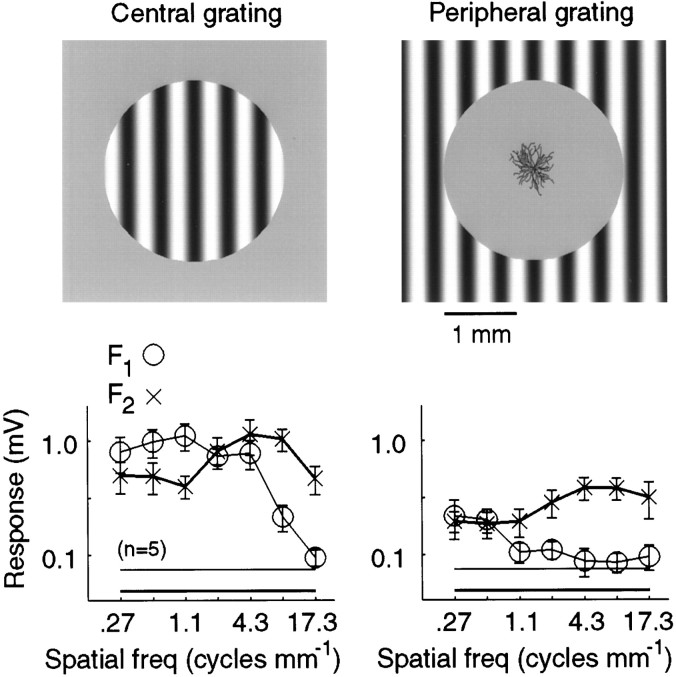
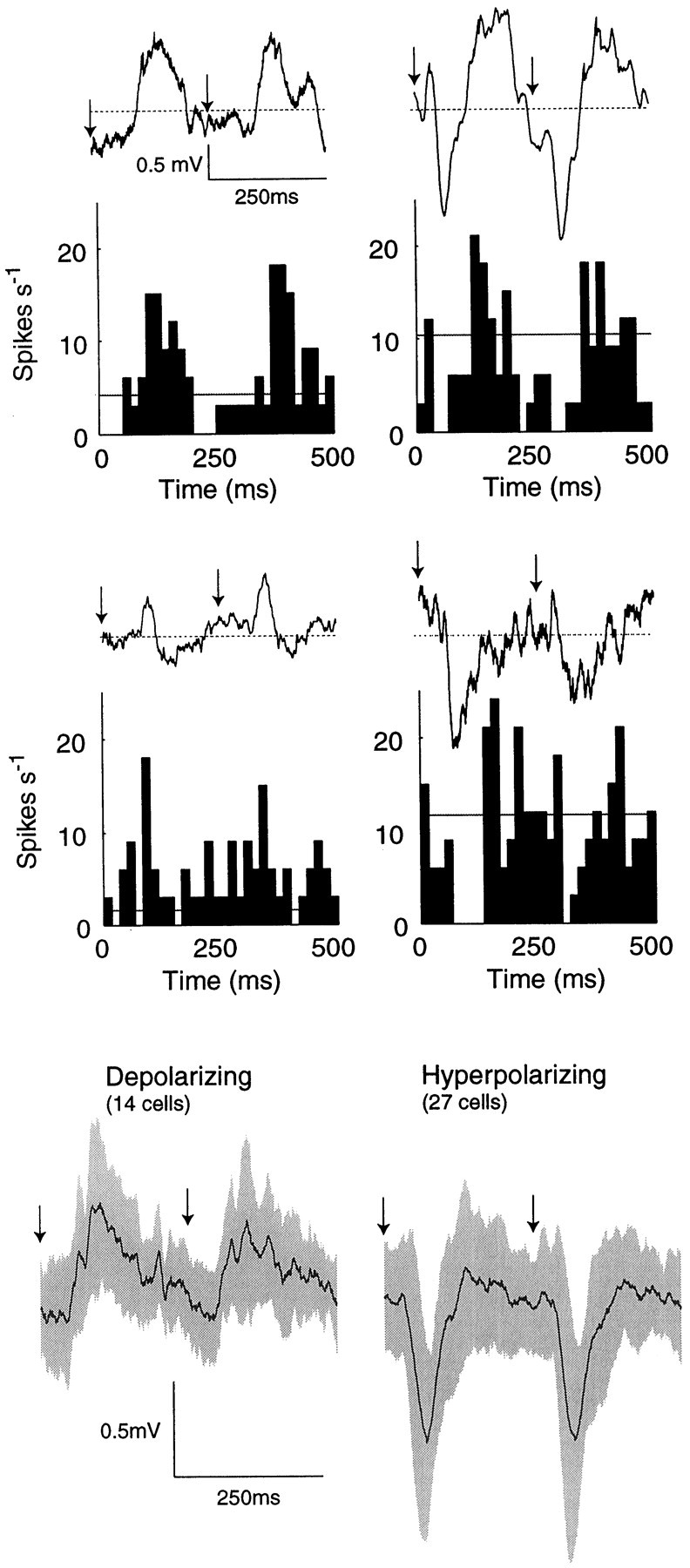
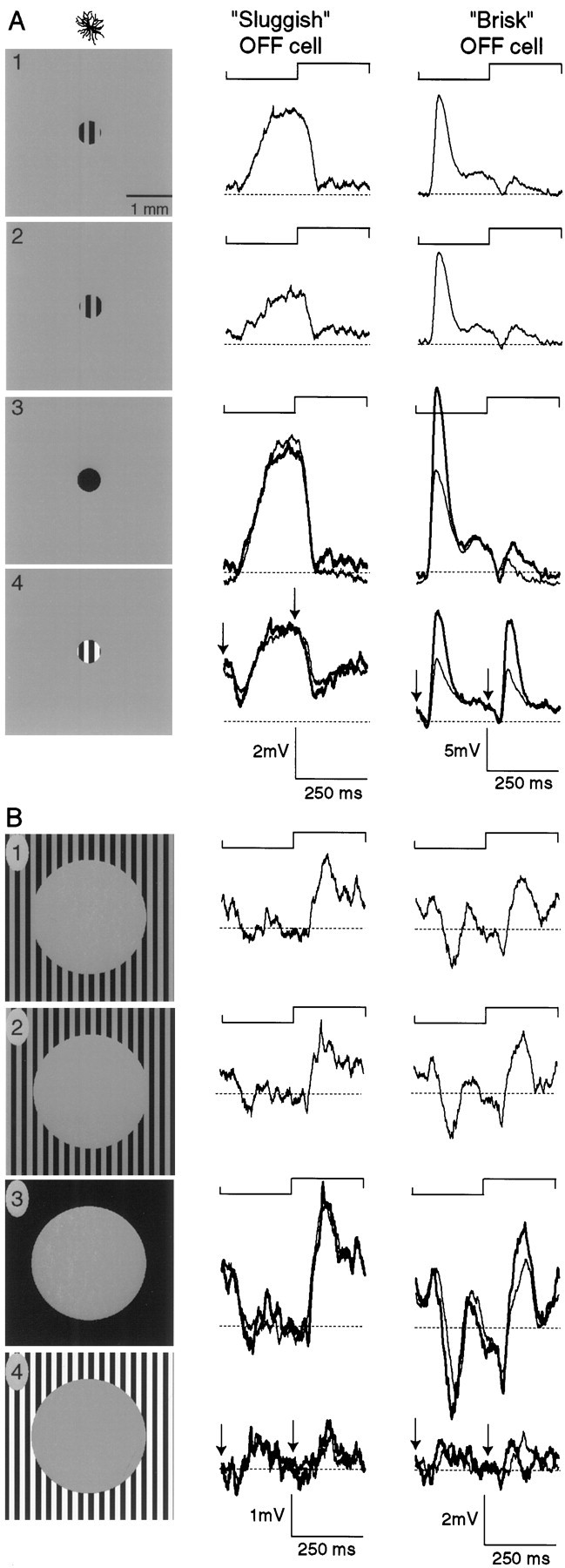
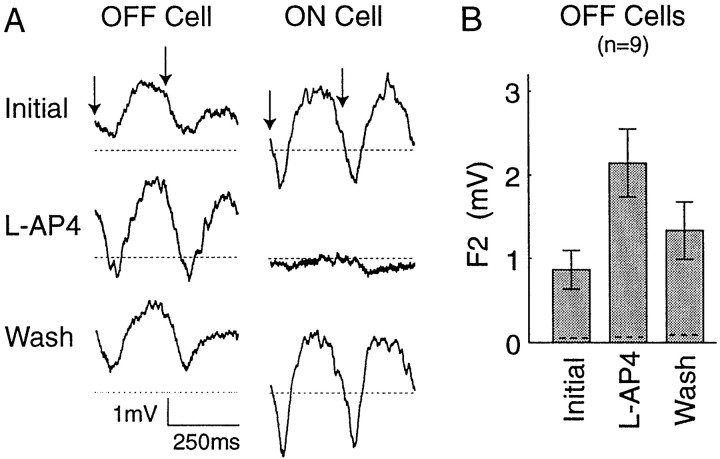
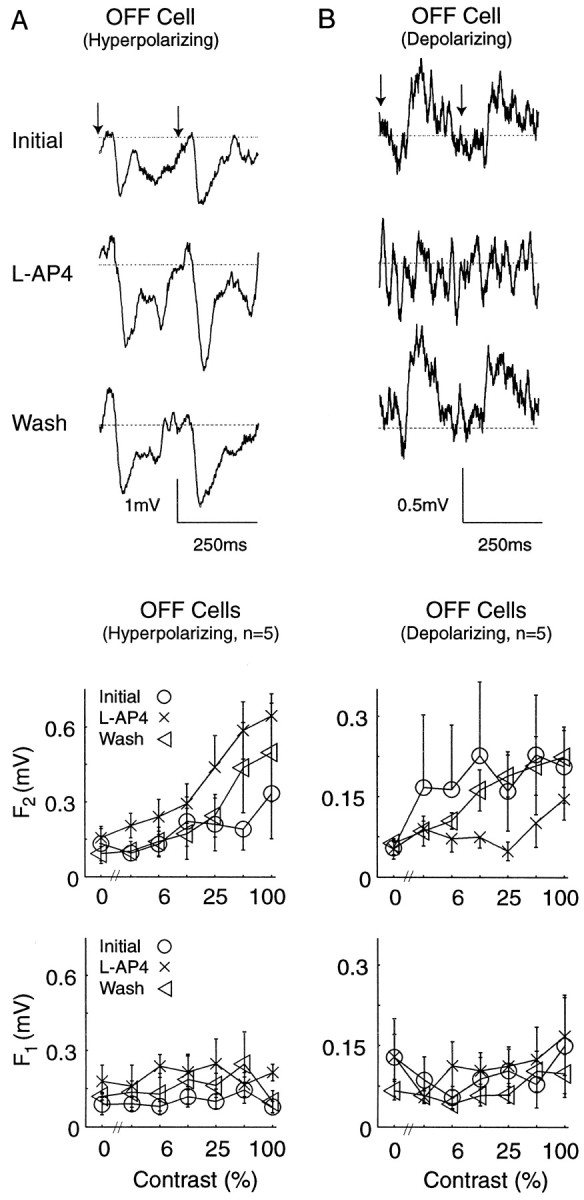
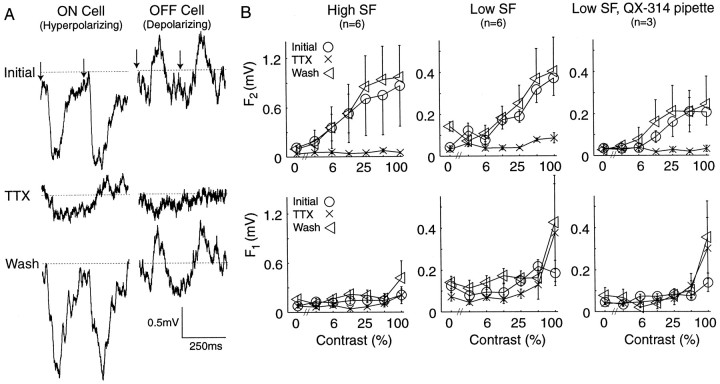
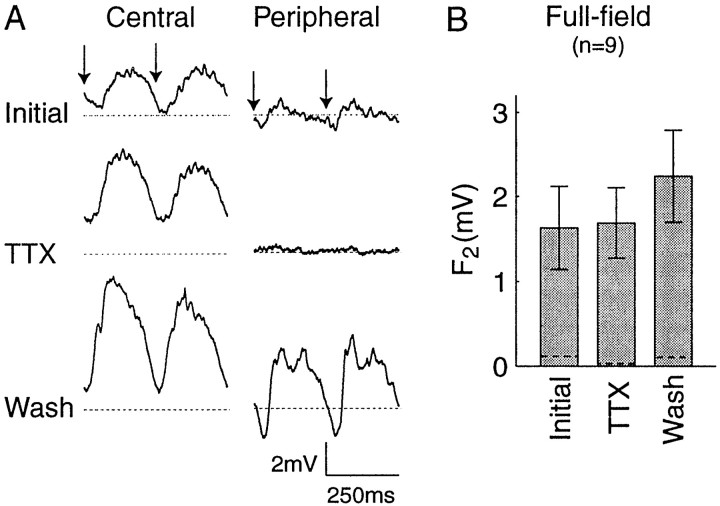
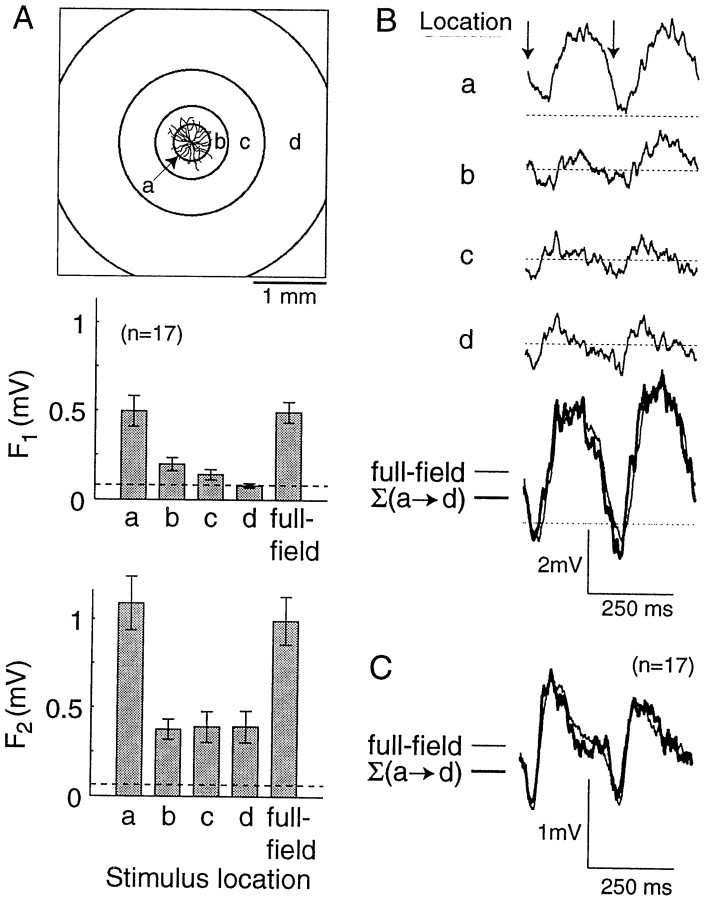
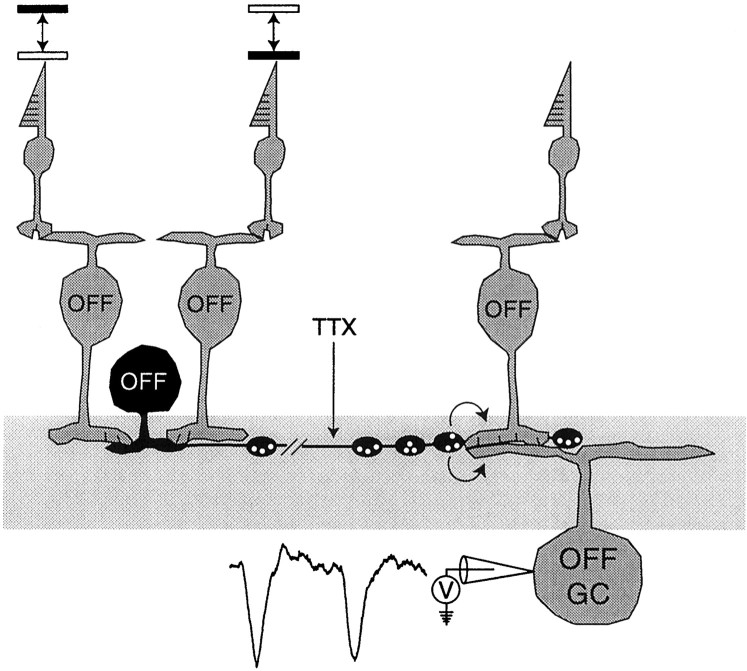
A retinal ganglion cell commonly expresses two spatially overlapping receptive field mechanisms. One is the familiar "center/surround," which sums excitation and inhibition across a region somewhat broader than the ganglion cell's dendritic field. This mechanism responds to a drifting grating by modulating firing at the drift frequency (linear response). Less familiar is the "nonlinear" mechanism, which sums the rectified output of many small subunits that extend for millimeters beyond the dendritic field. This mechanism responds to a contrast-reversing grating by modulating firing at twice the reversal frequency (nonlinear response). We investigated this nonlinear mechanism by presenting visual stimuli to the intact guinea pig retina in vitro while recording intracellularly from large brisk and sluggish ganglion cells. A contrast-reversing grating modulated the membrane potential (in addition to the firing rate) at twice the reversal frequency. This response was initially hyperpolarizing for some cells (either ON or OFF center) and initially depolarizing for others. Experiments in which responses to bars were summed in-phase or out-of-phase suggested that the single class of bipolar cells (either ON or OFF) that drives the center/surround response also drives the nonlinear response. Consistent with this, nonlinear responses persisted in OFF ganglion cells when ON bipolar cell responses were blocked by L-AP-4. Nonlinear responses evoked from millimeters beyond the ganglion cell were eliminated by tetrodotoxin. Thus, to relay the response from distant regions of the receptive field requires a spiking interneuron. Nonlinear responses from different regions of the receptive field added linearly.
Figures
References
-
- Benardete EA, Kaplan E, Knight BW. Contrast gain control in the primate retina: P cells are not X-like, some M cells are. Vis Neurosci. 1992;8:483–486. - PubMed
-
- Bloomfield SA. Effect of spike blockade on the receptive-field size of amacrine and ganglion cells in the rabbit retina. J Neurophysiol. 1996;75:1878–1893. - PubMed
-
- Bolz J, Wässle H, Thier P. Pharmacological modulation of ON and OFF ganglion cells in the cat retina. Neuroscience. 1984;12:875–885. - PubMed
Publication types
MeSH terms
Substances
Grants and funding
LinkOut - more resources
Full Text Sources
Miscellaneous
