. 1999 Nov 15;190(10):1465-78.
doi: 10.1084/jem.190.10.1465.

Ovalbumin sensitization changes the inflammatory response to subsequent parainfluenza infection. Eosinophils mediate airway hyperresponsiveness, m(2) muscarinic receptor dysfunction, and antiviral effects

Affiliations

Ovalbumin sensitization changes the inflammatory response to subsequent parainfluenza infection. Eosinophils mediate airway hyperresponsiveness, m(2) muscarinic receptor dysfunction, and antiviral effects

D J Adamko et al. J Exp Med. .

Abstract

Asthma exacerbations, many of which are virus induced, are associated with airway eosinophilia. This may reflect altered inflammatory response to viruses in atopic individuals. Inhibitory M(2) muscarinic receptors (M(2)Rs) on the airway parasympathetic nerves limit acetylcholine release. Both viral infection and inhalational antigen challenge cause M(2)R dysfunction, leading to airway hyperresponsiveness. In antigen-challenged, but not virus-infected guinea pigs, M(2)R dysfunction is due to blockade of the receptors by the endogenous antagonist eosinophil major basic protein (MBP). We hypothesized that sensitization to a nonviral antigen before viral infection alters the inflammatory response to viral infection, so that M(2)R dysfunction and hyperreactivity are eosinophil mediated. Guinea pigs were sensitized to ovalbumin intraperitoneally, and 3 wk later were infected with parainfluenza. In sensitized, but not in nonsensitized animals, virus-induced hyperresponsiveness and M(2)R dysfunction were blocked by depletion of eosinophils with antibody to interleukin (IL)-5 or treatment with antibody to MBP. An additional and unexpected finding was that sensitization to ovalbumin caused a marked (80%) reduction in the viral content of the lungs. This was reversed by the antibody to IL-5, implicating a role for eosinophils in viral immunity.


Figures
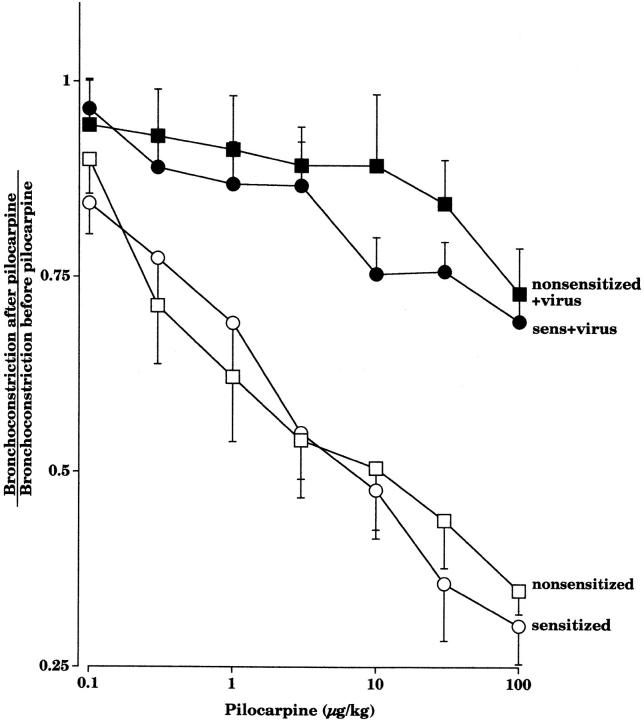
Figure 1
Figure 1
Pilocarpine (1–100 μg·kg−1 intravenous) inhibits vagally induced bronchoconstriction in pathogen-free guinea pigs, whether they are sensitized (open circles, n = 7) or not (open squares, n = 8). In contrast, pilocarpine does not inhibit vagally induced bronchoconstriction in virus-infected animals, whether they are sensitized (filled circles, n = 10) or not (filled squares, n = 7). Results are expressed as the ratio of vagally induced bronchoconstriction in the presence of pilocarpine to the response of vagal stimulation in the absence of pilocarpine. There was a significant difference between the pilocarpine dose–response curves in noninfected versus virus-infected guinea pigs (P < 0.0001). Each point is the mean, with SEM shown by vertical bars.
Figure 2
Figure 2
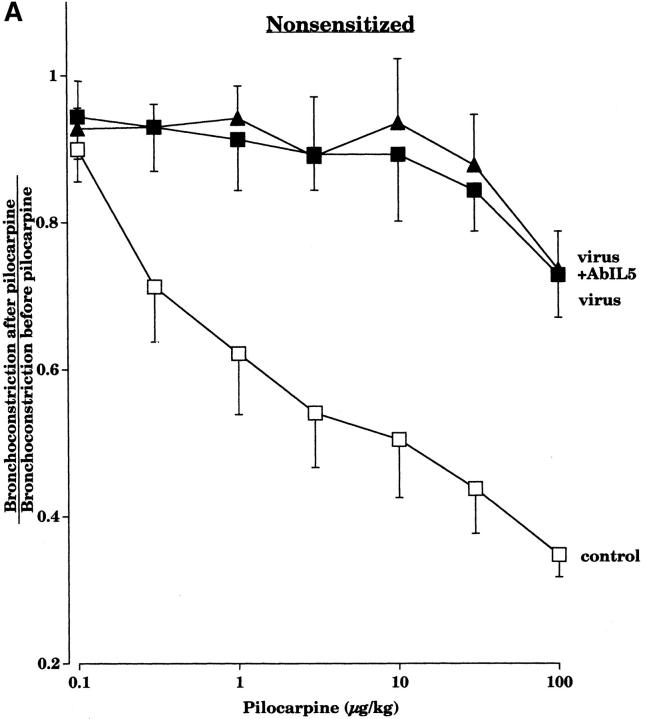
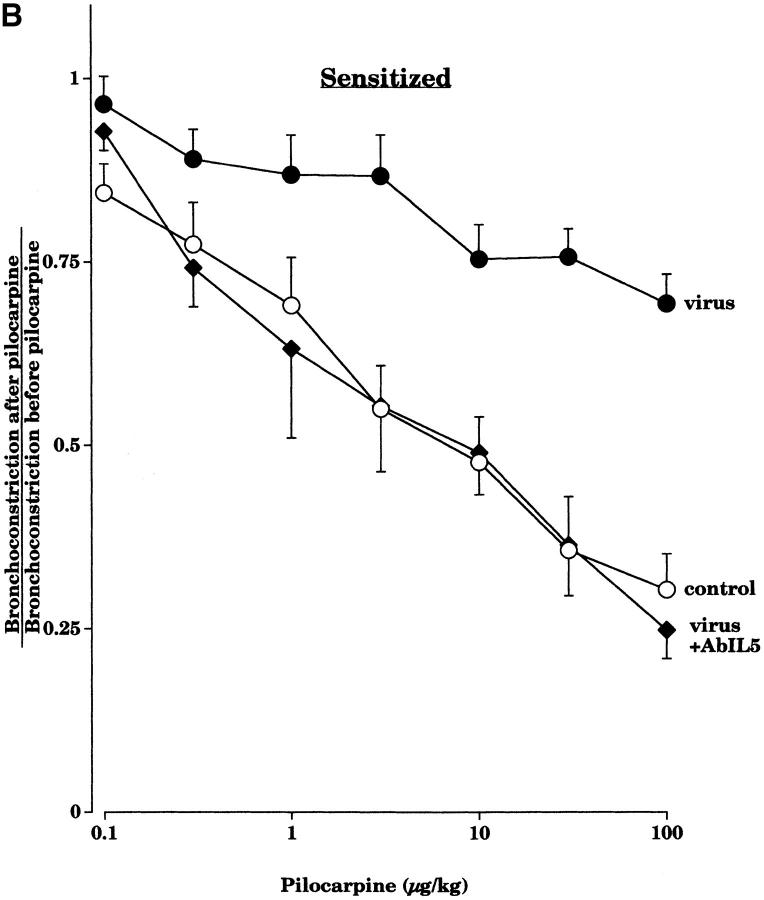
Pretreatment with AbIL5 before viral infection did not protect the ability of pilocarpine to inhibit vagally induced bronchoconstriction in nonsensitized guinea pigs (A). Pilocarpine (1–100 μg·kg−1 intravenous) inhibited vagally induced bronchoconstriction in control animals (open squares, n = 8), but not in virus-infected animals (filled squares, n = 7) or in virus-infected animals pretreated with AbIL5 before infection (filled triangles, n = 5). In contrast, in sensitized guinea pigs, AbIL5 given before viral infection did protect the ability of pilocarpine to inhibit vagally induced bronchoconstriction (B). Pilocarpine (1–100 μg·kg−1 intravenous) inhibited vagally induced bronchoconstriction in sensitized control animals (open circles, n = 7), but not in sensitized virus-infected animals (filled circles, n = 10). However, pilocarpine did inhibit vagally induced bronchoconstriction in sensitized virus-infected animals pretreated with AbIL5 (filled diamonds, n = 5, P = 0.0006). The control and virus-infected data of Figs. A and B are the same as shown in Fig. 1. Each point is the mean, with SEM shown by vertical bars.
Figure 2
Figure 2
Pretreatment with AbIL5 before viral infection did not protect the ability of pilocarpine to inhibit vagally induced bronchoconstriction in nonsensitized guinea pigs (A). Pilocarpine (1–100 μg·kg−1 intravenous) inhibited vagally induced bronchoconstriction in control animals (open squares, n = 8), but not in virus-infected animals (filled squares, n = 7) or in virus-infected animals pretreated with AbIL5 before infection (filled triangles, n = 5). In contrast, in sensitized guinea pigs, AbIL5 given before viral infection did protect the ability of pilocarpine to inhibit vagally induced bronchoconstriction (B). Pilocarpine (1–100 μg·kg−1 intravenous) inhibited vagally induced bronchoconstriction in sensitized control animals (open circles, n = 7), but not in sensitized virus-infected animals (filled circles, n = 10). However, pilocarpine did inhibit vagally induced bronchoconstriction in sensitized virus-infected animals pretreated with AbIL5 (filled diamonds, n = 5, P = 0.0006). The control and virus-infected data of Figs. A and B are the same as shown in Fig. 1. Each point is the mean, with SEM shown by vertical bars.
Figure 4
Figure 4
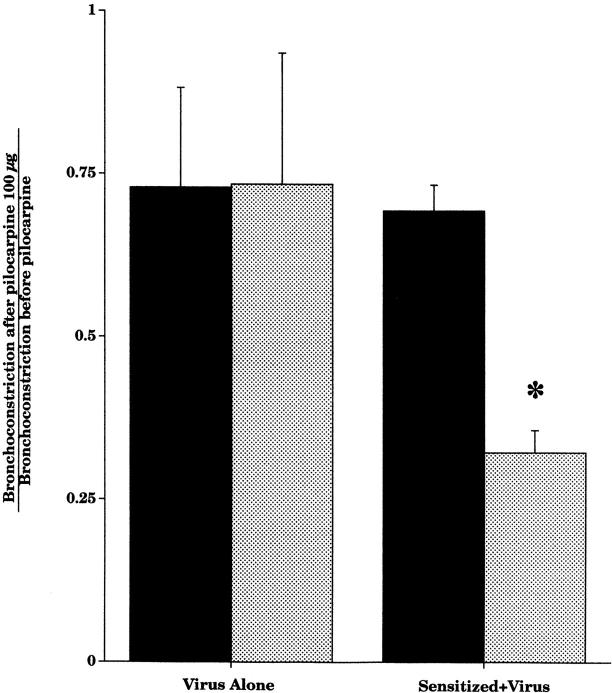
Pilocarpine (100 μg·kg−1 intravenous) did not inhibit vagally induced bronchoconstriction in virus-infected animals, whether they were sensitized or not (black bars). Heparin (2,000 IU, intravenous) restored pilocarpine's ability to inhibit vagally induced bronchoconstriction in virus-infected animals with prior sensitization (n = 7, P = 0.0001), but not in nonsensitized virus-infected animals (n = 5, gray bars). Each point is the mean, with SEM shown by vertical bars.
Figure 3
Figure 3
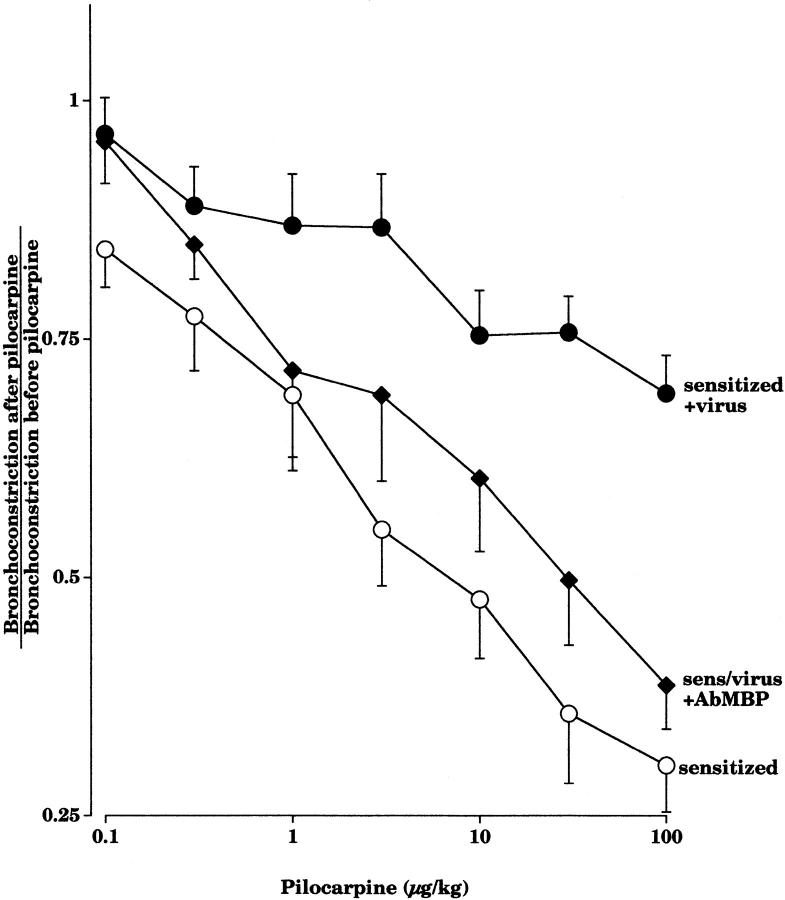
Administration of AbMBP before viral infection of sensitized animals protected the ability of pilocarpine to inhibit vagally induced bronchoconstriction. Pilocarpine (1–100 μg·kg−1 intravenous) inhibited vagally induced bronchoconstriction in sensitized control animals (open circles, n = 7), but not in sensitized virus-infected animals (filled circles, n = 10), unless they were pretreated with AbMBP (filled diamonds, n = 5; P = 0.005). Each point is the mean, with SEM shown by vertical bars.
Figure 5
Figure 5
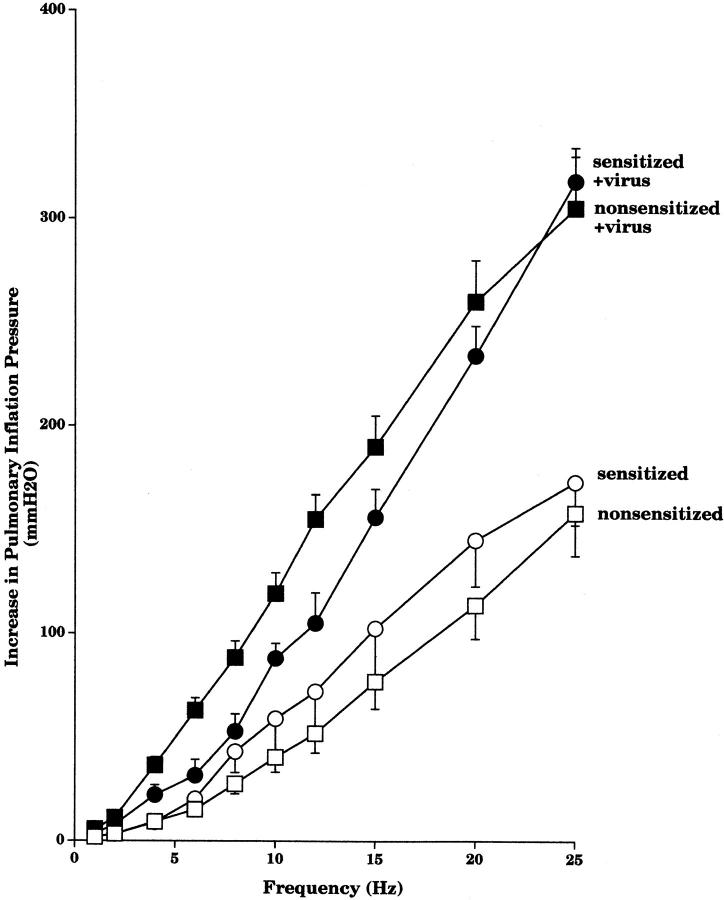
Simultaneous electrical stimulation of both cut vagus nerves (2.0–25 Hz, 10.0 V, 0.1 ms, 5 s) produced frequency-dependent bronchoconstriction measured as an increase in P pi. Viral infection significantly potentiated vagally induced bronchoconstriction in both sensitized (filled circles, n = 5) and nonsensitized (filled squares, n = 6) animals compared with their respective controls (open circles, n = 6; and open squares, n = 8; P < 0.0001). Results are expressed as the mean increase in P pi (mmH2O). Each point is the mean, with SEM shown by vertical bars.
Figure 6
Figure 6
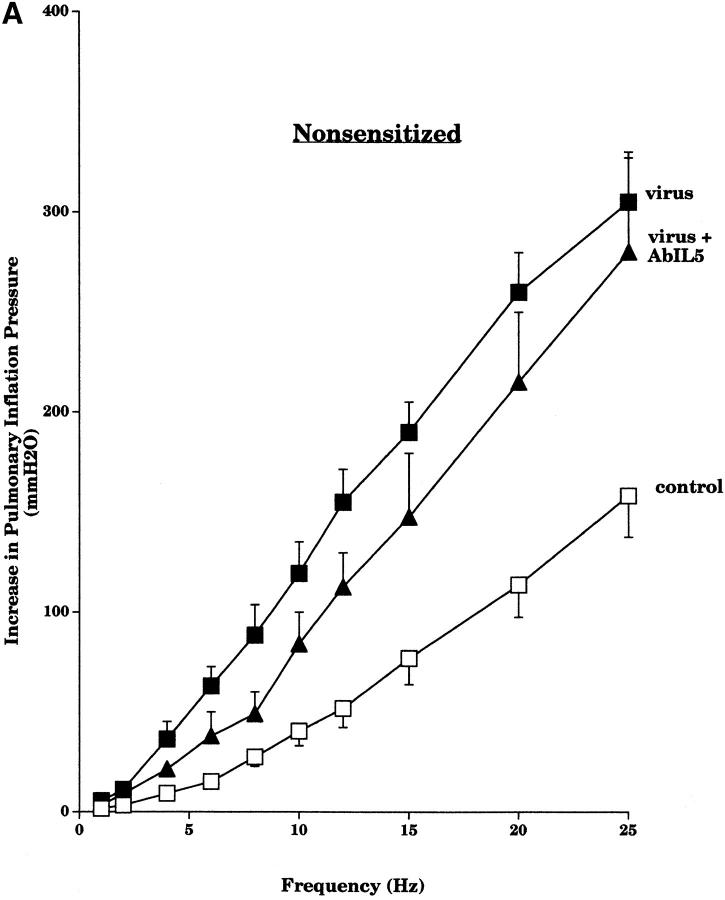
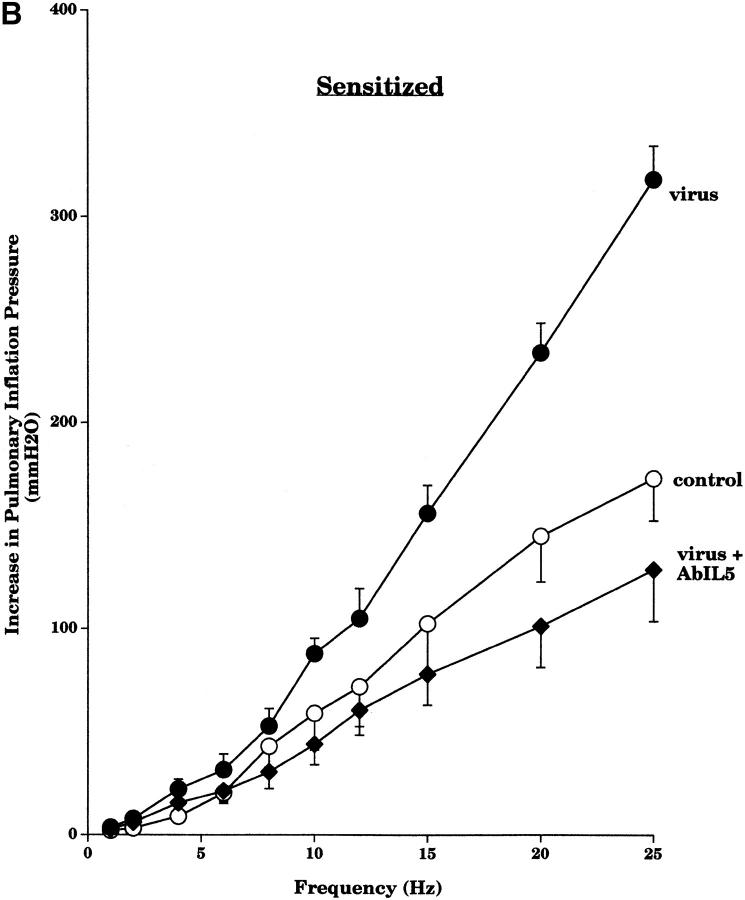
Pretreatment of nonsensitized animals with AbIL5 did not prevent virus-induced vagal hyperreactivity (A). Vagally induced bronchoconstriction in both nonsensitized virus-infected animals (filled squares, n = 6) and nonsensitized virus-infected animals pretreated with AbIL5 (filled triangles, n = 5) remained greater than in nonsensitized control animals (open squares, n = 8). In contrast, pretreatment of sensitized animals with AbIL5 did prevent virus-induced vagal hyperreactivity in sensitized animals (B). Vagally induced bronchoconstriction in sensitized virus-infected animals (filled circles, n = 5) was greater than in sensitized control animals (open circles, n = 6). Vagally induced bronchoconstriction in sensitized virus-infected animals pretreated with AbIL5 (filled diamonds, n = 5) was significantly decreased (P = 0.004) to become similar to sensitized controls. Results are expressed as the mean increase in P pi (mmH2O). Virus-infected and control data are the same as shown in Fig. 5. Each point is the mean, with SEM shown by vertical bars.
Figure 6
Figure 6
Pretreatment of nonsensitized animals with AbIL5 did not prevent virus-induced vagal hyperreactivity (A). Vagally induced bronchoconstriction in both nonsensitized virus-infected animals (filled squares, n = 6) and nonsensitized virus-infected animals pretreated with AbIL5 (filled triangles, n = 5) remained greater than in nonsensitized control animals (open squares, n = 8). In contrast, pretreatment of sensitized animals with AbIL5 did prevent virus-induced vagal hyperreactivity in sensitized animals (B). Vagally induced bronchoconstriction in sensitized virus-infected animals (filled circles, n = 5) was greater than in sensitized control animals (open circles, n = 6). Vagally induced bronchoconstriction in sensitized virus-infected animals pretreated with AbIL5 (filled diamonds, n = 5) was significantly decreased (P = 0.004) to become similar to sensitized controls. Results are expressed as the mean increase in P pi (mmH2O). Virus-infected and control data are the same as shown in Fig. 5. Each point is the mean, with SEM shown by vertical bars.
Figure 7
Figure 7
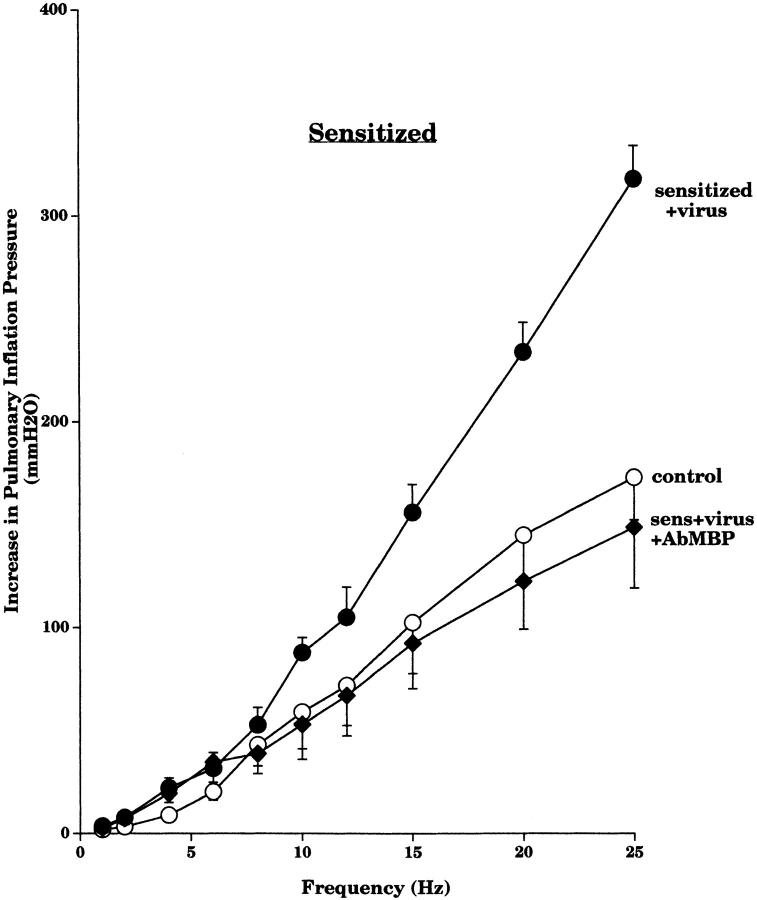
Pretreatment with AbMBP prevented virus-induced vagal hyperreactivity in sensitized animals. Vagally induced bronchoconstriction in sensitized virus-infected animals (filled circles, n = 5) was greater than in sensitized control animals (open circles, n = 6). Vagally induced bronchoconstriction in sensitized virus-infected animals pretreated with AbMBP (filled diamonds, n = 5) was significantly decreased (P = 0.02) to become similar to sensitized control animals. Results are expressed as the mean increase in P pi (mmH2O). Each point is the mean, with SEM shown by vertical bars.
Figure 8
Figure 8
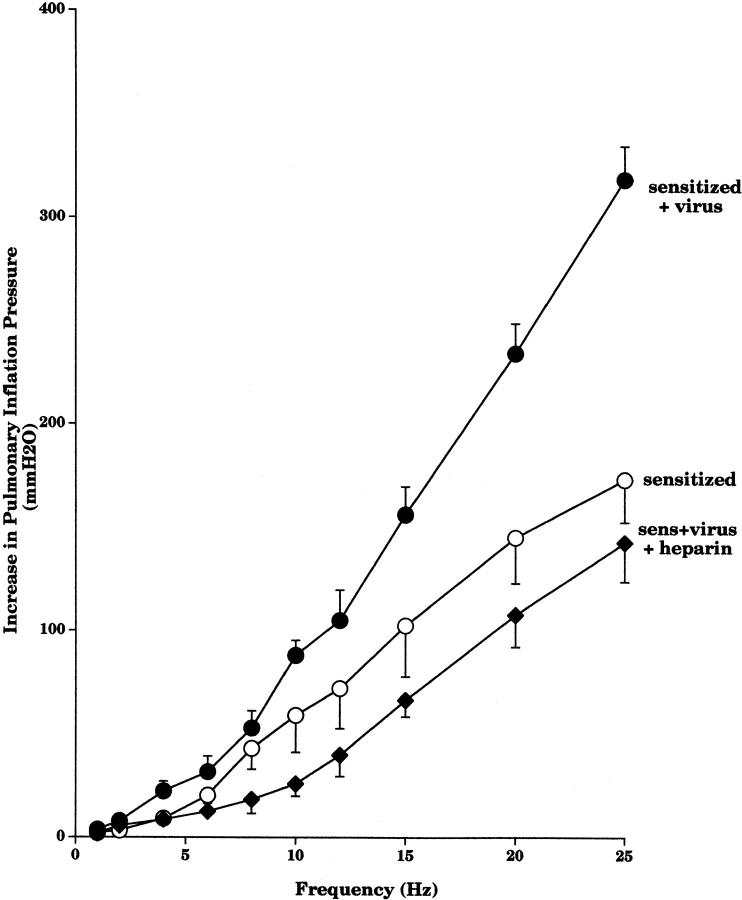
Heparin reversed virus-induced vagal hyperreactivity in sensitized animals. Vagally induced bronchoconstriction in sensitized virus-infected animals (filled circles, n = 5) was significantly higher (P < 0.0001) than in sensitized control animals (open circles, n = 6). Vagally induced bronchoconstriction in sensitized virus-infected animals given heparin (filled diamonds, n = 5) was significantly decreased (P = 0.0004) to become similar to sensitized control animals. Virus-infected and control data are the same as shown in Fig. 5. Results are expressed as the mean increase in P pi (mmH2O). Each point is the mean, with SEM shown by vertical bars.
Figure 9
Figure 9
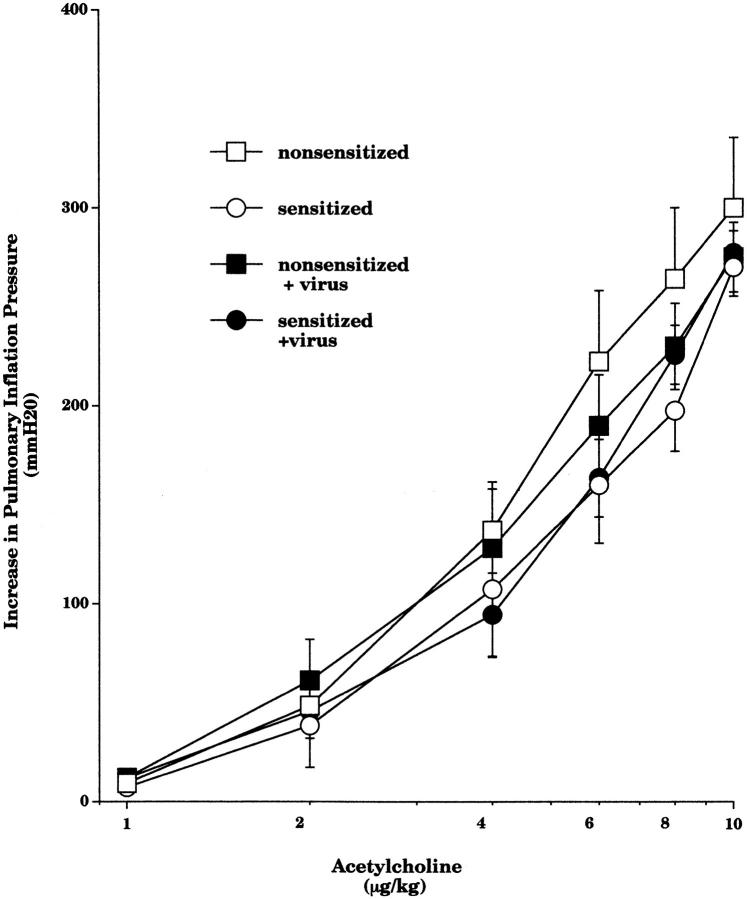
Intravenous injection of acetylcholine (1–10 μg/kg) produced dose-dependent bronchoconstriction, measured as an increase in P pi. Acetylcholine dose–response measurements in nonsensitized controls (open squares, n = 7), sensitized controls (open circles, n = 5), nonsensitized virus-infected (filled squares, n = 7), and sensitized virus-infected guinea pigs (filled circles, n = 8) were not significantly different. Each point is the mean, with SEM shown by vertical bars.
Figure 11
Figure 11
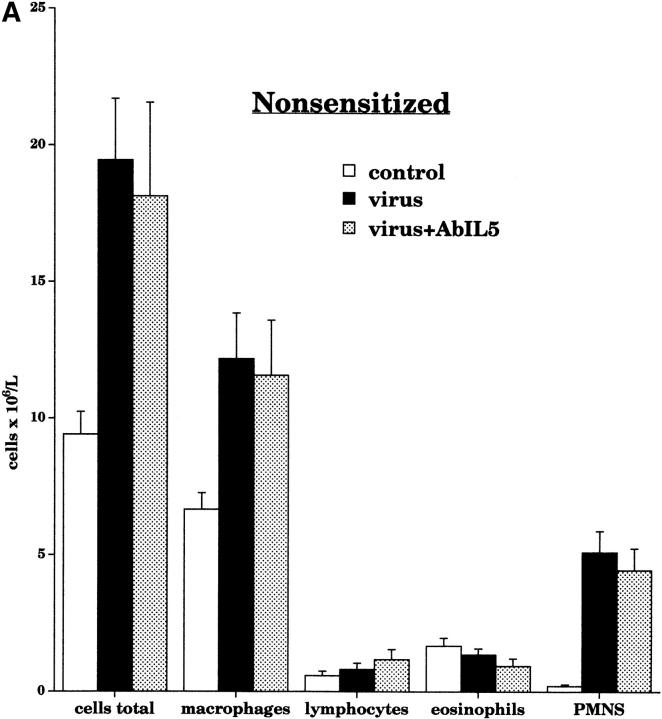
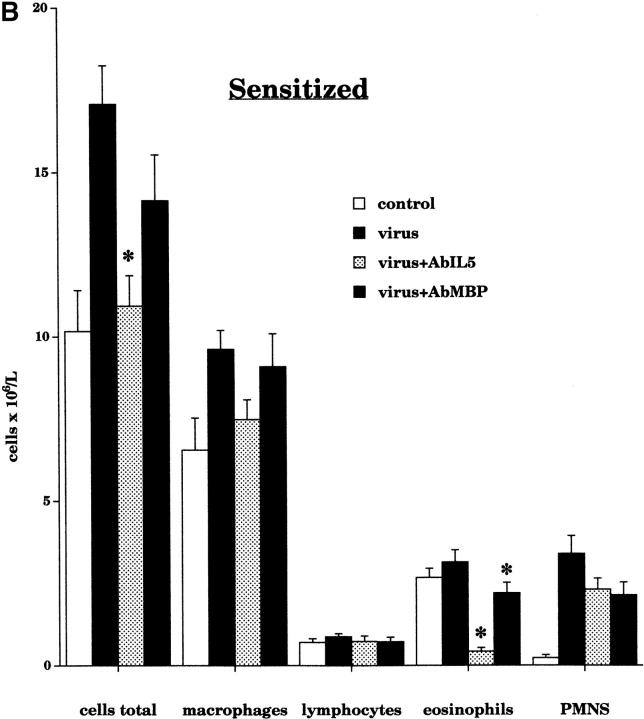
Airway leukocyte populations were measured in bronchoalveolar lavage after pretreatment with AbIL5 and AbMBP. In nonsensitized virus-infected animals (black bars, n = 10), pretreatment with AbIL5 (gray bars, n = 5) did not change any of the leukocyte numbers (A). In contrast, pretreatment of sensitized virus-infected animals with AbIL5 (gray bars, n = 8) significantly decreased the number of eosinophils compared with sensitized virus-infected alone (black bars; n = 16, P < 0.0001) (B). Pretreatment of sensitized virus-infected animals with AbMBP (dark gray bars, n = 7) caused a slight but statistically significantly decrease in eosinophil numbers compared with sensitized virus-infected animals alone (black bars; n = 16, P = 0.04). In both AbIL5- and AbMBP-pretreated animals, neutrophil cell numbers were unaltered. Total leukocyte numbers were significantly decreased in sensitized virus-infected animals treated with AbIL5 (light gray bar) compared with sensitized virus-infected animals alone (black bar, P = 0.0025). Data are expressed as the means of total cells recovered by lavage. Each point is the mean, with SEM shown by vertical bars.
Figure 11
Figure 11
Airway leukocyte populations were measured in bronchoalveolar lavage after pretreatment with AbIL5 and AbMBP. In nonsensitized virus-infected animals (black bars, n = 10), pretreatment with AbIL5 (gray bars, n = 5) did not change any of the leukocyte numbers (A). In contrast, pretreatment of sensitized virus-infected animals with AbIL5 (gray bars, n = 8) significantly decreased the number of eosinophils compared with sensitized virus-infected alone (black bars; n = 16, P < 0.0001) (B). Pretreatment of sensitized virus-infected animals with AbMBP (dark gray bars, n = 7) caused a slight but statistically significantly decrease in eosinophil numbers compared with sensitized virus-infected animals alone (black bars; n = 16, P = 0.04). In both AbIL5- and AbMBP-pretreated animals, neutrophil cell numbers were unaltered. Total leukocyte numbers were significantly decreased in sensitized virus-infected animals treated with AbIL5 (light gray bar) compared with sensitized virus-infected animals alone (black bar, P = 0.0025). Data are expressed as the means of total cells recovered by lavage. Each point is the mean, with SEM shown by vertical bars.
Figure 10
Figure 10
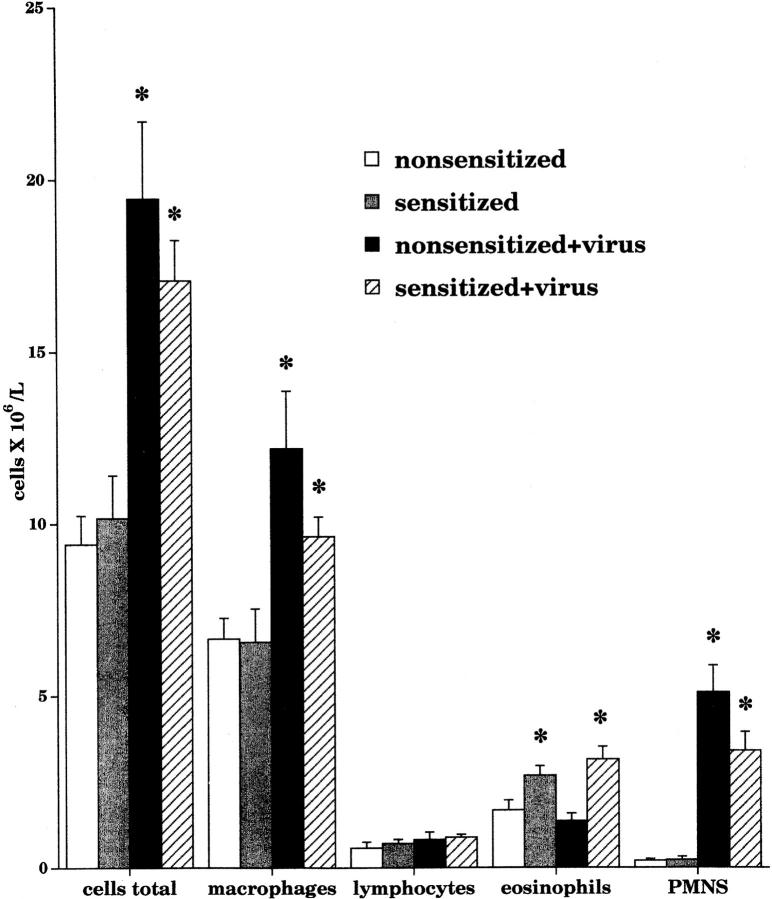
Airway leukocyte populations were measured in bronchoalveolar lavage. There was a significant increase (P = 0.0001) in the total inflammatory cell number after viral infection of both nonsensitized (black bar, n = 10) and sensitized (hatched bar, n = 16) animals compared with their respective controls (white and gray bars, n = 9–11). This increase consisted of macrophages and neutrophils. Regardless of viral infection, there was a significant increase in the number of eosinophils in sensitized animals (gray bar, P = 0.0295; and hatched bar, P = 0.0004). Data are expressed as the means of total cells recovered by lavage. Each point is the mean, with SEM shown by vertical bars.
Figure 12
Figure 12
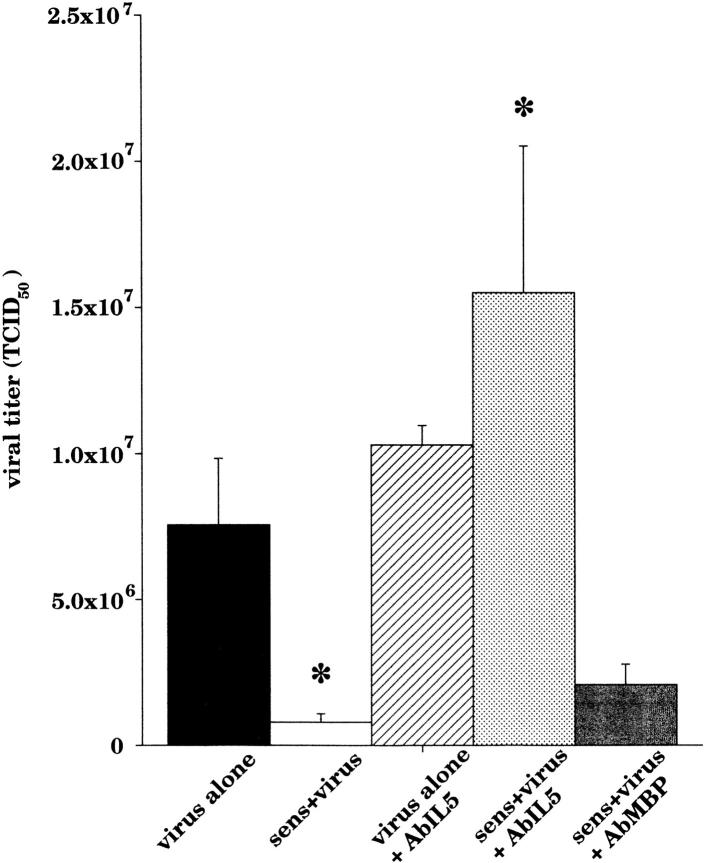
Viral titers from the lungs of all virus-exposed guinea pigs were quantified. Sensitized virus-infected guinea pigs (white bar, n = 19) had a significant decrease in viral titer compared with nonsensitized virus-infected guinea pigs (black bar, n = 11, P = 0.04). Pretreatment with AbIL5 had no effect on nonsensitized virus-infected guinea pigs (hatched bar, n = 3), but caused a significant increase in recovered viral titers in sensitized virus-infected animals (light gray bar, n = 11, P < 0.0001). Sensitized virus-infected guinea pigs treated with AbMBP (dark gray bar, n = 7) continued to have decreased viral titers compared with untreated, sensitized virus-infected animals.

References

    1. Johnston S., Pattermore P., Sanderson G., Smith S., Lampe F., Josephs L., Symington P., O'Toole S., Myint S., Tyrell D., Holgate S. Community study of role of viral infections in exacerbations of asthma in 9-11 year old children. BMJ. 1995;310:1225–1229. - PMC - PubMed
    1. Empey D.W., Laitinen L.A., Jacobs L., Gold W.M., Nadel J.A. Mechanisms of bronchial hyperreactivity in normal subjects following upper respiratory tract infection. Am. Rev. Respir. Dis. 1976;113:523–527. - PubMed
    1. Nadel J.A., Barnes P.J. Autonomic regulation of the airways. Annu. Rev. Med. 1984;35:451–467. - PubMed
    1. Roffel A.F., Elzinga C.R., Zaagsma J. Muscarinic M3 receptors mediate contraction of human central and peripheral airway smooth muscle. Pulm. Pharmacol. 1990;3:47–51. - PubMed
    1. Fryer A.D., Maclagan J. Muscarinic inhibitory receptors in pulmonary parasympathetic nerves in the guinea-pig. Br. J. Pharmacol. 1984;83:973–978. - PMC - PubMed

Publication types