


Comparison of four clinical specimen types for detection of influenza A and B viruses by optical immunoassay (FLU OIA test) and cell culture methods
- PMID: 10565916
- PMCID: PMC85858
- DOI: 10.1128/JCM.37.12.3971-3974.1999
Comparison of four clinical specimen types for detection of influenza A and B viruses by optical immunoassay (FLU OIA test) and cell culture methods
Abstract
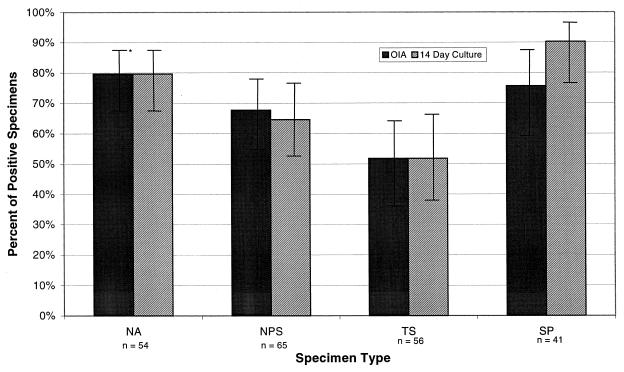
Although laboratory diagnosis of respiratory viruses has been widely studied, there is a relative insufficiency of literature examining the impact of specimen type on the laboratory diagnosis of influenza A and B. In a clinical study comparing the FLU OIA test with 14-day cell culture, clinical specimens from nasopharyngeal swabs, throat swabs, nasal aspirates, and sputum were obtained from patients experiencing influenza-like symptoms. A total of 404 clinical specimens were collected from 184 patients. Patients were defined as influenza positive if the viral culture of a specimen from any sample site was positive. Patients were defined as influenza negative if the viral cultures of specimens from all sample sites were negative. By this gold standard, culture and FLU OIA test results for each sample type were compared. For each of the four specimen types, the viral culture and FLU OIA test demonstrated equal abilities to detect the presence of influenza A or B virus or viral antigen. Sputum and nasal aspirate samples were the most predictive of influenza virus infection. Throat swabs were the least predictive of influenza virus infection, with both tests failing to detect influenza virus in nearly 50% of the throat samples studied.
Figures
References
-
- Ahlawalia G, Embree J, McNicol P, Law B, Hammond G W. Comparison of nasopharyngeal aspirate and nasopharyngeal swab specimens for respiratory syncytial virus diagnosis by cell culture, indirect immunofluorescence assay, and enzyme-linked immunosorbent assay. J Clin Microbiol. 1987;25:763–767. - PMC - PubMed
-
- Betts R F. Influenza virus. In: Mandell G L, Douglas R G Jr, Bennett J E, editors. Principle and practice of infectious diseases. 4th ed. New York, N.Y: Churchill Livingstone, Inc.; 1995. pp. 1546–1567.
-
- Cruz J R, Quinonez E, De Fernandez A, Peralta F. Isolation of viruses from nasopharyngeal secretions: comparison of aspiration and swabbing as means of sample collection. J Infect Dis. 1987;156:415–416. - PubMed
-
- Della-Latta P, Whittier S, Hosmer M, Agre F. Rapid detection of group A streptococcal pharyngitis in a pediatric population with optical immunoassay. Pediatr Infect Dis J. 1994;13:742–743. - PubMed
Publication types
MeSH terms
LinkOut - more resources
Full Text Sources
Other Literature Sources
Medical
