Alkaliphiles: some applications of their products for biotechnology
- PMID: 10585964
- PMCID: PMC98975
- DOI: 10.1128/MMBR.63.4.735-750.1999
Alkaliphiles: some applications of their products for biotechnology
Abstract
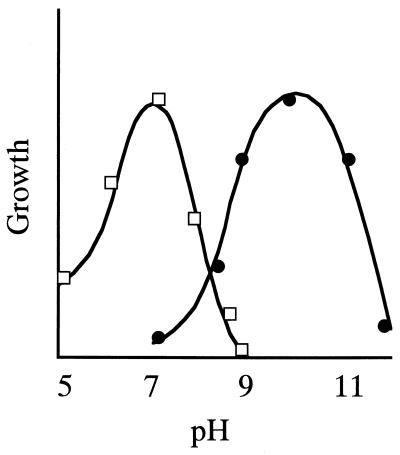
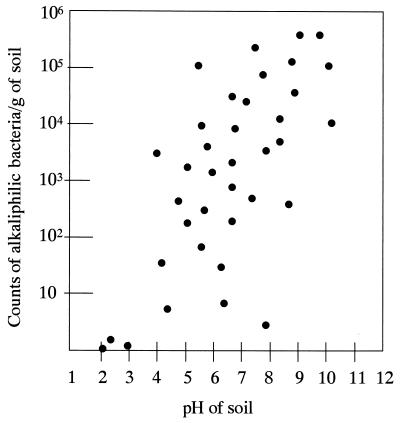
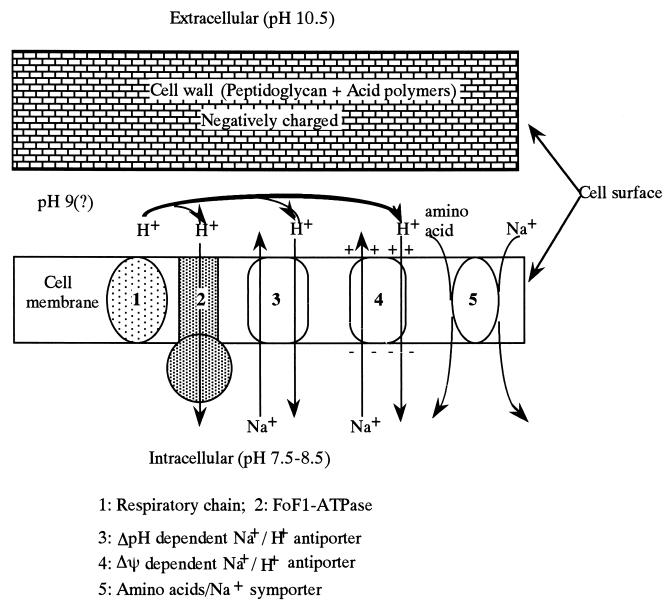
The term "alkaliphile" is used for microorganisms that grow optimally or very well at pH values above 9 but cannot grow or grow only slowly at the near-neutral pH value of 6.5. Alkaliphiles include prokaryotes, eukaryotes, and archaea. Many different taxa are represented among the alkaliphiles, and some of these have been proposed as new taxa. Alkaliphiles can be isolated from normal environments such as garden soil, although viable counts of alkaliphiles are higher in samples from alkaline environments. The cell surface may play a key role in keeping the intracellular pH value in the range between 7 and 8.5, allowing alkaliphiles to thrive in alkaline environments, although adaptation mechanisms have not yet been clarified. Alkaliphiles have made a great impact in industrial applications. Biological detergents contain alkaline enzymes, such as alkaline cellulases and/or alkaline proteases, that have been produced from alkaliphiles. The current proportion of total world enzyme production destined for the laundry detergent market exceeds 60%. Another important application is the industrial production of cyclodextrin by alkaline cyclomaltodextrin glucanotransferase. This enzyme has reduced the production cost and paved the way for cyclodextrin use in large quantities in foodstuffs, chemicals, and pharmaceuticals. It has also been reported that alkali-treated wood pulp could be biologically bleached by xylanases produced by alkaliphiles. Other applications of various aspects of alkaliphiles are also discussed.
Figures
References
-
- Abelyan V A, Yamamoto T, Afrikyan E G. Isolation and characterization of cyclomaltodextrin glucanotransferases using cyclodextrin polymers and their derivatives. Biochemistry (Engl Transl Biokhimiya) 1994;59:573–579.
-
- Abraham T E. Immobilized cyclodextrin glycosyl transferase for the continuous production of cyclodextrins. Biocatal Biotransform. 1995;12:137–146.
-
- Aono R, Horikoshi K. Carotenes produced by alkaliphilic yellow pigmented strains of Bacillus. Agric Biol Chem. 1991;55:2643–2645.
-
- Aono R, Horikoshi K. Chemical composition of cell walls of alkalophilic strains of Bacillus. J Gen Microbiol. 1983;129:1083–1087.
-
- Aono R, Ito M, Horikoshi K. Measurement of cytoplasmic pH of the alkaliphile Bacillus lentus C-125 with a fluorescent pH probe. Microbiology. 1997;143:2531–2536. - PubMed
Publication types
MeSH terms
Substances
LinkOut - more resources
Full Text Sources
Other Literature Sources
Molecular Biology Databases