


The drosophila MSL complex acetylates histone H4 at lysine 16, a chromatin modification linked to dosage compensation
- PMID: 10594033
- PMCID: PMC85086
- DOI: 10.1128/MCB.20.1.312-318.2000
The drosophila MSL complex acetylates histone H4 at lysine 16, a chromatin modification linked to dosage compensation
Abstract
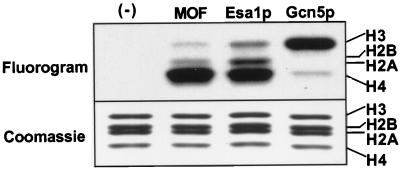
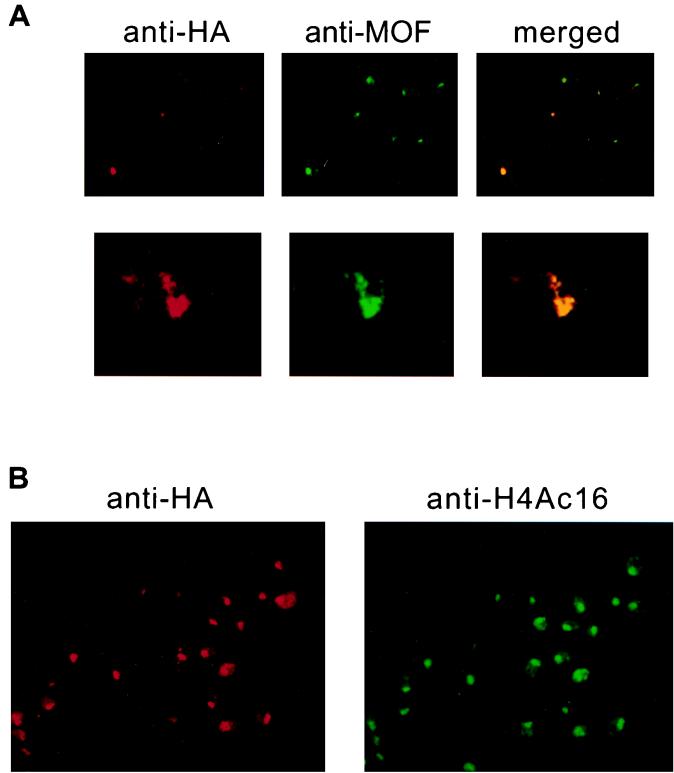
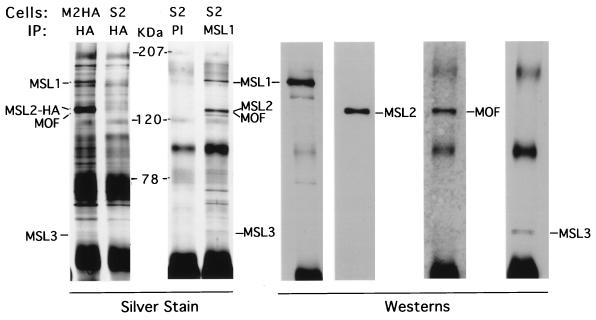
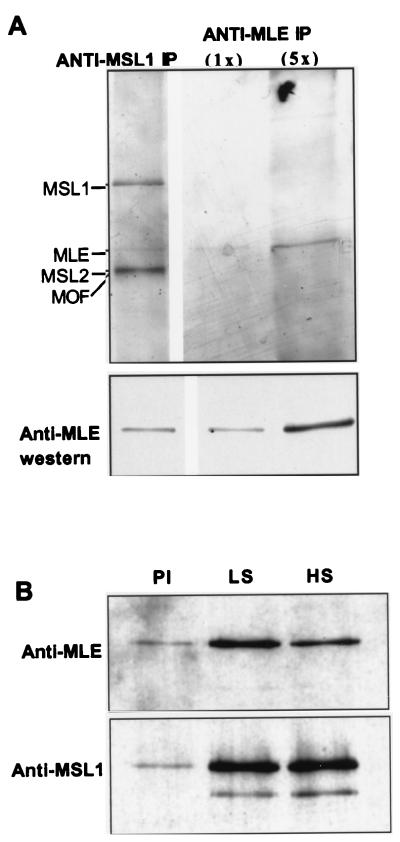
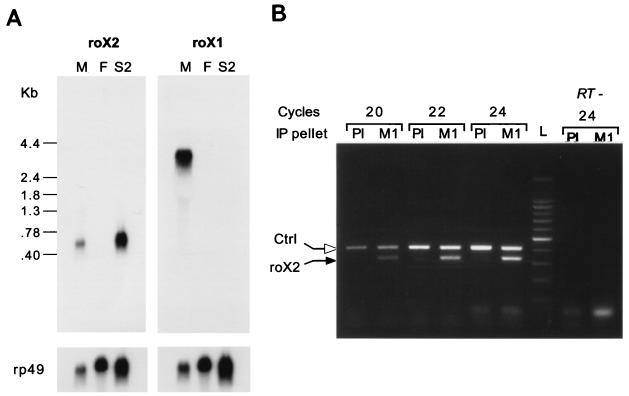
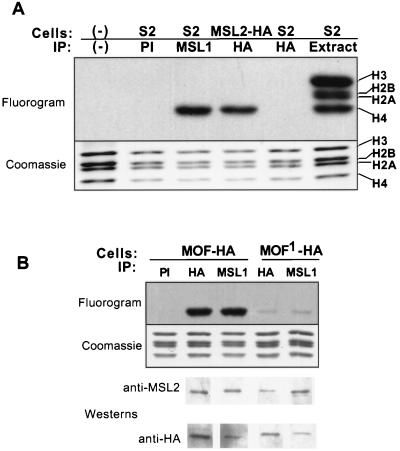
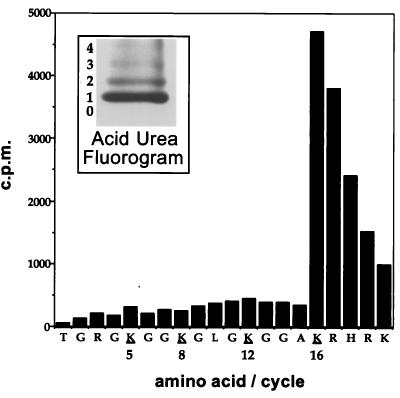
In Drosophila, dosage compensation-the equalization of most X-linked gene products in males and females-is achieved by a twofold enhancement of the level of transcription of the X chromosome in males relative to each X chromosome in females. A complex consisting of at least five gene products preferentially binds the X chromosome at numerous sites in males and results in a significant increase in the presence of a specific histone isoform, histone 4 acetylated at lysine 16. Recently, RNA transcripts (roX1 and roX2) encoded by two different genes have also been found associated with the X chromosome in males. We have partially purified a complex containing MSL1, -2, and -3, MOF, MLE, and roX2 RNA and demonstrated that it exclusively acetylates H4 at lysine 16 on nucleosomal substrates. These results demonstrate that the MSL complex is responsible for the specific chromatin modification characteristic of the X chromosome in Drosophila males.
Figures
References
-
- Amrein H, Axel R. Genes expressed in neurons of adult male Drosophila. Cell. 1997;88:459–469. - PubMed
-
- Ashburner M. Drosophila: a laboratory manual. Cold Spring Harbor, N.Y: Cold Spring Harbor Laboratory Press; 1989.
-
- Ausio J, van Holde K E. Histone hyperacetylation: its effects on nucleosome conformation and stability. Biochemistry. 1986;25:1421–1428. - PubMed
-
- Bashaw G J, Baker B S. The msl-2 dosage compensation gene of Drosophila encodes a putative DNA-binding protein whose expression is sex specifically regulated by Sex-lethal. Development. 1995;121:3245–3258. - PubMed
-
- Bashaw G J, Baker B S. The regulation of the Drosophila msl-2 gene reveals a function for Sex-lethal in translational control. Cell. 1997;89:789–798. - PubMed
Publication types
MeSH terms
Substances
Grants and funding
LinkOut - more resources
Full Text Sources
Molecular Biology Databases
