Irritable bowel syndrome in general practice: prevalence, characteristics, and referral
- PMID: 10601059
- PMCID: PMC1727778
- DOI: 10.1136/gut.46.1.78
Irritable bowel syndrome in general practice: prevalence, characteristics, and referral
Abstract
Background and aims: Little is known about the prevalence, symptoms, diagnosis, attitude, and referral to specialists of patients with irritable bowel syndrome (IBS) in general practice. This study aimed to determine these characteristics.
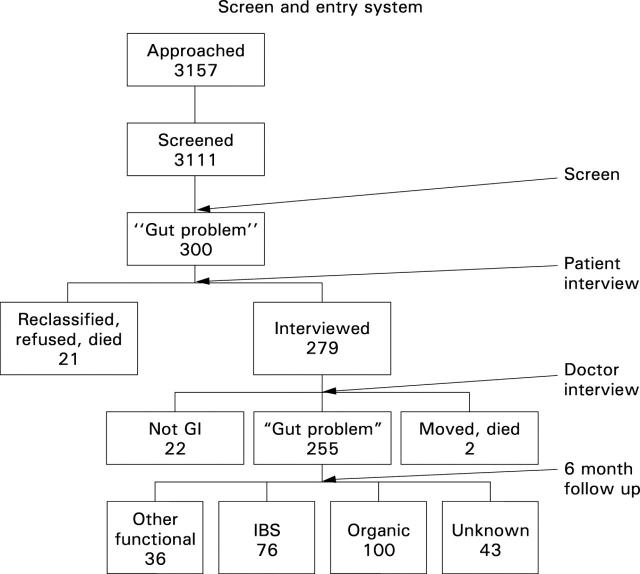
Methods: 3111 patients attending 36 general practitioners (GPs) at six varied locations in and near Bristol, UK, were screened to identify those with a gastrointestinal problem. These patients (n=255) and their doctors were given questionnaires. Six months later the case notes were examined to reach criteria based diagnoses of functional bowel disorders.
Results: Of 255 patients with a gastrointestinal complaint, 30% were judged to have IBS and 14% other functional disorders. Compared with 100 patients with an "organic" diagnoses, those with IBS were more often women and more often judged by their GP to be polysymptomatic and to have unexplained symptoms. The majority of patients with IBS (58%) were diagnosed as such by the GP; 22% had other functional diagnoses. Conversely, among 54 patients diagnosed as having IBS by the GPs, the criteria based diagnosis was indeed functional in 91%; only one patient had organic disease (proctitis). More patients with IBS than those with organic disease feared cancer. In most some fear remained after the visit to the doctor. On logistic regression analysis, predictors of referral to a specialist (29% referred) were denial of a role for stress, multiple tests, and frequent bowel movements.
Conclusions: Half the patients with gut complaints seen by GPs have functional disorders. These are usually recognised, and few patients are referred. In IBS, cancer fears often remain, suggesting unconfident diagnosis or inadequate explanation.
Figures
Comment in
-
IBS: prime problem in primary care.Gut. 2000 Jan;46(1):7-8. doi: 10.1136/gut.46.1.7. Gut. 2000. PMID: 10601045 Free PMC article. No abstract available.
References
Publication types
MeSH terms
LinkOut - more resources
Full Text Sources
Medical