


Efficacies of topical formulations of foscarnet and acyclovir and of 5-percent acyclovir ointment (Zovirax) in a murine model of cutaneous herpes simplex virus type 1 infection
- PMID: 10602719
- PMCID: PMC89624
- DOI: 10.1128/AAC.44.1.30-38.2000
Efficacies of topical formulations of foscarnet and acyclovir and of 5-percent acyclovir ointment (Zovirax) in a murine model of cutaneous herpes simplex virus type 1 infection
Abstract
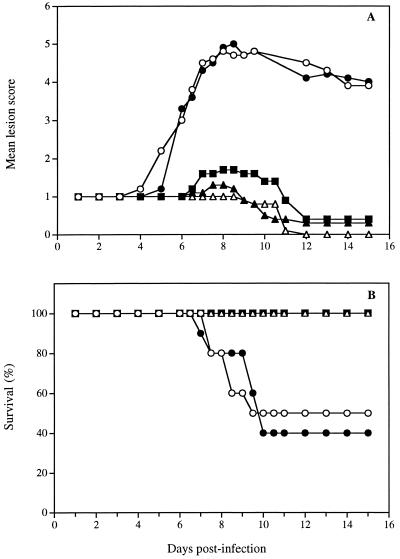
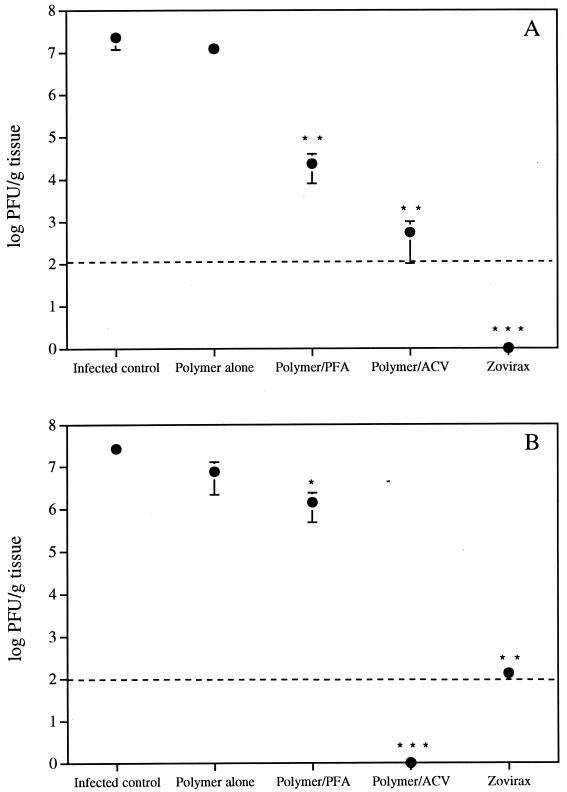
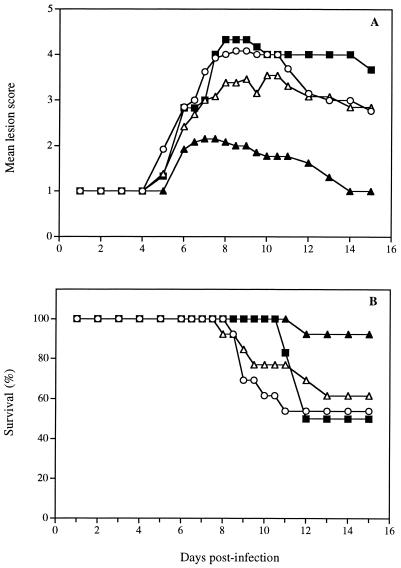
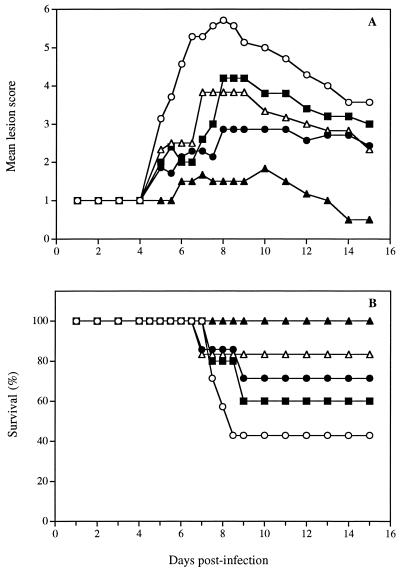
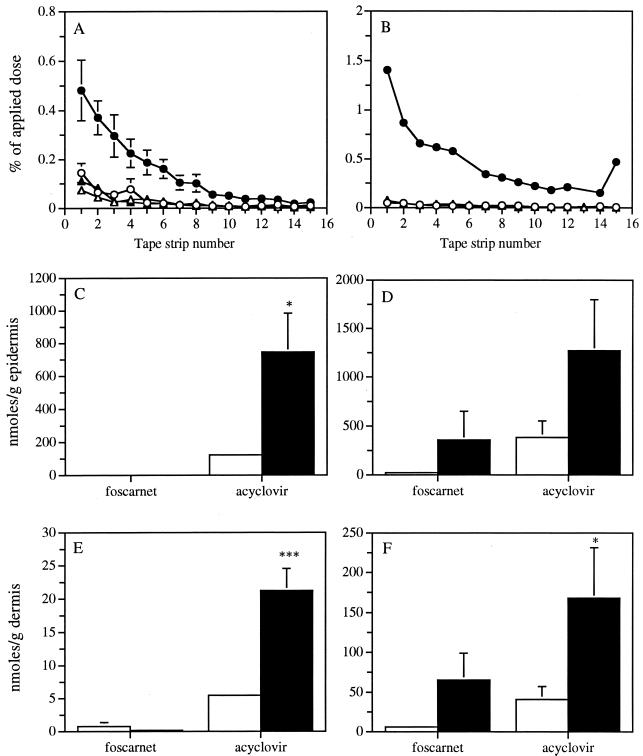
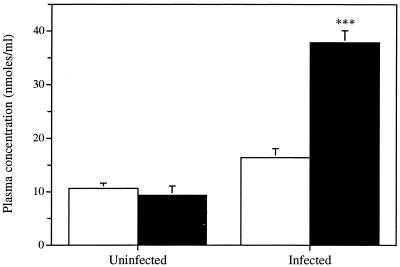
The topical efficacies of foscarnet and acyclovir incorporated into a polyoxypropylene-polyoxyethylene polymer were evaluated and compared to that of 5% acyclovir ointment (Zovirax) by use of a murine model of cutaneous herpes simplex virus type 1 infection. All three treatments given three times daily for 4 days and initiated 24 h after infection prevented the development of the zosteriform rash in mice. The acyclovir formulation and the acyclovir ointment reduced the virus titers below detectable levels in skin samples from the majority of mice, whereas the foscarnet formulation has less of an antiviral effect. Reducing the number of treatments to a single application given 24 h postinfection resulted in a significantly higher efficacy of the formulation of acyclovir than of the acyclovir ointment. Acyclovir incorporated within the polymer was also significantly more effective than the acyclovir ointment when treatment was initiated on day 5 postinfection. The higher efficacy of the acyclovir formulation than of the acyclovir ointment is attributed to the semiviscous character of the polymer, which allows better penetration of the drug into the skin.
Figures
References
-
- Alenius S, Berg M, Froberg F, Eklind K, Lindborg B, Öberg B. Therapeutic effects of foscarnet sodium and acyclovir on cutaneous infections due to herpes simplex virus type 1 in guinea pigs. J Infect Dis. 1982;146:569–573. - PubMed
-
- Barton S E, Munday P E, Kinghorn G R, van der Meijden W I, Stolz E, Notowicz A, Rashid S, Schuller J L, Essex-Cater A J, Kuijpers M H M, Chanas A C. Topical treatment of recurrent genital herpes simplex virus infections with trisodium phosphonoformate (foscarnet): double blind, placebo controlled, multicentre study. Genitourin Med. 1986;62:247–250. - PMC - PubMed
-
- Blyth W A, Harbour D A, Hill T J. Pathogenesis of zosteriform spread of herpes simplex virus in the mouse. J Gen Virol. 1984;65:1477–1486. - PubMed
-
- Chatis P A, Miller C H, Schrager L E, Crumpacker C S. Successful treatment with foscarnet of an acyclovir-resistant mucocutaneous infection with herpes simplex virus in a patient with acquired immunodeficiency syndrome. N Engl J Med. 1989;320:297–300. - PubMed
-
- Chrisp P, Clissold P. Foscarnet: a review of its antiviral activity, pharmacokinetic properties and therapeutic use in immunocompromised patients with cytomegalovirus retinitis. Drugs. 1991;41:104–129. - PubMed
Publication types
MeSH terms
Substances
LinkOut - more resources
Full Text Sources
Other Literature Sources
Medical
