


Analysis of immune responses against T- and B-cell epitopes from Plasmodium falciparum liver-stage antigen 1 in rodent malaria models and malaria-exposed human subjects in India
- PMID: 10603380
- PMCID: PMC97113
- DOI: 10.1128/IAI.68.1.141-150.2000
Analysis of immune responses against T- and B-cell epitopes from Plasmodium falciparum liver-stage antigen 1 in rodent malaria models and malaria-exposed human subjects in India
Abstract
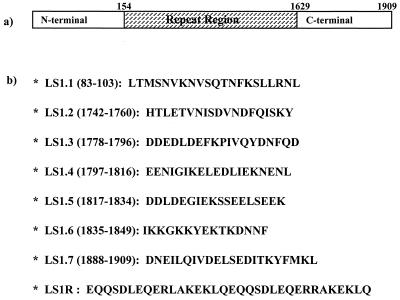
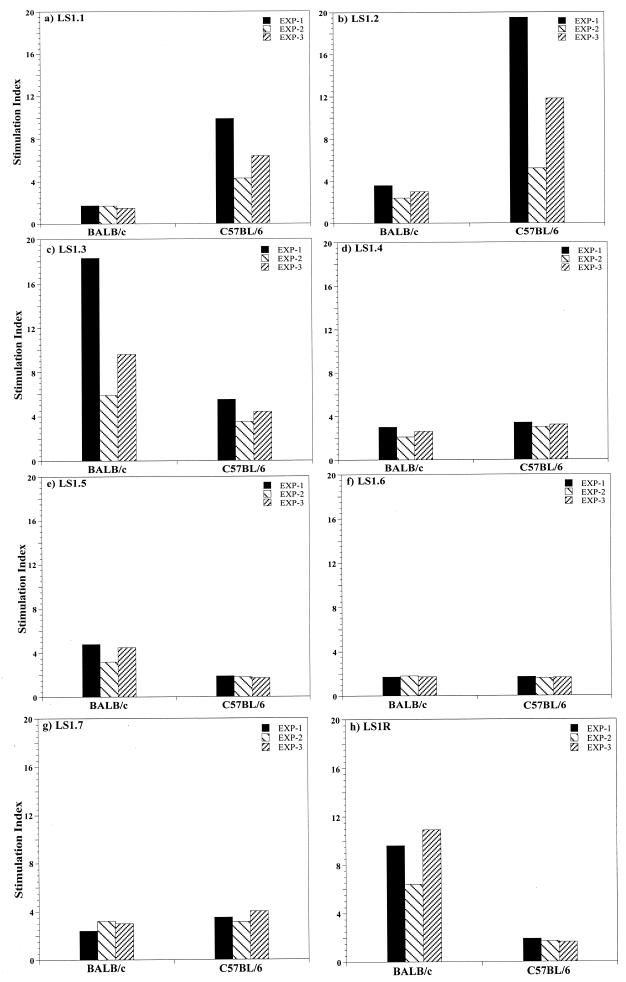
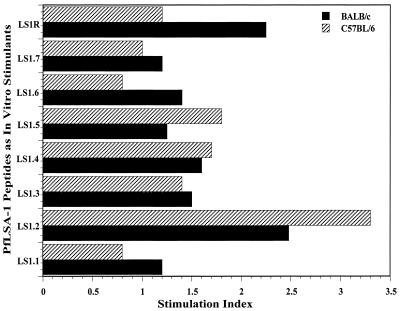
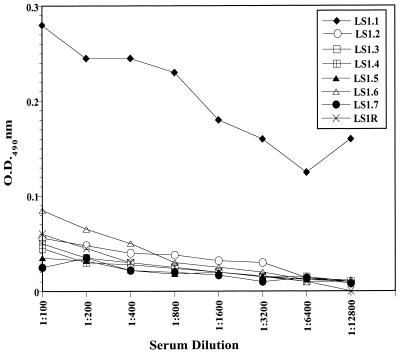
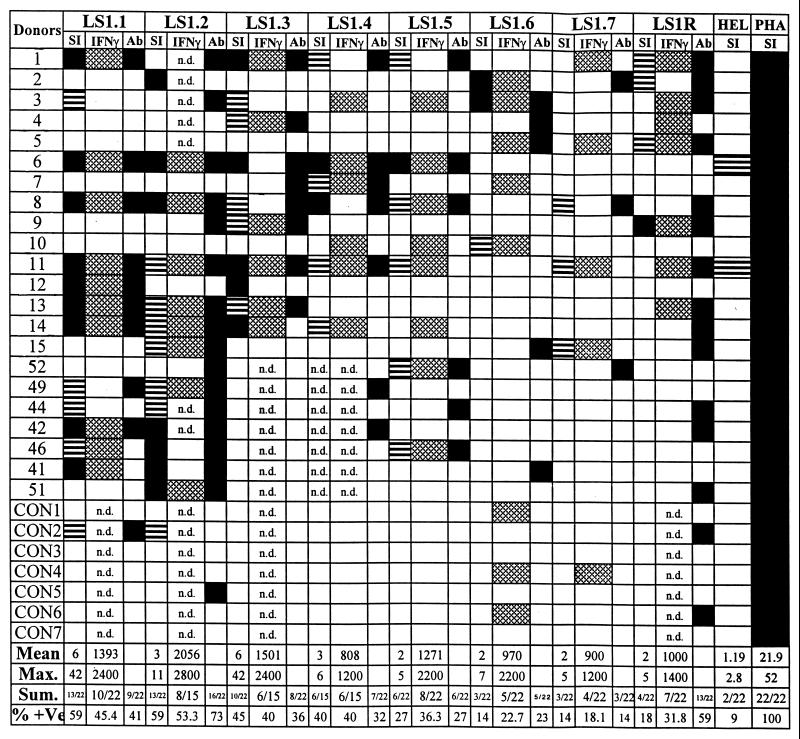
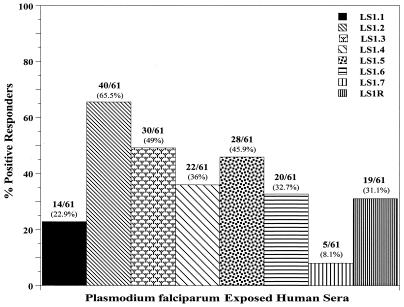
Liver-stage antigen 1 (LSA-1) is a potential vaccine candidate against preerythrocytic stages of malaria. We report here the immunogenicity of linear synthetic constructs delineated as T(H)-cell determinants from the nonrepeat regions of Plasmodium falciparum LSA-1 in murine models and human subjects from areas where malaria is endemic in Rajasthan State, India. Seven peptide constructs (LS1.1 to LS1.7) corresponding to predicted T-cell sites from both the N- and C-terminal regions and peptide LS1R from a repeat region of PfLSA-1 were synthesized to analyze the cellular immune responses. These linear peptides were also tested for humoral responses in order to determine if there were any overlapping B-cell epitopes in the predicted T-cell sites. Most peptides induced cellular responses in peptide-immunized BALB/c and C57BL/6 mice as measured by proliferation and cytokine analysis. Cross-reactive T-cell recognition of P. falciparum-based peptides in Plasmodium berghei-immune animals was evaluated, but only one peptide, LS1.2 (amino acids 1742 to 1760) triggered T-cell proliferation and interleukin-2 and gamma interferon secretion in P. berghei-immune splenocytes of BALB/c and C57BL/6 mice as well as in Thamnomys gazellae (natural host of P. berghei ANKA). In an enzyme-linked immunosorbent assay with the peptides, only one peptide, LS1.1, was recognized by anti-P. berghei liver-stage serum. Three peptides (LS1. 1, LS1.2, and LS1.3) of the eight peptides tested in this study were recognized by a relatively large percentage of P. falciparum-exposed human subjects; the reactivities ranged from approximately 45% for LS1.3 to approximately 60% for LS1.1 and LS1.2. Interestingly, all of the eight putative T-cell determinants were also recognized by the sera collected from malaria patients, although the response was variable in nature. These T(H)- and B-cell epitopes may be of potential value for preerythrocytic antigen-based malaria subunit vaccine formulations.
Figures
References
-
- Akhiani A A, Nilsson L A, Ouchterlony O. Immunological cross-reactivity between Schistosoma mansoniand cholera toxin. Parasite Immunol (Oxford) 1997;19:355–361. - PubMed
-
- Atkinson C T, Hollingdale M R, Aikawa M. Localization of a 230 kDa parasitophorous vacuole membrane antigen of Plasmodium bergheiexoerythrocytic schizonts (LSA-2) by immunoelectron and confocal laser scanning microscopy. Am J Trop Med Hyg. 1992;46:533–537. - PubMed
-
- Bottius E, BenMohammed L, Brahimi K, Gras H, Lepers J P, Raharimalala L, Aikawa M, Meis J, Slierendregt B, Sartan A, Thomas A, Druilhe P. A novel Plasmodium falciparumsporozoite and liver stage antigen (SALSA) defines major B, T helper, and CTL epitopes. J Immunol. 1996;156:2874–2884. - PubMed
-
- Calvo-Calle J M, Hammer J, Sinigaglia F, Clavijo P, Moya-Castro Z R, Nardin E H. Binding of malaria T cell epitopes to DR and DQ molecules in vitro correlates with immunogenicity in vivo. J Immunol. 1997;159:1362–1373. - PubMed
MeSH terms
Substances
LinkOut - more resources
Full Text Sources
Other Literature Sources
Molecular Biology Databases
