


The human natural killer cell immune synapse
- PMID: 10611338
- PMCID: PMC24773
- DOI: 10.1073/pnas.96.26.15062
The human natural killer cell immune synapse
Abstract
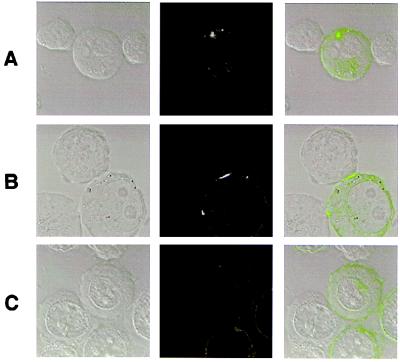
Inhibitory killer Ig-like receptors (KIR) at the surface of natural killer (NK) cells induced clustering of HLA-C at the contacting surface of target cells. In this manner, inhibitory immune synapses were formed as human NK cells surveyed target cells. At target/NK cell synapses, HLA-C/KIR distributed into rings around central patches of intercellular adhesion molecule-1/lymphocyte function-associated antigen-1, the opposite orientation to mature murine T cell-activating synapses. This organization of protein was stable for at least 20 min. Cells could support multiple synapses simultaneously, and clusters of HLA-C moved as NK cells crawled over target cells. Clustering required a divalent metal cation, explaining how metal chelators inhibit KIR function. Surprisingly, however, formation of inhibitory synapses was unaffected by ATP depletion and the cytoskeletal inhibitors, colchicine and cytochalsins B and D. Clearly, supramolecular organization within plasma membranes is critical for NK cell immunosurveillance.
Figures



References
-
- Long E O. Annu Rev Immunol. 1999;17:875–904. - PubMed
-
- Ljunggren H-G, Karre K. Immunol Today. 1990;11:237–244. - PubMed
-
- Colonna M, Brooks E G, Falco M, Ferrera G B, Strominger J L. Science. 1993;260:1121–1124. - PubMed
-
- Bjorkman P J, Saper M A, Samraoui B, Bennett W S, Strominger J L, Wiley D C. Nature (London) 1987;329:506–512. - PubMed
Publication types
MeSH terms
Substances
Grants and funding
LinkOut - more resources
Full Text Sources
Other Literature Sources
Research Materials
