


Is preinfarction angina related to the presence or absence of coronary plaque rupture?
- PMID: 10618338
- PMCID: PMC1729270
- DOI: 10.1136/heart.83.1.64
Is preinfarction angina related to the presence or absence of coronary plaque rupture?
Abstract
Objective: To analyse the prodrome of acute myocardial infarction in relation to the plaque morphology underlying the infarct.
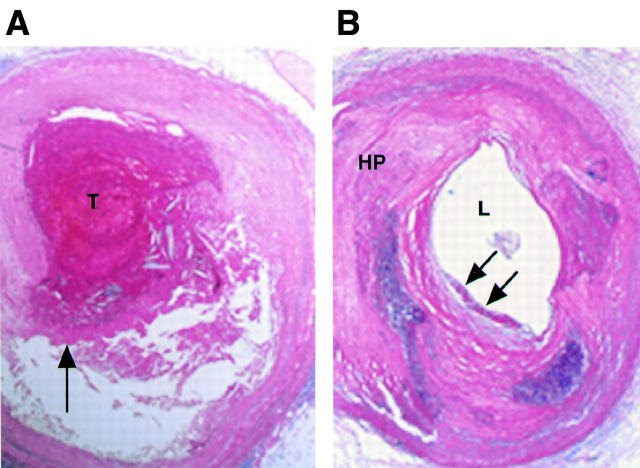
Design: A retrospective investigation of the relation between rupture and erosion of coronary atheromatous plaques and the clinical characteristics of acute myocardial infarction. The coronary arteries of 100 patients who died from acute myocardial infarction were cut transversely at 3 mm intervals. Segments with a stenosis were examined microscopically at 5 micrometer intervals. The clinical features of the infarction were obtained from the medical records.
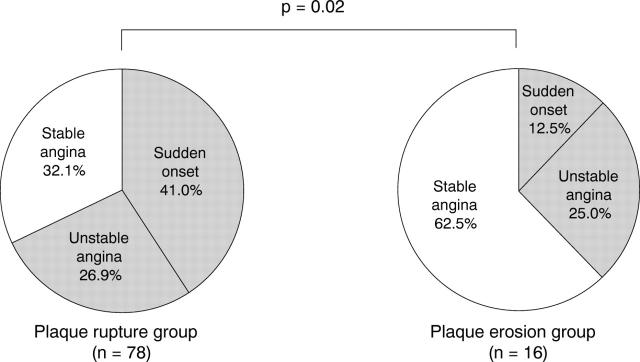
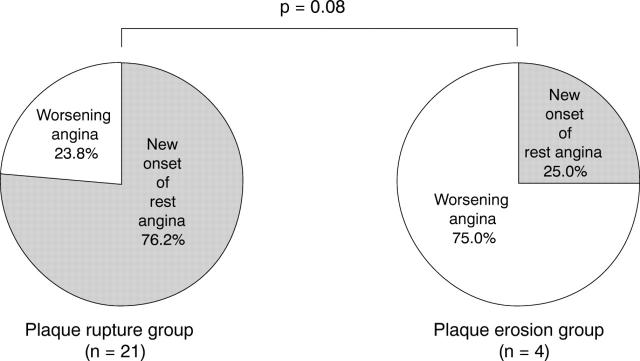
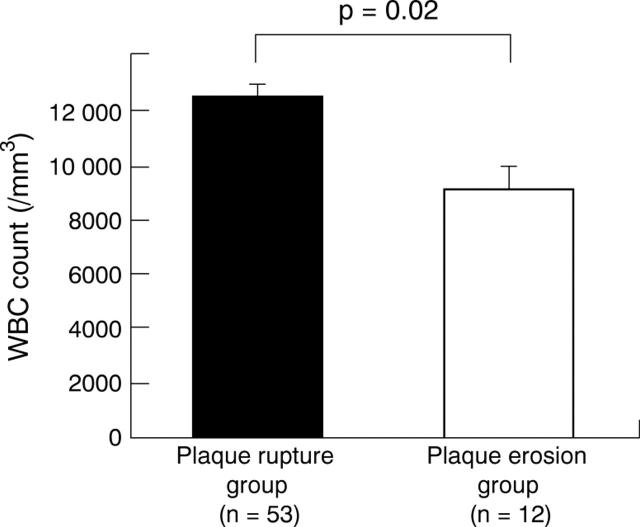
Results: A deep intimal rupture was encountered in 81 plaques, whereas 19 had superficial erosions only. There were no differences in the location of infarction, the incidence of hypertension, diabetes mellitus, or hyperlipidaemia, diameter stenosis of the infarcted related artery, Killip class, Forrester's haemodynamic subset, or peak creatine kinase between plaque rupture and plaque erosion groups. The presence of plaque rupture was associated with significantly greater incidences of leucocytosis, current smoking, and sudden or unstable onset of acute coronary syndrome. In patients with unstable preinfarction angina, new onset rest angina rather than worsening angina tended to develop more often in the plaque rupture group than in the plaque erosion group (p = 0.08).
Conclusions: Plaque rupture causes the sudden onset of acute myocardial infarction or unstable preinfarction angina, which may be aggravated by smoking and inflammation.
Figures
References
MeSH terms
LinkOut - more resources
Full Text Sources
