


Species identification of Mycobacterium avium complex isolates by a variety of molecular techniques
- PMID: 10655336
- PMCID: PMC86135
- DOI: 10.1128/JCM.38.2.508-512.2000
Species identification of Mycobacterium avium complex isolates by a variety of molecular techniques
Abstract
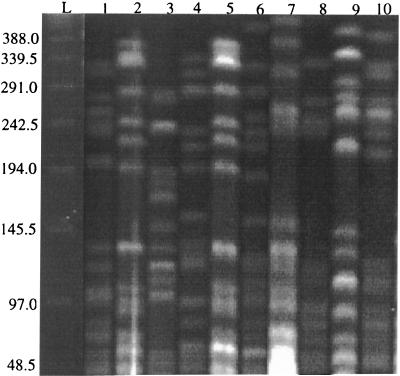
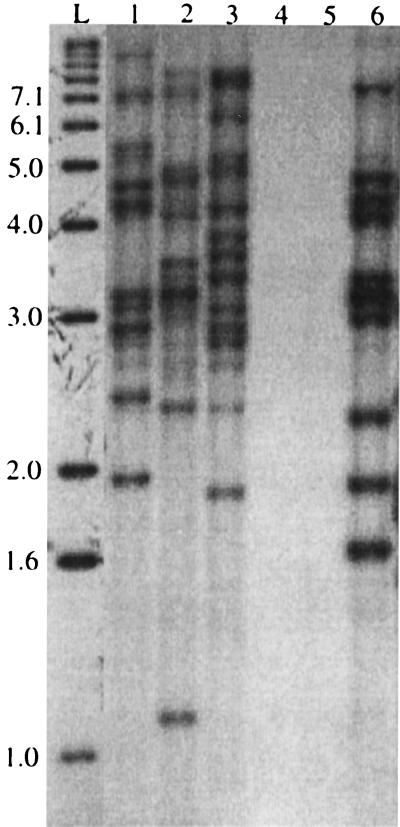
Organisms in the Mycobacterium avium complex (MAC; M. avium, M. intracellulare, and "nonspecific or X" MAC) are emerging pathogens among individual organisms of which significant genetic variability is displayed. The objective of the present study was to evaluate various molecular methods for the rapid and definitive identification of MAC species. Isolates were obtained from both human immunodeficiency virus (HIV)-positive patients and HIV-negative patients with and without known predisposing conditions. The isolates were initially hybridized with nucleic acid probes complementary to the rRNA of the respective mycobacterial species (AccuProbe Culture Confirmation kits for M. avium, M. intracellulare, and MAC species; Gen-Probe). Isolates were also examined by PCR and in some cases by Southern blot hybridization for the insertion element IS1245. Two other techniques included a PCR assay that amplifies the mig gene, a putative virulence factor for MAC, and hsp65 gene amplification and sequencing. This study led to the following observations. Eighty-five percent of the isolates from HIV-positive patients were M. avium and 86% of the isolates from HIV-negative patients were M. intracellulare. Fifteen of the M. avium isolates did not contain IS1245 and 7% of the M. intracellulare isolates were found to carry IS1245. All of the M. avium strains were mig positive, and all of the M. intracellulare strains were mig negative.
Figures
References
-
- Bull T J, Shanson D C. Evaluation of a commercial chemiluminescent gene probe system “AccuProbe” for the rapid differentiation of mycobacteria, including “MAIC X”, isolated from blood and other sites, from patients with AIDS. J Hosp Infect. 1992;21:143–149. - PubMed
-
- Crawford J T, Bates J H. Analysis of plasmids in Mycobacterium avium-intracellulare isolates from persons with acquired immunodeficiency syndrome. Am Rev Respir Dis. 1986;134:659–661. - PubMed
-
- Ellner J J, Goldberger M J, Parenti D M. Mycobacterium avium infection and AIDS: a therapeutic dilemma in rapid evolution. J Infect Dis. 1991;163:1326–1335. - PubMed
Publication types
MeSH terms
Substances
Grants and funding
LinkOut - more resources
Full Text Sources
Other Literature Sources
Medical
Research Materials
