


Loss of FHIT expression in transitional cell carcinoma of the urinary bladder
- PMID: 10666370
- PMCID: PMC1850046
- DOI: 10.1016/S0002-9440(10)64745-1
Loss of FHIT expression in transitional cell carcinoma of the urinary bladder
Abstract
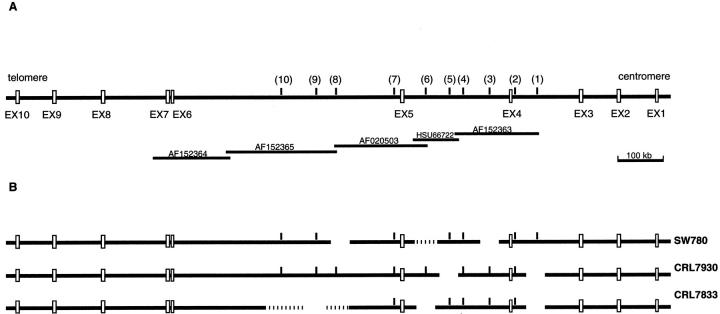
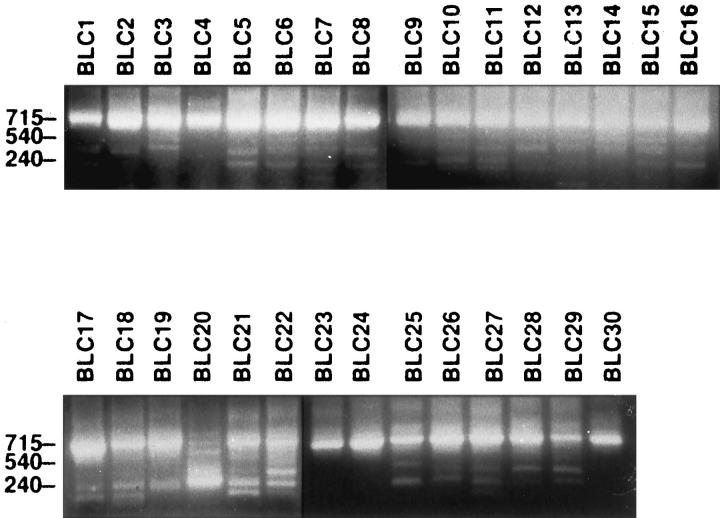
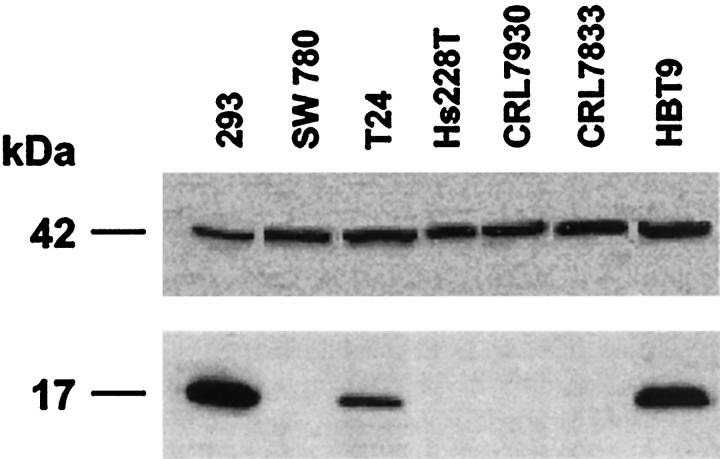
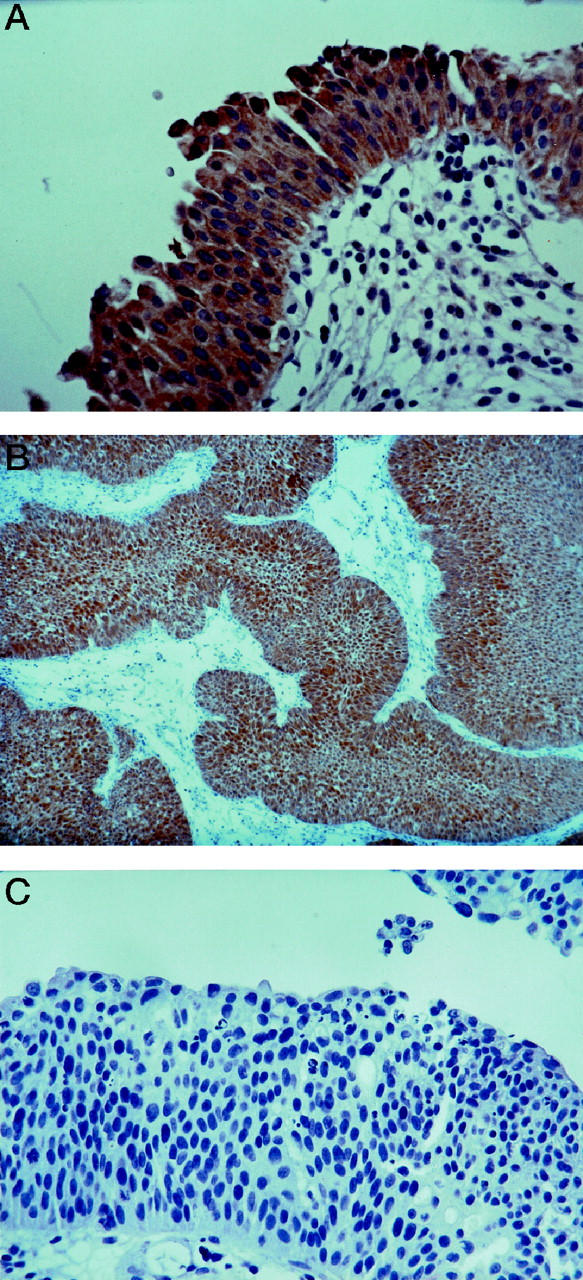
Cytogenetic and loss of heterozygosity (LOH) studies demonstrated chromosome 3p deletions in transitional cell carcinoma (TCC). We recently cloned the tumor suppressor gene FHIT (fragile histidine triad) at 3p14.2, one of the most frequently deleted chromosomal regions in TCC of the bladder, and showed that it is the target of environmental carcinogens. Abnormalities at the FHIT locus have been found in tumors of the lung, breast, cervix, head and neck, stomach, pancreas, and clear cell carcinoma of the kidney. We examined six TCC derived cell lines (SW780, T24, Hs228T, CRL7930, CRL7833, and HTB9) and 30 primary TCC of the bladder for the integrity of the FHIT transcript, using reverse transcriptase-polymerase chain reaction (RT-PCR) to investigate a potential role of the FHIT gene in TCC of the bladder. In addition, we tested expression of the Fhit protein in the six TCC-derived cell lines by Western blot analysis and in 85 specimens of primary TCCs by immunohistochemistry. Three of the six cell lines (50%) did not show the wild-type FHIT transcript, and Fhit protein was not detected in four of the six cell lines (67%) tested. Fhit expression also was correlated with pathological and clinical status. A significant correlation was observed between reduced Fhit expression and advanced stage of the tumors. Overall, 26 of 30 (87%) primary TCCs showed abnormal transcripts. Fhit protein was absent or greatly reduced in 61% of the TCCs analyzed by immunohistochemistry. These results suggested that loss of Fhit expression may be as important in the development of bladder cancer as it is for other neoplasms caused by environmental carcinogens.
Figures
References
-
- Thrasher JB, Crawford ED: Current management of invasive and metastatic transitional cell carcinoma of the bladder. J Urol 1993, 149:957-972 - PubMed
-
- Landis SM, Murray T, Bolden S, Wingo PA: Cancer statistics. CA Cancer J Clin 1999, 49:8-31 - PubMed
-
- Sobin LH, Fleming ID: TNM Classification of Malignant Tumors, 5th ed. Union Internationale Contre le Cancer and American Joint Commitee on Cancer. Cancer 1997, 80:1803–1804 - PubMed
-
- Ross RK, Jones PA, Yu MC: Bladder cancer epidemiology and pathogenesis. Semin Oncol 1996, 23:536-545 - PubMed
-
- Olumi AF, Tsai TC, Nichols PW, Skinner DG, Cain DR, Bender LI, Jones PA: Allelic loss of chromosome 17p distinguishes high grade from low grade transitional cell carcinoma of the bladder. Cancer Res 1990, 50:7081-7083 - PubMed
Publication types
MeSH terms
Substances
Grants and funding
LinkOut - more resources
Full Text Sources
Medical
