Effects of sibutramine alone and with alcohol on cognitive function in healthy volunteers
- PMID: 10671904
- PMCID: PMC2014907
- DOI: 10.1046/j.1365-2125.2000.00131.x
Effects of sibutramine alone and with alcohol on cognitive function in healthy volunteers
Abstract
Aims: To investigate the effects of sibutramine in combination with alcohol in a double-blind, randomised, placebo-controlled, four-way crossover study in 20 healthy volunteers.
Methods: On each study day each volunteer received either: sibutramine 20 mg+0.5 g kg-1 alcohol; sibutramine 20 mg+placebo alcohol; placebo capsules+0.5 g kg-1 alcohol; or placebo capsules+placebo alcohol. Alcohol was administered 2 h following ingestion of the study capsules. During each study day, assessments of cognitive performance were made prior to dosing, and at 3, 4.5, 6 and 10 h post dosing. Blood alcohol concentration was estimated using a breath alcometer immediately prior to each cognitive performance test session. Each study day was followed by a minimum 7 day washout period.
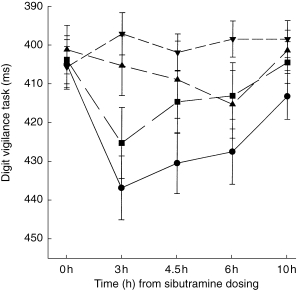
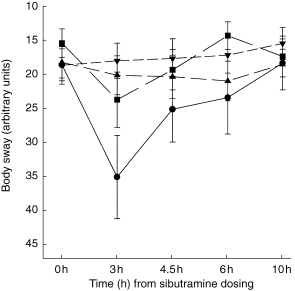
Results: Alcohol was found to produce statistically significant impairments in tests of attention (maximum impairment to speed of digit vigilance=49 ms) and episodic memory (maximum impairment to speed of word recognition=74 ms). Alcohol also increased body sway (maximum increase 17.4 units) and lowered self rated alertness (maximum decrease 13.6 mm). These effects were produced by an inferred blood alcohol level of 53.2 mg dl-1. Sibutramine was not found to potentiate any of the effects of alcohol. There was a small, yet statistically significant, interaction effect observed on the sensitivity index of the picture recognition task. In this test, the combined effects of sibutramine and alcohol were smaller than the impairments produced by alcohol alone. Sibutramine, when dosed alone, was associated with improved performance on several tasks. Sibutramine improved attention (mean speed of digit vigilance improved by 21 ms), picture recognition speed (improvement at 3=81) and motor control (tracking error at 3 h reduced by 1.58 mm). Also sibutramine improved postural stability (reducing body sway at 3 h by 14.2 units). Adverse events reported were unremarkable and consistent with the known pharmacology of sibutramine and alcohol.
Conclusions: There was little evidence of a clinically relevant interaction of sibutramine with the impairment of cognitive function produced by alcohol in healthy volunteers. The single statistically significant interaction indicated a reduction, rather than a worsening, of alcohol-induced impairment when sibutramine is taken concomitantly. Sibutramine when administered alone is associated with improved performance on several tasks.
Figures
References
-
- Surge MF. Neuropharmacology of drugs affecting food intake. Pharmacol Ther. 1987;32:145–182. - PubMed
-
- Silverstone T. Appetite suppressants: a review. Drugs. 1992;43:820–836. - PubMed
-
- Bucket WR, Thomas PC, Luscombe GP. The pharmacology of sibutramine hydrochloride (BTS 54, 524), a new antidepressant which induces rapid noradrenergic down–regulation. Progr Neuropsychopharmacol Biol Psychiat. 1988;12:575–584. - PubMed
-
- Luscombe GP, Hopcroft RH, Thomas PC, Buckett WR. The contribution of metabolites to the rapid and potent down-regulation of rat cortical β-adrenoceptors by the putative antidepressant sibutramine hydrochloride. Neuropharmacology. 1989;28:129–134. - PubMed
-
- Luscombe GP, Slater NA, Lyons MB, Wynne RD, Scheinbaum ML, Buckett WR. Effect on radiolabelled-monoamine uptake in vitro of plasma taken from healthy volunteers administered the antidepressant sibutramine HCL. Psychopharmacology. 1990;100:345–349. - PubMed
Publication types
MeSH terms
Substances
LinkOut - more resources
Full Text Sources
Other Literature Sources