


Cerebral correlates of autonomic cardiovascular arousal: a functional neuroimaging investigation in humans
- PMID: 10673560
- PMCID: PMC2269796
- DOI: 10.1111/j.1469-7793.2000.t01-1-00259.x
Cerebral correlates of autonomic cardiovascular arousal: a functional neuroimaging investigation in humans
Abstract
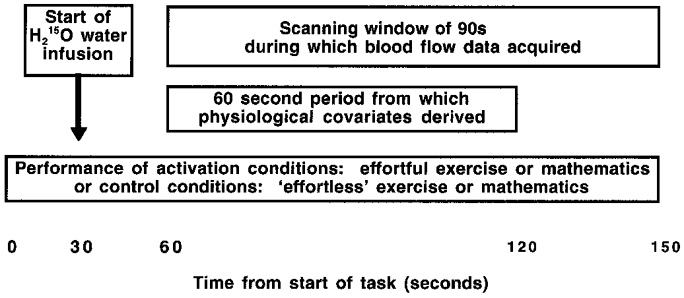
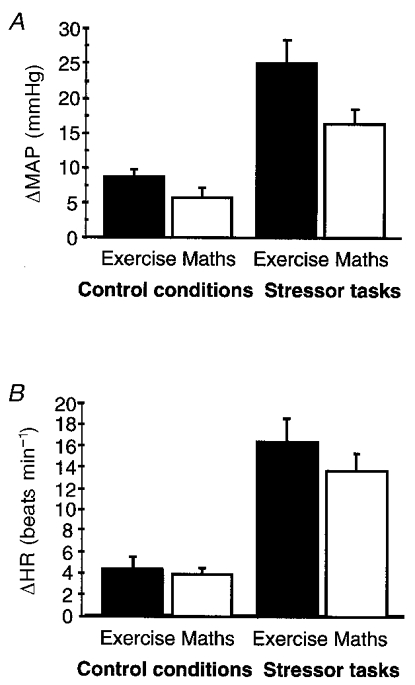
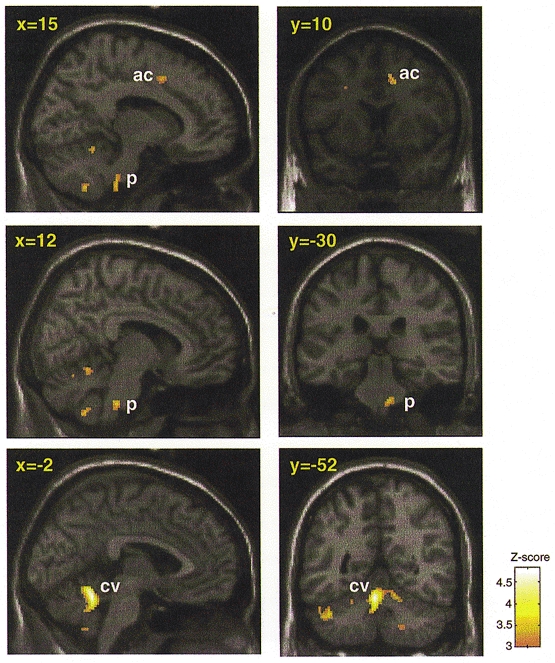
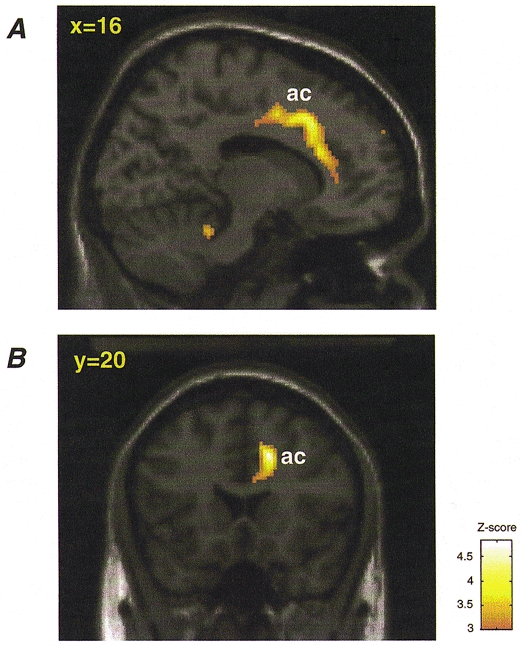
1. States of peripheral autonomic arousal accompany emotional behaviour, physical exercise and cognitive effort, and their central representation may influence decision making and the regulation of social and emotional behaviours. However, the cerebral functional neuroanatomy representing and mediating peripheral autonomic responses in humans is poorly understood. 2. Six healthy volunteer subjects underwent H215O positron emission tomography (PET) scanning while performing isometric exercise and mental arithmetic stressor tasks, and during corresponding control tasks. Mean arterial blood pressure (MAP) and heart rate (HR) were monitored during scanning. 3. Data were analysed using statistical parametric mapping (SPM99). Conjunction analyses were used to determine significant changes in regional cerebral blood flow (rCBF) during states of cardiovascular arousal common to both exercise and mental stressor tasks. 4. Exercise and mental stressor tasks, relative to their control tasks, were associated with significantly (P < 0.001) increased MAP and HR. Significant common activations (increased rCBF) were observed in cerebellar vermis, brainstem and right anterior cingulate. In both exercise and mental stress tasks, increased rCBF in cerebellar vermis, right anterior cingulate and right insula covaried with MAP; rCBF in pons, cerebellum and right insula covaried with HR. Cardiovascular arousal in both categorical and covariance analyses was associated with decreased rCBF in prefrontal and medial temporal regions. 5. Neural responses in discrete brain regions accompany peripheral cardiovascular arousal. We provide evidence for the involvement of areas previously implicated in cognitive and emotional behaviours in the representation of peripheral autonomic states, consistent with a functional organization that produces integrated cardiovascular response patterns in the service of volitional and emotional behaviours.
Figures
References
-
- Allen GV, Cechetto DF. Functional and neuroanatomical organization of cardiovascular pressor and depressor sites in the lateral hypothalamic area. Journal of Comparative Neurology. 1992;315:313–332. - PubMed
-
- Angyan L. Somatomotor and cardiorespiratory responses to basal ganglia stimulation in cats. Physiology and Behavior. 1994;56:167–173. - PubMed
-
- Bechara A, Tranel D, Damasio H, Adolphs R, Rockland C, Damasio A. Double dissociation of conditioning and declarative knowledge relative to the amygdala and hippocampus in humans. Science. 1995;267:1115–1118. - PubMed
-
- Bennarroch EE. Central Autonomic Network: Functional Organization and Clinical Correlations. Armonk, NY, USA: Futura Publishing Company Inc.; 1997. Functional anatomy of the central autonomic network; pp. 29–60.
-
- Bradley DJ, Ghelarducci B, Spyer KM. The role of the posterior cerebellar vermis in cardiovascular control. Neuroscience Research. 1991;12:45–56. - PubMed
MeSH terms
LinkOut - more resources
Full Text Sources
Other Literature Sources
Medical
